Geographical distance doesn't mean much anymore when global supply chains are fracturing. If you think India’s foreign policy is only about balancing Washington, Beijing, and Moscow, you’re missing a massive piece of the puzzle. The real action is shifting toward highly specialized, trust-based coalitions.
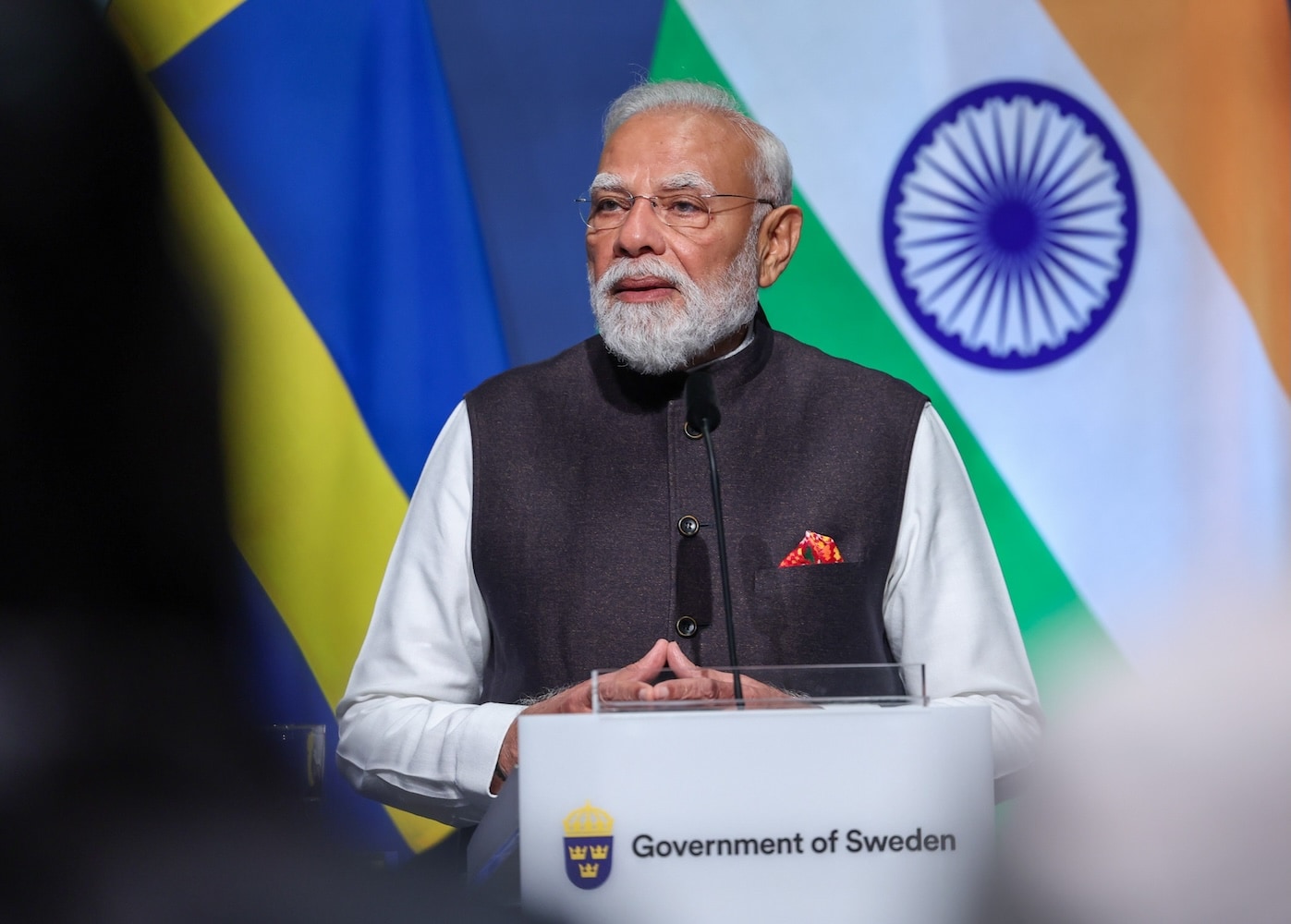
Look no further than Prime Minister Narendra Modi’s recent high-profile visit to Oslo for the Third India-Nordic Summit. This wasn't just another diplomatic photo-op or a routine handshake in the snow. It marked the first time an Indian Prime Minister visited Norway in 43 years, signaling a major strategic pivot.
While the rest of the world fixates on traditional superpowers, New Delhi is quietly locking down a critical alliance with Europe’s northern tier—Denmark, Finland, Iceland, Norway, and Sweden. The reason is simple. India has the scale, the manpower, and the market. The Nordic nations have the advanced technology, the sovereign capital, and the green blueprints. When you fuse them together, it changes the game for economic security.
Flipping the Script on Green Technology
For years, Western nations lectured developing economies about carbon footprints without offering practical alternatives. That dynamic is officially dead. The biggest takeaway from the Oslo summit is the formal elevation of ties to a Green Technology and Innovation Strategic Partnership.
This isn't a vague declaration of intent. It's a calculated matchmaking exercise that connects specific Nordic capabilities directly to India’s massive industrial scale.
- Iceland is plugging its expertise in geothermal energy and sustainable fisheries straight into Indian infrastructure.
- Norway is bringing its deep-sea blue economy and Arctic research insights to help India manage its maritime wealth.
- Sweden is deeply integrating its advanced manufacturing capabilities with India’s defense industrial corridors, backed by India's policy allowing 100% Foreign Direct Investment (FDI) in defense.
- Finland is aligning its world-class telecom architecture to collaborate on 6G development and secure artificial intelligence.
- Denmark is focusing heavily on cybersecurity and health-tech solutions.
Basically, India is treating the Nordic region not as a singular European bloc, but as a boutique shopping mall of hyper-specialized technologies. It's an aggressive move to decarbonize India’s rapid growth without slamming the brakes on industrial manufacturing.
The 200 Percent Surge in Cold Hard Cash
Let's talk about the numbers because sentiment doesn't build ports or deploy 6G towers. During the summit, data revealed that investments from Nordic countries into India skyrocketed by nearly 200% over the last decade. Bilateral trade has quadrupled in the same period.
This financial momentum isn't happening in a vacuum. It's being supercharged by a new legal framework. The India-EFTA Trade and Economic Partnership Agreement (TEPA), which came into force recently, includes a historic commitment from EFTA states—including Norway and Iceland—to target $100 billion in investments into India, aiming to create one million direct jobs. Combine that with the major progress on the India-EU Free Trade Agreement, and you realize we're entering a highly lucrative era for cross-border capital.
Nordic pension funds and sovereign wealth funds are hunting for long-term, stable yields. India's infrastructure push, from the flagship Mission LiFE to massive renewable energy targets, offers exactly the kind of scale these funds need to fulfill their green mandates. They aren't investing out of charity; they're doing it because India is the world's most dynamic growth engine.
Geopolitics in a Fractured World Order
You can't ignore the timing of this trip. The world is experiencing intense geopolitical flux, torn apart by ongoing conflicts in Ukraine and West Asia. In this climate, trust is the rarest commodity.
By gathering in Oslo, these six nations sent a sharp message about international law and the rules-based global order. Denmark’s leadership perfectly summarized the vibe, noting that while the Nordic countries are a middle power when united, partnering with a global heavyweight like India brings stability and unity to a rapidly changing world.
There's also serious structural backing here. The Nordic leaders reiterated their explicit support for India’s permanent membership in a reformed UN Security Council and backed India's application to the Nuclear Suppliers' Group. New Delhi, in turn, secured solid solidarity against cross-border terrorism, a critical point emphasized after the recent security challenges in regions like Pahalgam.
Furthermore, look at the Arctic Council. India is an observer state, and this visit cemented joint research projects in polar science. As Arctic ice melts, new shipping lanes open, and resource availability shifts. India wants a seat at that table, and its Nordic partners just handed it the invite.
Actionable Next Steps for Businesses and Investors
If you're an executive, investor, or policy strategist, you shouldn't view this summit as just government-to-government theater. The policy changes coming out of Oslo require immediate corporate action.
First, track the money moving into GIFT City, Gujarat. PM Modi explicitly invited Nordic financial institutions to set up operations there. If you're in fintech or wealth management, that's where the regulatory easing will happen first.
Second, look at university and startup ecosystem linkages. The summit laid out concrete plans for talent mobility and joint STEM research. If you're managing an R&D department, start building talent pipelines between Indian engineering hubs and Nordic tech labs now, especially in AI and next-gen communications.
Finally, watch the India-Middle East-Europe Economic Corridor (IMEC). The joint statement explicitly linked Nordic connectivity to the Indo-Pacific through this corridor. The supply chains of tomorrow are being built right now, and they are bypassing traditional, risky transit routes. Don't get left behind relying on old logistics playbooks. Get your business aligned with the new green corridors today.