The Night Rome Echoed with Indian Rhythms
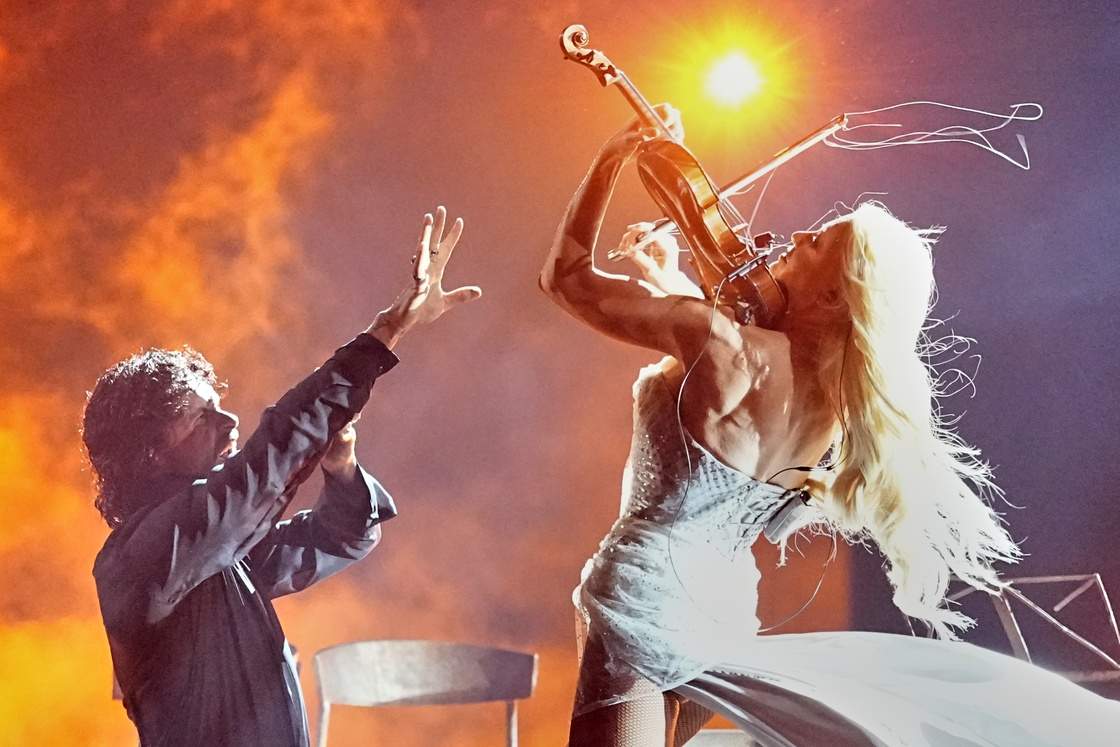
Western audiences don't just tolerate classical Indian music anymore. They actively study it, master it, and perform it with staggering precision. We saw this firsthand when Prime Minister Narendra Modi traveled to Rome for official diplomatic meetings. While geopolitical strategies dominated the daytime agendas, the evening turned into an unexpected showcase of soft power. Italian artists took the stage to perform traditional Indian ragas and devotional songs, leaving the diplomatic delegation visibly impressed.
Modi pointed out a shifting reality during his address. Indian music is getting very popular across Europe, and it isn't just a fleeting trend driven by viral social media videos. It's a deep, analytical fascination with the complex mathematical structures of Indian classical notes. In similar updates, read about: Why Robert Kimball Matters to Anyone Who Loves the American Musical.
When you see an Italian musician playing a sitar or singing flawless Sanskrit bhajans, you realize something fundamental has changed. This isn't superficial exoticism. It's genuine artistic adoption.
Decoding the Global Appeal of Ragas and Bhajans
Why is this happening now? For decades, Western listeners viewed Indian classical music as background noise for meditation or a psychedelic relic of the 1960s Beatles era. That patronizing view has died out. Today, international conservatory students analyze the complex time signatures of the tabla and the microtonal shifts of the carnatic vocal tradition. Variety has also covered this critical topic in extensive detail.
The human brain craves novel melodic patterns. Western classical structures rely heavily on harmony and chord progressions. Indian music focuses on melody and intricate rhythm. It offers an entirely different framework for musical expression.
Western Music Structure: Chords -> Harmonies -> Fixed Progressions
Indian Music Structure: Raag (Melody) -> Taal (Rhythm) -> Infinite Improvisation
Musicians trained in Rome, Paris, or Berlin find this refreshing. It frees them from the rigid constraints of Western notation. The performance highlighted by Modi wasn't an isolated incident. It reflects a growing network of European schools offering specialized courses in Eastern classical instrumentation. Italian artists spending years mastering the subtle bends of a sitar string show a level of dedication that goes way beyond casual interest.
Moving Past Superficial Cultural Exchange
Diplomatic events love to stage cultural performances. Most of the time, they feel forced. A local choir sings a poorly pronounced version of a foreign national anthem, everyone claps politely, and everyone forgets it five minutes later.
This performance in Rome felt different. The Italian artists demonstrated a genuine technical grasp of the material. They understood the emotional weight behind the compositions.
This tells us that Indian music has successfully migrated from niche immigrant communities into mainstream European artistic spaces. It has become a prestigious pursuit for serious Western musicians. When a prime minister highlights these performances, it serves as a validation of this artistic bridge. It highlights a mutual respect that doesn't depend on economic treaties or military pacts.
How to Explore Indian Classical Music Without Getting Overwhelmed
If you want to understand the depth of this musical tradition yourself, don't just search blindly on streaming platforms. The sheer volume of material will overwhelm you immediately. You need a structured approach to appreciate what these Italian musicians spent years learning.
Start by listening to the distinct differences between morning and evening ragas. Indian classical music is tied to the time of day, designed to evoke specific psychological states based on the sun's position.
- Morning Ragas: Listen to Raag Ahir Bhairav. It uses flat notes to create a calm, awakening atmosphere.
- Evening Ragas: Switch to Raag Yaman. It uses sharp notes that feel romantic, reflective, and deeply grounded.
Focus your attention on the transition from the slow, unmetred introduction known as the alaap to the fast-paced, rhythmic section called the gat. Tracking this acceleration helps you understand how a performer builds tension without ever changing the underlying scale.
Look up cross-cultural collaborations that bridge the gap between traditions. Seek out historical recordings of the Shakti ensemble, where British guitarist John McLaughlin traded blazing improvisations with Indian violin maestro L. Shankar and tabla legend Zakir Hussain. This gives you a clear entry point, showing exactly how Western harmonic thinking interacts with Eastern rhythmic genius. Stop treating this art form as ambient relaxation music. Listen actively to the dialogue between the soloist and the percussionist, and you will quickly realize why European virtuosos are dedicating their careers to mastering it.