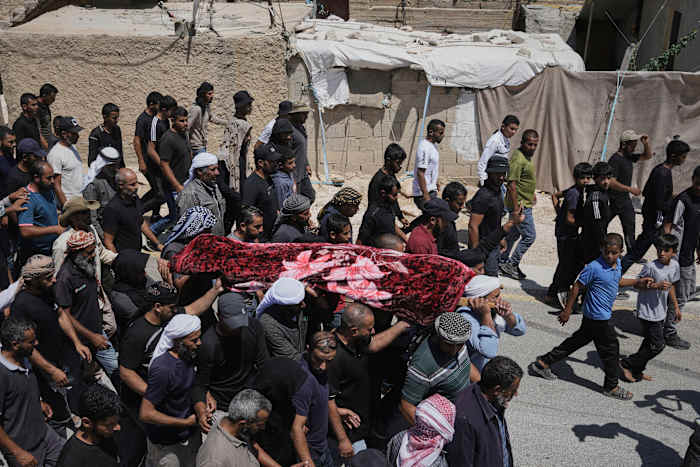
Justice moves at a snail's pace in the occupied West Bank, if it moves at all. For years, accountability for settler violence has been an exception rather than the rule. That reality shifted slightly when Israeli prosecutors filed an indictment against Yinon Levi for the reckless manslaughter of Palestinian activist Awdah Hathaleen.
If you follow legal trends in the region, you know indictments like this are practically unprecedented. Human rights organizations, including B'Tselem, note that this is the first time an Israeli has been formally charged with killing a Palestinian in the West Bank since October 2023. Out of hundreds of violent incidents, almost all close without a trial. This case broke the mold because of one undeniable factor: high-definition video evidence.
What Happened in Umm al-Khair
The confrontation took place in July 2025 in the South Hebron Hills village of Umm al-Khair. Yinon Levi, a 33-year-old settler and contractor, used an excavator to clear an unauthorized route across privately owned Palestinian land. Local residents, including Awdah Hathaleen, rushed to the site to protect their property and document the destruction.
Things turned violent fast. Footage from the scene shows the excavator driver striking a resident and damaging local fences. As stones were thrown in response, Levi pulled out a firearm.
Multiple cameras captured what happened next. Video clips show Levi firing shots toward the crowd. One harrowing sequence—believed to be filmed by Hathaleen himself—shows Levi shooting directly toward the person holding the camera before the footage abruptly cuts. Hathaleen, an English teacher, father of three, and prominent voice against displacement, was struck in the chest. He died before reaching the hospital.
The Significance of the Charges
Prosecutors filed the indictment at the Beersheba District Court, charging Levi with reckless manslaughter, armed trespassing, and malicious property damage.
Critics argue the charges fall short. Hathaleen's family and legal team wanted a murder charge, pointing out that firing live rounds into a crowd of people shows clear intent. Instead, the state opted for reckless manslaughter, which carries a lighter sentence under Israeli law.
Even with the lesser charge, the legal action is a jolt to the system. Levi's defense team immediately called the prosecution's decision a mistake, signaling a fierce courtroom battle ahead. Avichay Hajbi, representing Levi, maintains his client acted in self-defense—an argument that initially kept Levi out of jail months prior when a local judge released him due to supposed evidentiary gaps.
Why the Global Spotlight Matters
Awdah Hathaleen wasn't just a local teacher. He was heavily involved in No Other Land, an Oscar-winning documentary chronicling the struggle of Palestinian villagers facing forced displacement in Masafer Yatta. Because of his international connections and active media presence, his killing instantly drew global outrage.
Western governments noticed. Back in 2024, the United States and other allies slapped sanctions on Levi due to mounting evidence of his involvement in regional violence. While those American sanctions faced policy shifts later on, the international pressure created an environment where sweeping the killing under the rug became politically difficult for authorities.
Rights groups remain skeptical about systemic reform. Statistics show that the vast majority of settler violence investigations quietly disappear without formal charges. National Security Minister Itamar Ben-Gvir's tenure has overseen a sharp drop in effective enforcement against extremist actions in the territories. That's why Hathaleen's case stands out so starkly. Without the video footage and global media attention, this indictment likely never would have happened.
The court proceedings will test whether visual evidence can pierce a wall of impunity that has stood for decades. Accountability remains rare, but the trial will force a public accounting of what happened on that dusty hillside in Umm al-Khair.