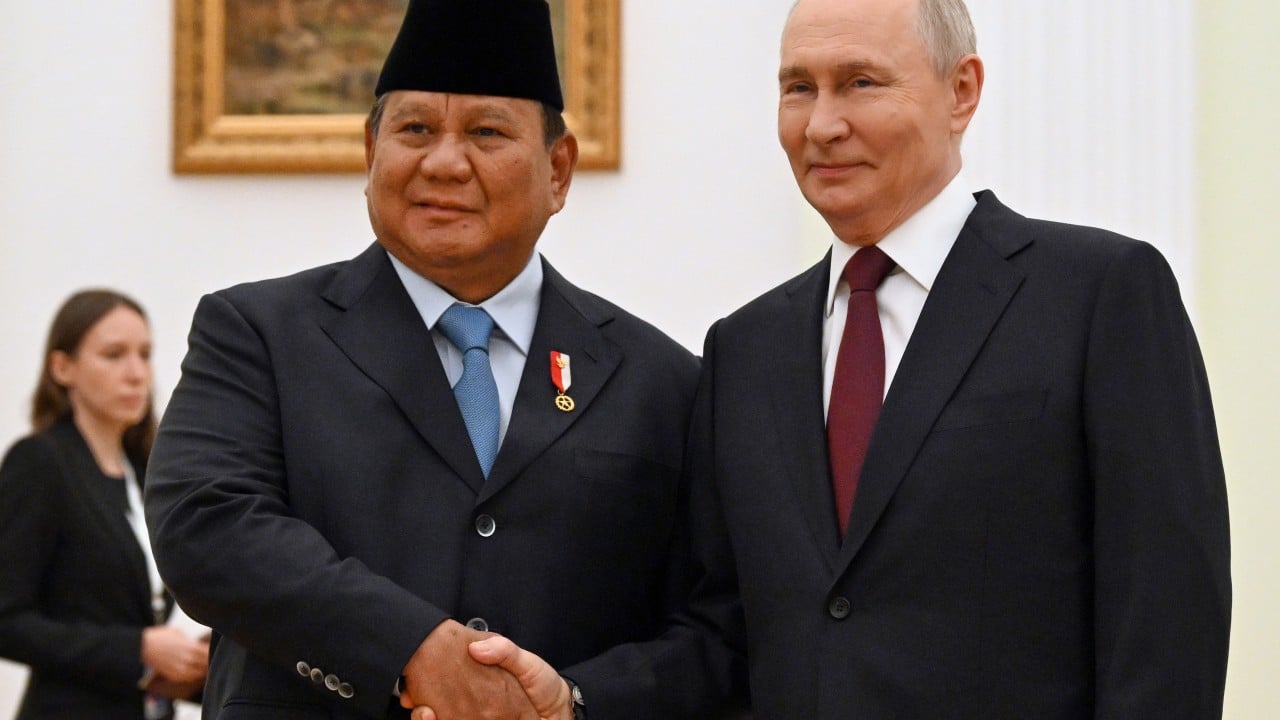
While most world leaders treat Moscow like a radioactive zone, Indonesia’s Prabowo Subianto just touched down for another meeting with Vladimir Putin. It’s not a mistake. It’s not a snub to the West. It’s a cold, calculated move by a leader who knows exactly what his country needs to survive the next decade.
If you’re looking for a simple narrative about "good guys" and "bad guys," you won’t find it in Jakarta. For Prabowo, Russia isn't just a pariah state on the edge of Europe; it's a massive supermarket for energy, food, and weapons. Indonesia is a country of 280 million people. They need to eat. They need lights to stay on. They need a military that doesn't rely on a single, fickle supplier.
The Energy Desperation Behind the Handshakes
Indonesia is currently staring down an energy crisis that doesn't care about European sanctions. The country’s domestic oil production is slipping, and the Middle East is a powderkeg. One bad week in the Strait of Hormuz and Jakarta goes dark.
Prabowo brought a heavy-hitting team to Moscow, including Energy Minister Bahlil Lahadalia. They aren't there for the scenery. They’re chasing a few very specific things:
- A massive new oil refinery: Indonesia needs to stop exporting raw crude only to buy it back as expensive refined fuel. Russia has the tech and the capital to build the infrastructure Western firms are too hesitant to touch.
- Nuclear Power: This is the big one. Prabowo is openly discussing a civilian nuclear energy industry. Russia’s Rosatom is the undisputed king of exporting nuclear tech to the developing world.
- Small Modular Reactors (SMRs): These are perfect for Indonesia’s thousands of islands. It’s a match made in engineering heaven, even if it makes Washington nervous.
Fertilizer Is More Important Than Geopolitics
You can't talk about Indonesian politics without talking about rice. If the price of rice spikes, governments fall. It’s that simple. Russia happens to be one of the world's largest exporters of the fertilizers that keep Indonesian farms green.
While the West focuses on the frontline in Ukraine, Prabowo is looking at the soil in Java. He’s securing long-term deals for potash and phosphate. He's also eyeing Russian wheat for Indonesia's massive instant noodle industry—a staple that feeds the nation's working class. Honestly, when you’re responsible for feeding nearly 300 million people, "strategic autonomy" isn't a buzzword; it’s a survival mechanism.
The Sukarno Playbook
Prabowo isn't inventing a new foreign policy. He’s dusting off an old one. He frequently reminds Putin (and anyone else listening) about the 1950s and 60s. Back then, the Soviet Union helped Indonesia’s first president, Sukarno, build up the military and infrastructure when the West was cold to the idea.
It’s a powerful psychological tool. By framing the current relationship as a continuation of "old friendships," Prabowo justifies his neutrality to his domestic audience. Indonesians, by and large, don't view Russia through a Cold War lens. They see a "great power" that treated them like an equal when others didn't.
Weapons Without Strings
The Indonesian military (TNI) has a long history with Russian hardware. They fly Su-27 and Su-30 fighter jets. They drive BMP-3F tanks. Why? Because Russia doesn't usually attach "human rights" clauses or political conditions to their sales.
If Indonesia buys American F-15s, they have to worry about the U.S. Congress cutting off spare parts if Jakarta does something Washington doesn't like. If they buy Russian, they just pay the bill. Prabowo is currently looking at:
- Pilot Training: Sending Indonesian officers to Russian academies.
- Joint Exercises: The "Orruda" exercises are a clear signal that the two militaries are getting cozy.
- Modernization: Upgrading existing Russian gear that has been sitting idle due to fear of U.S. sanctions (CAATSA).
Prabowo is essentially betting that Indonesia is too big and too important for the U.S. to actually punish them for buying Russian. It's a high-stakes game of chicken.
The BRICS Ambition
Don't ignore the timing. Indonesia is seriously flirting with joining BRICS. This trip to Moscow is a "soft launch" for that transition. By strengthening ties with Russia now, Prabowo is positioning Indonesia as a leader of the "Global South"—a middle power that refuses to take sides in a new Cold War.
He isn't choosing Russia over the U.S. He’s choosing Indonesia. He’ll go to Washington, talk about maritime security, and buy Boeing jets. Then he’ll go to Moscow, talk about nuclear plants, and buy fertilizer. It’s messy, it’s pragmatic, and it’s exactly what a country in Indonesia’s position should be doing.
If you want to understand what's actually happening, stop looking at the war maps and start looking at the energy and food balance sheets. That's where the real deals are being made.
Moving forward, expect to see more "non-aligned" moves like this. The next step for Jakarta is formalizing the Free Trade Agreement with the Eurasian Economic Union. Keep an eye on the flight paths between Moscow and Denpasar. When the direct flights start landing in Bali again, you'll know the "re-engagement" is complete. Grab a coffee and watch the shift; the era of Western-only alliances in Southeast Asia is officially over.