Jakarta just bought itself a serious piece of maritime insurance. By signing a multi-million dollar contract for India’s BrahMos supersonic cruise missiles, Indonesia isn't just buying hardware. It’s fundamentally rewriting how it defends its vast archipelagic waters.
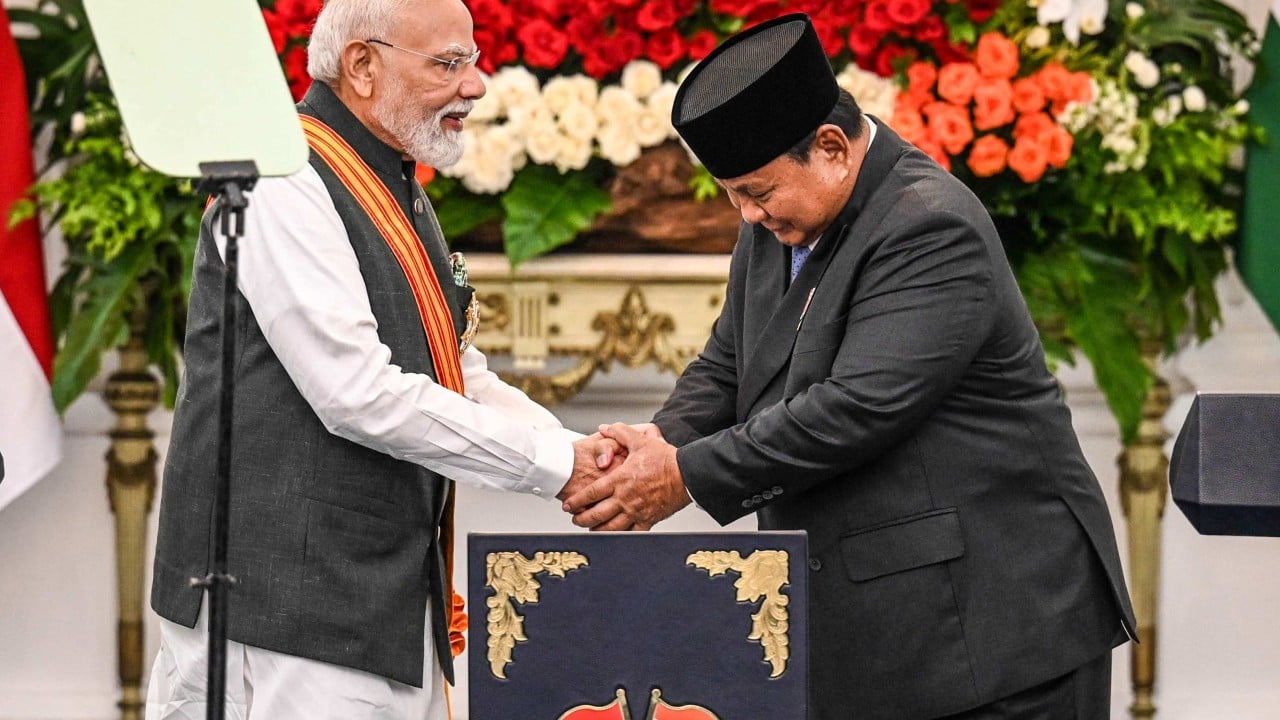
The deal, signed in July 2026 during Indian Prime Minister Narendra Modi’s state visit to Jakarta, sees Indonesia securing two batteries of the lethal shore-based missile system. Along with it comes a surprise order for Astra Mk-1 beyond-visual-range air-to-air missiles. It is a massive strategic shift for President Prabowo Subianto, and it sends a clear message to anyone eyeing the South China Sea.
Let's break down exactly what this means, why it happened now, and why it changes everything for regional security.
The Real Numbers Behind the Deal
Forget vague diplomatic talk. The numbers tell the real story here. Indonesia is spending roughly $200 million for two complete coastal defence batteries.
Each battery typically comes packed with:
- Four mobile autonomous launchers
- Twelve ready-to-fire missiles per battery
- Dedicated mobile command posts
- Long-range tracking radars and support vehicles
Indonesia originally wanted just one battery. They doubled the order. That tells you everything about Jakarta's current threat perception. The package includes full operator training, maintenance infrastructure, and long-term logistical support from New Delhi.
Why BrahMos Changes the Military Equation
Most cruise missiles are slow. They chug along at subsonic speeds, giving modern warship radars plenty of time to spot them, track them, and shoot them down.
BrahMos does not chug.
It flies at a sustained Mach 2.8 to Mach 3. That is nearly three times the speed of sound. When a missile moves that fast, it compresses the target's reaction window to almost nothing.
A hostile warship navigating a choke point near Indonesian waters might only get a few seconds of warning before impact. That is terrifying for an opposing captain.
The missile uses a hybrid propulsion system. A solid booster kicks it off, and then a liquid-fuel ramjet takes over. It flies a sea-skimming trajectory, dropping down to between three and ten meters above the waves during its final approach. It hides below radar horizons until it is far too late. With a strike range that India is actively upgrading past 400 kilometers for naval targets, Indonesia can now lock down its critical straits from the safety of the coastline.
The Unsung Winner of the Jakarta Pact
While the press focuses entirely on the big cruise missiles, the real surprise is the Astra Mk-1. Indonesia is the first foreign buyer to grab this Indian-developed air-to-air weapon.
The Indonesian Air Force relies heavily on Russian-made Sukhoi Su-27 and Su-30 fighter jets. Historically, sourcing modern missiles for these jets meant dealing with Moscow. Given ongoing global supply issues and political complications, Jakarta needed an alternative.
India stepped in. New Delhi will directly support integrating the Astra missile onto Indonesia’s Sukhoi fleet. This provides Jakarta with a modern, beyond-visual-range aerial combat option without relying on traditional big-power suppliers. It gives the air force immediate flexibility.
Strategic Geography Near the Malacca Strait
Look at a map to understand why this matters. This partnership goes far deeper than just handing over crates of missiles. The two countries are moving forward with joint development at Sabang Port.
Sabang sits on Weh Island in Aceh. It is positioned directly at the northern entrance of the Malacca Strait. That is one of the world's most critical maritime transit corridors. It sits barely 100 miles away from India's massive Great Nicobar port project.
By upgrading Sabang and placing an Indonesian liaison officer at the Indian Navy’s Information Fusion Centre, the two nations are effectively forming a maritime security wall. They are monitoring grey-zone coercion, tracking illegal fleets, and establishing a formidable cross-strait deterrence web.
Beyond the Weapons Array
This meeting in Jakarta also targeted economic survival. Security requires strong supply chains, not just missiles.
The two leaders signed agreements to lock down critical mineral supplies. India will invest directly in Indonesian manufacturing for steel, nickel, and rare earth permanent magnets. They even set up a joint venture between Steel Authority of India and Krakatau Steel for stainless steel production inside Indonesia.
On top of that, India's Unified Payments Interface is integrating with the Quick Response Code Indonesian Standard. Tourists and businesses will soon bypass Western banking intermediaries entirely when moving money between the two nations.
What Happens Next on the Ground
If you are tracking regional security or defence procurement, look for these immediate steps over the coming months.
First, watch the integration phase. Indian engineering teams will arrive at Indonesian airbases to begin the complex software and mechanical wiring required to mount Astra missiles onto Russian Sukhoi airframes. Any success or delay here will dictate whether other regional Sukhoi operators follow suit.
Second, identify the deployment sites for the BrahMos batteries. Their location will signal exactly which maritime corridors Jakarta intends to prioritize for coastal denial.
Jakarta has stopped playing defense. By diversifying its suppliers and locking arms with New Delhi, Indonesia secured a high-speed insurance policy that will make any aggressive neighbor think twice.