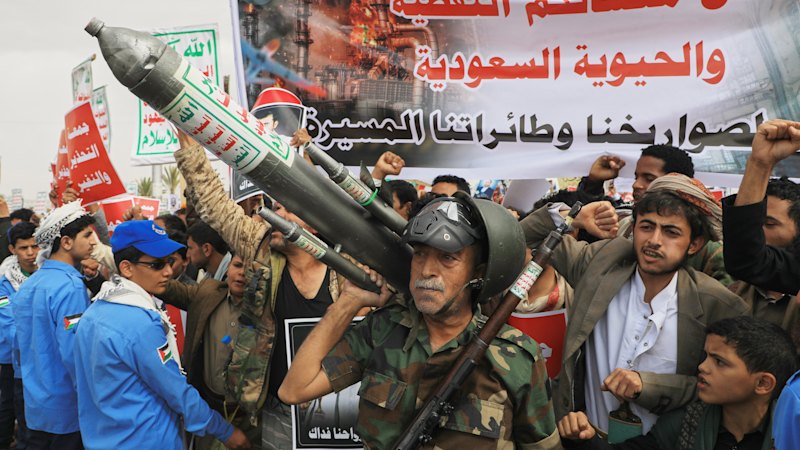
Global energy markets operate on a fragile assumption of physical redundancy. For decades, pricing models treated crude oil transport networks as a diversified grid capable of absorbing localized shocks, maritime blockades, and regional conflicts through simple rerouting. That theoretical resilience collapsed under the weight of empirical reality when repeated aerial strikes targeted Saudi Arabia's primary overland export corridor. The disruption of the East-West Pipeline exposed a structural vulnerability that financial markets had chronically underpriced: the physical limits of land-based crude transport are governed not by pipeline diameters, but by the terminal loading bottlenecks at the edge of the continent. When a primary maritime chokepoint like the Strait of Hormuz is compromised simultaneously with its overland bypass, the global economy faces an immediate supply deficit that cannot be bridged by spare capacity or inventory drawdowns.
Understanding this crisis requires stripping away the generalized narratives of geopolitical tension and examining the exact mechanical parameters governing Middle Eastern crude distribution. Saudi Arabia produces millions of barrels of oil daily from eastern fields concentrated around Ghawar, Abqaiq, and the Persian Gulf basin. Under normal operating parameters, the vast majority of this volume moves eastward through maritime tanker terminals situated inside the Persian Gulf, necessitating transit through the narrow waters of the Strait of Hormuz. To mitigate this single-point-of-failure risk, Riyadh constructed the East-West Crude Oil Pipeline, widely known as Petroline, traversing 1,200 kilometers across the Arabian Peninsula to the Red Sea port of Yanbu.
The engineering specifications of Petroline create a false sense of security among analysts who confuse nameplate throughput with practical export capacity. Built originally during the regional conflicts of the 1980s, the system consists of dual parallel lines—a primary 56-inch pipe and a secondary line converted from natural gas liquids. While Saudi Aramco engineers expanded system throughput capability to roughly 7 million barrels per day through strategic upgrades, this figure represents mainline hydraulic transit capacity, not terminal export throughput. At the western terminus in Yanbu, crude must transition from pressurized pipe infrastructure into marine vessels via the King Fahd Industrial Port and dedicated loading terminals. These marine berths possess a maximum tested loading capacity significantly lower than the mainline's peak potential. Under wartime conditions, with security restrictions, pilotage constraints, and potential terminal damage factored into the equation, practical seaborne export capacity through Yanbu caps out well below total volumetric demand, leaving a permanent deficit when Persian Gulf shipments remain restricted.
This physical bottleneck is compounded by a fundamental geographic mismatch: the export destination vector. Eastern Saudi fields feed customers across Asia, including major refining complexes in China, India, Japan, and South Korea. Pumping crude westward to Yanbu moves the commodity in the wrong geographical direction for four-fifths of the end-users. Tankers loading at Red Sea ports must subsequently sail through the Bab el-Mandeb strait, navigate the Red Sea and the Suez Canal, or round the entire African continent to reach Asian markets, drastically increasing ton-mile costs, shipping insurance premiums, and charter rates. When the Strait of Hormuz faces closure or severe maritime restrictions, rerouting volume westward via Petroline is an inefficient partial mitigation rather than a full operational substitute.
The vulnerability of the pipeline itself stems from its linear geometry across open terrain. Spanning 1,200 kilometers of desert, the installation relies on multiple high-pressure pumping stations to maintain flow across severe elevation changes and harsh climatic conditions. These pumping stations represent distinct physical targets vulnerable to asymmetric aerial strikes, including low-cost drones and cruise missiles launched by regional actors. Unlike maritime tanker traffic, which disperses risk across thousands of independent vessels navigating open waters, a pipeline represents a stationary, concentrated target set. A successful strike on a single critical pumping station halts hydraulic flow across the entire system until emergency repairs can be engineered. While Saudi Aramco maintains rapid-response maintenance teams equipped with pre-positioned modular replacement segments, complex electronic control systems and high-pressure valve assemblies cannot be repaired instantaneously.
The market reaction to the pipeline's shutdown reflects the exhaustion of global shock absorbers. In the months preceding the incident, international crude inventories had experienced steep multi-million-barrel draws as ongoing conflicts drained commercial storage tanks and strategic petroleum reserves. Buffer stocks that historically cushioned supply shocks had already been depleted by prior supply restrictions and sustained demand. Consequently, when the loss of Petroline's operational capacity removed millions of barrels per day of reliable export flow from the market, refiners faced an immediate physical shortage rather than a psychological paper-market panic. Brent crude and West Texas Intermediate futures surged past triple-digit thresholds, reflecting the hard math of lost barrels rather than speculative froth. Product markets experienced even sharper dislocations, with diesel and jet fuel refining margins spiking as middle distillate yields tightened globally.
Comparing regional infrastructure reveals why other Persian Gulf producers lack comparable mitigation mechanisms. Kuwait and Qatar occupy geographic positions that preclude any viable overland bypass to open water. Kuwait sits at the northern tip of the Gulf; any export pipeline bypassing Hormuz would require crossing thousands of kilometers of foreign sovereign territory through Saudi Arabia or Iraq, turning an engineering challenge into a complex diplomatic and legal hurdle. Qatar faces an even more intractable physical constraint: its primary export commodity, liquefied natural gas, requires massive cryogenic liquefaction facilities anchored directly to coastal fields like the North Field. Because LNG cannot be economically piped over land across the Arabian Peninsula without liquefaction and regasification terminals at both ends, Qatari exports remain entirely dependent on maritime transit through the Strait of Hormuz. Among the Gulf Cooperation Council states, only the United Arab Emirates possesses an operational bypass—the Abu Dhabi Crude Oil Pipeline running from Habshan to Fujairah—which routes crude directly to the Gulf of Oman outside the Persian Gulf. However, the volume throughput of the Emirati pipeline is insufficient to compensate for a total regional shutdown of Saudi and northern Gulf exports.
The systemic implications extend beyond immediate crude pricing into the mechanics of international trade finance and shipping logistics. Maritime intelligence data indicates that seaborne crude exports from Saudi Arabia plummeted to multi-year lows following the combined impact of Persian Gulf shipping restrictions and overland pipeline sabotage. Insurance underwriters responded to repeated regional strikes by canceling war-risk coverage for vessels operating in adjacent waters, pushing freight rates to punitive levels. Refiners in importing nations were forced into competitive bidding wars for non-Middle Eastern crudes, driving up feedstock costs and squeezing refining margins across Europe and Asia. This price transmission mechanism rapidly impacts consumer price indices, inflating transportation fuels, petrochemical feedstocks, and manufacturing input costs worldwide.
Managing exposure to this structural risk requires a fundamental shift in corporate and national energy strategy. Downstream operators and procurement executives must abandon the assumption of infinite liquid mobility and incorporate physical infrastructure asset concentration into quantitative risk models. Refiners heavily reliant on Middle Eastern heavy sour grades must diversify crude slates toward Atlantic Basin, West African, and North American light tight oil grades to insulate operations against localized supply shocks. Furthermore, strategic inventory management must transition from lean, just-in-time commercial stockholding to mandatory reserve thresholds that account for extended pipeline and maritime infrastructure outages lasting multiple quarters rather than weeks. Energy trading desks should abandon short-term momentum strategies during infrastructure crises and instead focus on physical inventory balances, terminal loading velocity data, and refining utilization rates to price the actual duration of supply destruction.