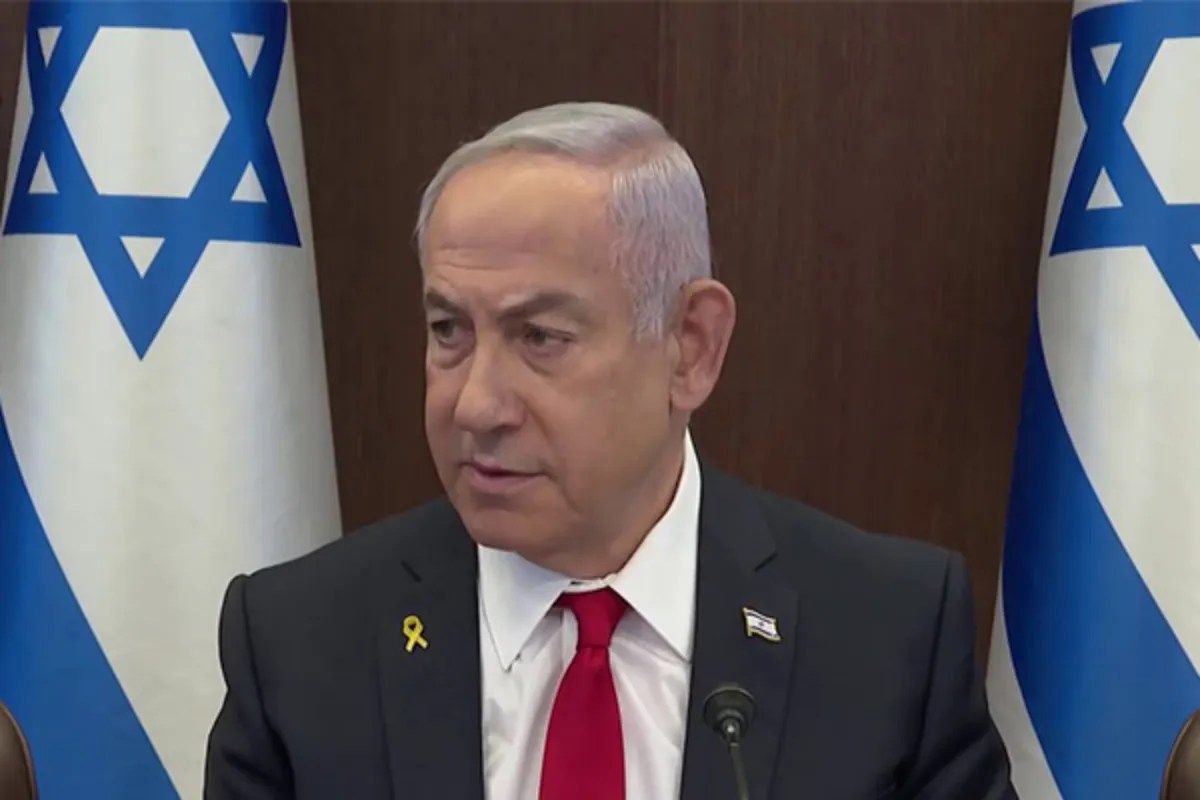
Benjamin Netanyahu has finally admitted that former Egyptian intelligence chief Abbas Kamel landed in Israel shortly before the October 7, 2023 Hamas attack, yet the prime minister insists they never met and demands to know who actually spoke with the visiting spy chief. That admission exposes a much deeper rot than a simple diplomatic scheduling mix-up. A sovereign intelligence chief flew into Ben-Gurion International Airport for roughly an hour, and three years later the head of Israel's government claims on television that he still does not know whom Kamel met or why.
If a leader does not know which officials inside his own security apparatus hosted a foreign intelligence chief days before the worst security breach in the country's history, then command and control were already fractured. Worse still, the public debate keeps getting trapped in a binary argument: either Netanyahu was explicitly warned and ignored it, or no warning ever reached him. Intelligence failures rarely work that cleanly. They usually happen when political assumptions, bureaucratic blind spots, and diplomatic habits turn a real signal into background noise.
The Runway Admission That Raised More Questions Than It Answered
For years, denials around the pre-October 7 contacts between Cairo and Jerusalem sounded like standard political damage control. In late September 2026, fresh reporting revived claims that Kamel had visited Israel in late September 2023 and pressed Israeli officials with blunt warnings about Gaza, followed by phone calls and warnings that continued almost up to the attack. By mid-October 2026, Netanyahu went on Channel 14 and acknowledged that Kamel had indeed been in Israel before October 7—while arguing that their schedules did not overlap and questioning why an intelligence chief would meet a head of state anyway.
That claim runs straight into documented history. Netanyahu had hosted Kamel at his official Jerusalem residence in May 2021, and again later that year around the Gaza conflict, when Cairo acted as a primary channel between Jerusalem and Hamas. Intelligence chiefs in the Middle East routinely deal with political leaders when mediation, quiet ceasefires, or economic relief packages are on the table. Pretending the channel did not exist—or acting surprised that a spy chief might carry a message upward—reads less like an airtight defense and more like a deflection.
At the same time, Netanyahu's demand for surveillance footage and records to see whom Kamel met points to a real dysfunction. In a tightly controlled security environment, a high-level visitor from Egypt does not simply stroll through airport customs unnoticed. If the prime minister genuinely did not know who received Kamel, that points to one of two uncomfortable realities: either a breakdown in internal reporting between security agencies and the political leadership, or a political culture where inconvenient warnings from regional mediators were filtered out before they reached the top floor.
Why a Warning About "Gaza Blowing Up" Missed the Actual Plot
Anyone who has watched intelligence crises unfold over decades knows how easy it is to miss the forest while arguing over the exact wording of a single tree. Accounts of Kamel's message describe warnings that Gaza could "blow up" or turn "volatile" if Israel did not change course, rather than a neat dossier containing exact breach points, troop movements, or a calendar date for October 7.
Skeptics of the "ignored warning" narrative have a fair point when they ask how much operational detail Cairo actually possessed. Reports indicate that Yahya Sinwar and his inner circle kept the October 7 assault tightly compartmentalized, even hiding key aspects from allies like Hezbollah and Iran to prevent leaks. Assessments pointing to Sinwar's shifting tone or frequent meetings between Hamas and Palestinian Islamic Jihad reflect behavioral inference rather than an exact operational blueprint.
A strategic warning of impending explosion is not the same thing as tactical intelligence of a coordinated border invasion—yet dismissing a strategic warning because it lacks tactical detail is how surprise attacks succeed.
That distinction matters. When Egyptian officials warned that pressure and stalemate in Gaza risked a major eruption, Israeli decision-makers had heard variations of that argument for years. In intelligence analysis, familiarity breeds numbness. Analysts and policymakers develop confirmation bias, interpreting new signs of tension through old assumptions rather than testing whether the opponent has changed its doctrine entirely.
If Jerusalem viewed Hamas as deterred and focused on economic calm or governance headaches, a warning framed around broader instability sounded like Cairo's usual pitch for easing pressure on Gaza. Instead of asking what kind of explosion Hamas was preparing, the prevailing mindset treated warnings of instability as routine regional bargaining.
Bureaucratic Friction Inside the Security Chain
A single foreign visit rarely causes a catastrophic failure on its own. It takes an entire chain of habits to turn a visit into a blind spot.
Consider how information moves—or stalls—between foreign intelligence services, domestic security agencies, military intelligence, and the prime minister's office. Even when foreign counterparts share concerns, those assessments must survive translation, skepticism, and turf boundaries. If one agency treats a foreign intelligence chief's visit as a diplomatic courtesy or a routine mediation stop, while another treats it as a security alert, the signal gets diluted before anyone synthesizes it.
Public disputes between Netanyahu and former security officials over warnings and accountability have only deepened the fog. When political leaders and intelligence veterans trade accusations through media interviews and lawsuits instead of an independent, transparent state inquiry, the public is left with competing fragments rather than a verified timeline.
| Factor | What It Suggests | Where Evidence Remains Incomplete |
|---|---|---|
| Kamel's pre-October 7 trip | Flight and visit acknowledgments show high-level Egyptian contact occurred shortly before the attack. | Exact meetings, attendees, and verbatim exchanges remain disputed in public accounts. |
| Nature of Cairo's warnings | Reports point to broad warnings of escalation in Gaza rather than specific attack plans. | Whether specific actionable indicators existed or were shared remains unverified publicly. |
| Netanyahu's public denial | Netanyahu states he did not meet Kamel and questions who hosted him. | Past meetings between the two in 2021 undercut the claim that spy chiefs never deal with heads of state. |
| Political timing | Renewed leaks and denials surfaced amid heated domestic Israeli politics. | Partisan spin makes separating genuine oversight from political point-scoring harder. |
Notice how each row in that table carries a catch. That is the honest reality of investigative work when key records are classified or contested. Overstating what is proven damages credibility just as much as covering up what went wrong.
Regional Mediation and the Trap of Familiarity
Egypt occupies a uniquely awkward position whenever violence flares in Gaza. Cairo shares a border with Gaza, worries about spillover and instability in Sinai, and acts as an indispensable intermediary between Israel, Hamas, and Western capitals. Because Egypt speaks to Jerusalem and Gaza alike, its warnings often blend strategic threat perception with policy prescriptions—such as urging restraint, calm, or economic measures to prevent a broader collapse.
In diplomacy, that dual role is a feature. In intelligence warning, it creates a subtle trap. When a messenger has an institutional interest in a particular policy outcome, decision-makers sometimes discount the warning as advocacy. You see this dynamic across geopolitical flashpoints everywhere: policymakers hear "if you do not change course, things will blow up" so often from neighbors and mediators that they stop treating the phrase as an urgent risk indicator.
Meanwhile, Hamas exploited that exact blind spot. By projecting restraint or focusing on day-to-day tactical friction while concealing massive preparations, the group widened the gap between what Israeli leaders believed was happening and what was actually underway. Even if Egyptian intelligence lacked the exact October 7 battle plan, a warning that the pressure cooker was nearing its limit deserved rigorous stress-testing rather than automatic dismissal.
What Accountability Actually Requires Now
Shouting across talk shows about who landed at Ben-Gurion Airport and who checked their phone is no substitute for institutional reckoning. Real accountability requires looking at three concrete mechanisms that fail when governments rely on improvisation:
- Clear chain-of-custody for foreign warnings: Every significant warning or assessment from a foreign intelligence service—whether delivered formally, by phone, or during a brief stopover—must be logged, cross-checked against domestic collection, and routed through a documented briefing path so no leader can credibly claim ignorance of who received it.
- Red-teaming prevailing assumptions: Intelligence units need structured contrarian reviews that explicitly challenge consensus views like "the adversary is deterred" or "this warning is just political leverage."
- Independent post-mortems insulated from politics: When investigations become weapons in domestic power struggles, both the public and the security services lose trust in the findings.
Until those mechanics are examined honestly—without cherry-picking facts to protect a political legacy or score a partisan point—the debate over Abbas Kamel's visit will keep circling the same runway while the real lessons stay buried on the tarmac.