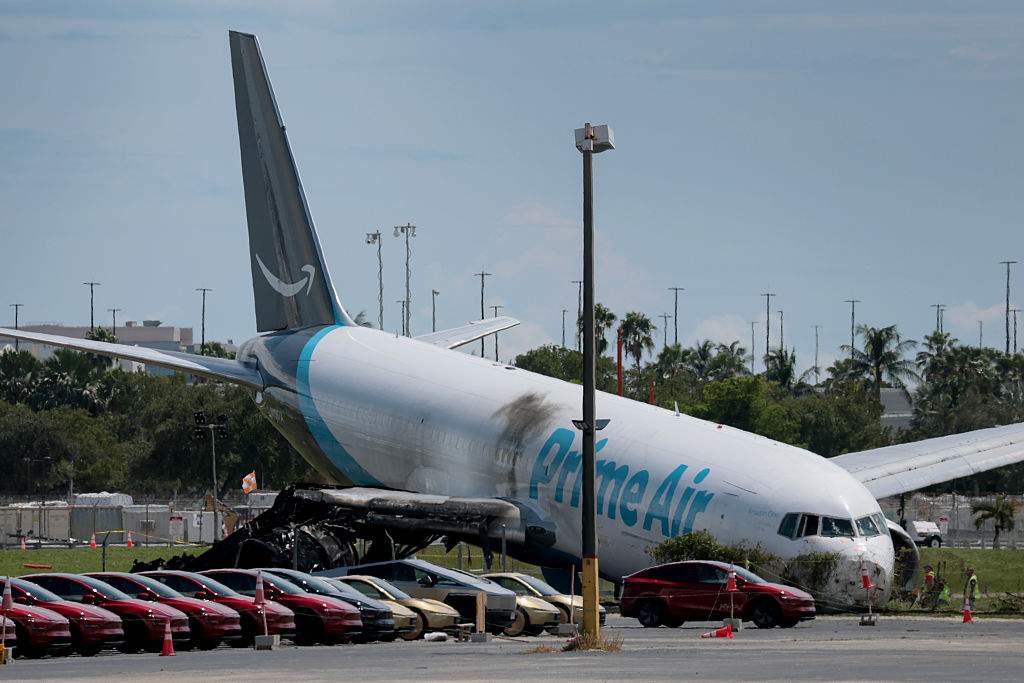
The corporate machinery of modern online retail relies on a fragile illusion of effortless velocity. Behind every guaranteed delivery window sits an intricate network of subcontracted air carriers, overworked flight crews, and compressed schedules that stretch commercial aviation to its structural limits. When Atlas Air Flight 3591 nosedived into Trinity Bay outside Houston, killing Captain Ricky Blakely, First Officer Conrad Jules Aska, and jumpseat pilot Sean Archuleta, the tragedy ripped open a window into the darker side of outsourced cargo operations.
Operating on behalf of Amazon Prime Air, the Boeing 767 freighter was not flying under the direct corporate banner of the retail giant. It was flown by a third-party wet-lease operator, a standard practice that allows tech and retail conglomerates to scale logistics empires while insulating themselves from the direct liabilities of flight operations. This separation between brand marketing and physical execution creates a dangerous grey zone in aviation safety, where cost-cutting pressures cascade downward onto regional carriers and contract flight crews.
The National Transportation Safety Board eventually laid bare a terrifying sequence of events in the cockpit. Encountering turbulence and a heavy cold front on descent into Houston, an inadvertent activation of the go-around mode triggered sudden engine thrust. The first officer, experiencing severe spatial disorientation, responded with improper nose-down control inputs that forced the aircraft into an unrecoverable steep dive. Thirty-two seconds elapsed from the accidental thrust activation to the final impact.
Yet focusing solely on those final thirty-two seconds misses the systemic rot that investigative reporters and aviation safety experts have flagged for years. The human element in the cockpit is only as reliable as the training pipelines and institutional support structures behind them.
The Subcontractor Burden
The economics of air cargo changed permanently as next-day and same-day delivery became the baseline consumer expectation. Legacy passenger airlines operate under rigid scheduling constraints, but cargo carriers face unique pressures. They fly mostly at night, turning planes around in hours to feed sorting hubs when the rest of the world sleeps.
Regional and wet-lease operators often function on razor-thin margins. To win lucrative contracts from logistics behemoths, these carriers must bid aggressively. That financial pressure filters directly into pilot recruitment, training budgets, and scheduling departments.
First Officer Aska had a history of performance and training difficulties at previous employers, struggling with basic instrument flying and cockpit stress management. In a fully transparent, highly standardized major passenger airline environment, these red flags often trigger intensive remediation or career interventions. In the high-turnover underbelly of cargo operations, pilot shortages and desperate staffing needs routinely override institutional caution. Carriers need bodies in seats to keep the boxes moving.
When the NTSB issued its final findings, it took direct aim at the aviation industry's fragmented hiring processes and inadequate performance measurement metrics. The safety board noted that vetting procedures failed to flag deep-seated aptitude issues before they manifested in fatal emergencies.
The Illusion of Direct Oversight
Consumers ordering goods online assume a single, unified entity controls the entire journey from warehouse shelf to front porch. The branding on the fuselage says Amazon Prime Air, reinforcing the mental shortcut that the tech company manages the flight deck.
The legal reality is radically different. Atlas Air operated the flight under a standard dry or wet-lease agreement, meaning the personnel, maintenance protocols, and operational control belonged to the carrier, not the retailer. This corporate firewall protects logistics companies from regulatory liability while allowing them to dictate strict performance metrics and delivery timetables to the airlines carrying their freight.
When a plane goes down, public attention focuses briefly on the victims and their grieving families, as it rightly should. Captain Blakely was an experienced aviator who had logged over eleven thousand hours. Archuleta was weeks away from starting a new career chapter at a major passenger carrier. Aska was a dedicated professional trying to build a career in a demanding industry. Their lives were reduced to statistical line items in a federal accident docket because the systemic pressures of the cockpit environment created a breeding ground for catastrophic error.
The Cost of Speed
The logistics boom shows no signs of slowing down, and the appetite for airborne freight remains insatiable. Cargo fleets continue to expand, pushing airports to capacity and adding thousands of nightly flight movements over populated areas.
Every time a consumer clicks for expedited shipping, they are participating in a system that values temporal efficiency above nearly all else. The infrastructure supporting this convenience depends on an invisible workforce operating heavy machinery under immense pressure, often out of the public eye.
The tragedy in Trinity Bay was not an isolated freak accident born of bad weather alone. It was the predictable intersection of human vulnerability, corporate opacity, and an aviation sector strained to its breaking point by the relentless demands of modern consumerism. Until the structural incentives governing cargo pilot training and carrier accountability undergo fundamental reform, the ghosts of Flight 3591 will continue to fly alongside every overnight shipment.


