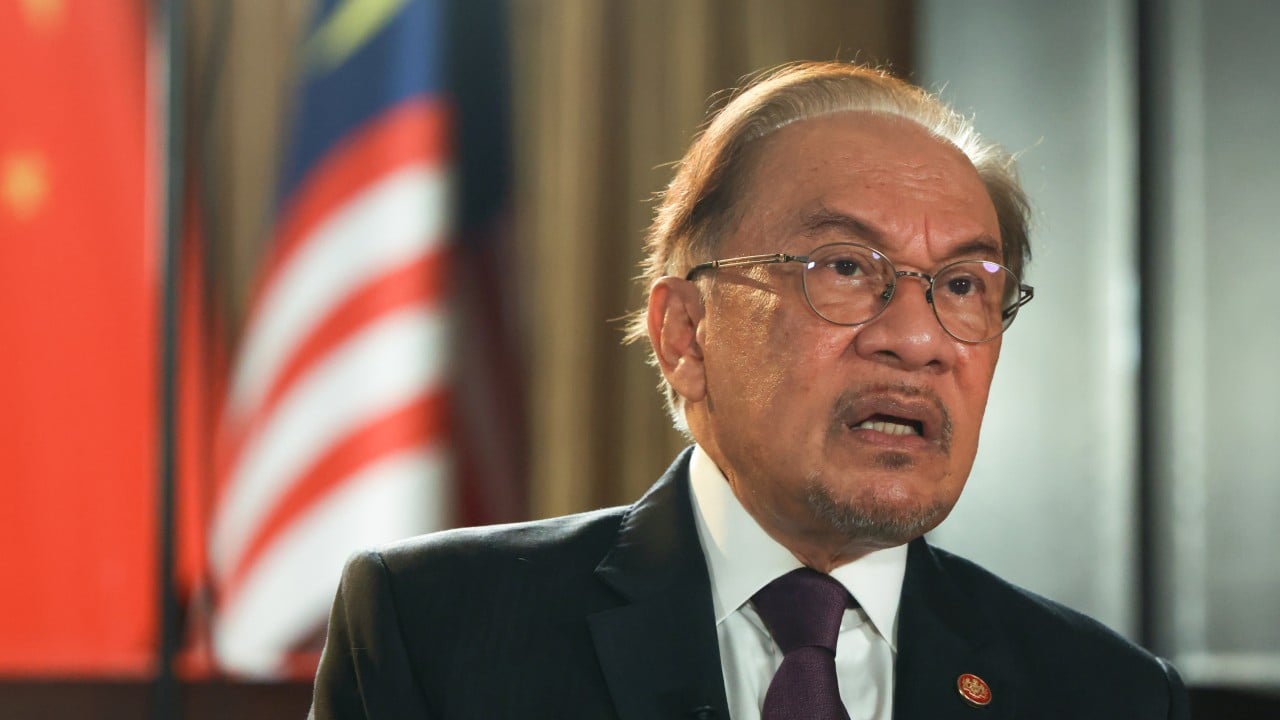
Malaysian Prime Minister Anwar Ibrahim is not acting as Beijing’s proxy, nor is he abandoning decades of strategic neutrality. Instead, his vocal pushback against Western criticism over Malaysia’s deepening ties with China reflects a cold, calculated economic survival strategy. Facing sluggish domestic productivity, intense competition for global supply chains, and a widening infrastructure gap, Putrajaya is prioritizing immediate capital inflows and industrial upgrading over Washington’s geopolitical anxieties. What foreign commentators frequently misread as ideological alignment is, in reality, pragmatic hedging executed by a middle power refusing to become collateral damage in a superpower cold war.
The debate flared sharply after Anwar repeatedly dismissed accusations from Western officials and analysts that his administration has tilted dangerously toward Beijing. To understand why those accusations miss the mark, you have to look past diplomatic rhetoric and examine the ledger books in Kuala Lumpur, the factory floors in Penang, and the shipping lanes of the Strait of Malacca. If you enjoyed this post, you should check out: this related article.
The Anatomy of a Geopolitical Misreading
Western foreign policy circles often view Southeast Asia through a binary lens. You are either with the rules-based international order championed by Washington, or you are drifting into Beijing’s sphere of influence. That framework breaks down the moment it hits Malaysian soil.
Malaysia has maintained formal diplomatic relations with the People’s Republic of China since 1974, making it the first member of the Association of Southeast Asian Nations (ASEAN) to do so. Long before Anwar took office in late 2022, Malaysian leaders across the political spectrum understood a basic geographic reality. China is an immediate neighbor and an economic juggernaut. The United States is an ocean away. For another angle on this event, refer to the latest update from TIME.
When Anwar defends his engagement with Beijing—or criticizes what he calls "China-phobia" in the West—he is articulating a consensus that runs deep within Malaysia’s civil service and business establishment. The critique from Washington and European capitals usually centers on three flashpoints: Malaysia’s warm reception of Chinese state-backed infrastructure projects, its reluctance to publicly confront Beijing over maritime disputes in the South China Sea, and its openness to Chinese telecommunications and technology firms.
Critics argue these moves compromise Malaysian sovereignty. Anwar’s counterargument is blunt. Western nations routinely lecture developing economies about the risks of Chinese capital while failing to offer comparable financing, market access, or technology transfers on viable timelines. For a Malaysian prime minister tasked with lifting a middle-income economy out of stagnation, lecture-heavy diplomacy pays zero bills.
Follow the Capital Not the Speeches
Diplomacy is cheap. Capital expenditure is real.
China has been Malaysia’s largest trading partner for over fifteen consecutive years. Bilateral trade routinely clears hundreds of billions of ringgit annually, dwarfing trade volumes with almost any other single nation. More importantly, the nature of that capital has evolved dramatically over the past decade.
Early Belt and Road Initiative (BRI) projects in Malaysia, such as the East Coast Rail Link (ECRL) and the Forest City development in Johor, drew heavy scrutiny for inflated costs, opaque contracting, and questionable commercial viability. When Anwar’s political coalition briefly held power in 2018 under Mahathir Mohamad, Putrajaya aggressively renegotiated the ECRL, slashing billions off the price tag and demanding greater local participation. That history proves Malaysia is hardly a passive recipient of Chinese terms.
Today, the money flowing from China into Malaysia looks very different. It is heavily concentrated in high-value manufacturing, green energy, and digital infrastructure.
- Electric Vehicles and Batteries: Chinese automakers like Geely—which holds a major stake in Malaysia’s national carmaker Proton—and BYD have poured capital into local assembly and regional distribution hubs.
- Semiconductors and Electronics: While Penang remains a stronghold for American and European chipmakers like Intel and Infineon, Chinese firms are increasingly setting up back-end packaging and testing facilities in Malaysia to bypass U.S. tariffs and export controls.
- Data Centers: Johor, sitting just across the causeway from Singapore, has experienced a massive boom in hyperscale data centers, attracting billions in investment from both American tech giants and Chinese cloud providers.
This is the China Plus One strategy in action. Multinational corporations—both Western and Chinese—are diversifying their supply chains to insulate themselves from Washington-Beijing trade wars. Malaysia sits in the sweet spot. It offers established industrial parks, English-speaking engineers, a solid legal framework, and relative insulation from direct U.S. sanctions.
If Anwar suddenly cooled relations with Beijing to appease Western hawks, he would instantly choke off one of the primary engines driving Malaysia’s current industrial revival. No rational head of government would commit economic self-sabotage to win applause in Washington think tanks.
The Quiet American Footprint Nobody Mentions
The narrative that Malaysia has "chosen" China collapses entirely when you examine Western investment data.
The United States remains one of Malaysia’s largest sources of cumulative foreign direct investment (FDI). Over the past few years, American tech and semiconductor heavyweights have announced multi-billion-dollar expansions across Malaysia. Intel committed billions to expanding its advanced packaging facilities in Penang. Amazon Web Services, Microsoft, and Google have all pledged massive capital outlays to build cloud regions and data center infrastructure across the country.
In security and defense, the quiet alignment is even more telling. Malaysia conducts regular joint military exercises with the U.S. Navy and Air Force. It relies heavily on American and European defense hardware, intelligence sharing, and maritime domain awareness programs to monitor its exclusive economic zone.
Anwar plays a dual game, and he plays it openly. He travels to Beijing to court green-tech investment and praise China’s economic rise. Months later, he hosts senior U.S. officials in Putrajaya, courts Silicon Valley executives in San Francisco, and welcomes European industrialists to Kuala Lumpur.
This is classic non-aligned hedging. By refusing to pick a side, Malaysia forces both superpowers to compete for its favor. The moment Putrajaya aligns exclusively with Washington, Beijing punishes it economically. The moment it becomes a true vassal of Beijing, Washington cuts off high-end semiconductor technology transfers and Western multinationals pull back. Ambiguity is not a flaw in Anwar’s foreign policy; it is the core mechanism that keeps both superpowers investing.
The South China Sea Tightrope
Where Anwar’s critics have their strongest case is in the contested waters of the South China Sea.
Beijing’s sweeping claims over the region, demarcated by its controversial ten-dash line, overlap directly with Malaysia’s Exclusive Economic Zone (EEZ) off the coast of Sarawak and Sabah on the island of Borneo. This is not an abstract cartographic dispute. Those waters hold vital offshore oil and gas fields operated by Malaysia’s state energy giant, Petronas.
Chinese Coast Guard vessels have repeatedly patrolled near Malaysian exploration rigs, creating tense standoffs at sea. Unlike the Philippines, which has adopted a strategy of aggressive public transparency—broadcasting collisions, water-cannon attacks, and territorial encroachments to rally international support—Malaysia handles these incursions quietly.
Putrajaya lodges formal diplomatic protests behind closed doors while keeping public rhetoric muted. Anwar has argued that megaphone diplomacy only escalates tensions and invites external military interference into Southeast Asia.
There is a pragmatic logic here, though it carries steep risks. Petronas has continued drilling and extracting hydrocarbons in contested blocks despite Chinese harassment, effectively maintaining operational control on the ground without triggering a shooting war. Yet critics within Malaysia’s own security establishment warn that quiet accommodation can slowly normalize Beijing’s presence in Malaysian waters. If Chinese vessels remain permanently stationed near Sarawak’s gas fields, de facto control begins to shift regardless of what diplomatic notes are filed in secret.
This is the clearest gray area in Anwar’s balancing act. Quiet diplomacy preserves trade stability today, but it risks eroding maritime sovereignty tomorrow.
Domestic Politics Drive Foreign Policy
To fully grasp why Anwar rejects the "pro-China" label—yet refuses to bow to Western pressure—you have to look at Malaysia’s internal political arithmetic.
Anwar leads a fragile unity government stitched together from former political rivals after a hung parliament in 2022. His administration faces constant pressure from a conservative opposition coalition that portrays his government as weak on defending Malay-Muslim interests and overly accommodating to external influences.
In this domestic climate, taking a sharp, vocal stance against Western hypocrisy plays remarkably well with Anwar’s political base. When Anwar criticizes Western double standards on global trade, climate finance, or conflicts in the Middle East, he reinforces his credentials as an independent, principled leader of the Global South.
Simultaneously, Malaysia’s large ethnic Chinese business community—a vital constituency for key parties within Anwar’s ruling coalition—strongly favors stable, productive commercial ties with mainland China. Smooth bilateral relations unlock cross-border joint ventures, tourism revenue, and export markets for Malaysian palm oil, durians, and manufactured goods.
Foreign policy in Malaysia is never purely about international relations. It is an extension of domestic coalition management. A posture of assertive neutrality satisfies Malay-Muslim voters skeptical of Western interventionism while delivering tangible commercial wins for the business community.
The BRICS Signal and the Global South Shift
Anwar’s decision to apply for Malaysia to join BRICS—the bloc of emerging economies originally comprising Brazil, Russia, India, China, and South Africa—sent another shockwave through Western diplomatic circles. Commentators immediately framed the move as further proof of Malaysia’s drift toward an anti-Western axis.
That reading ignores what BRICS actually represents to mid-sized developing nations.
For Malaysia, BRICS is not a military alliance or an ideological pact. It is a hedge against a global financial architecture still dominated by the U.S. dollar and Western institutions. Having lived through the 1997 Asian Financial Crisis—when currency speculation devastated the ringgit and International Monetary Fund (IMF) prescriptions were viewed across Southeast Asia as punitive—Malaysian policymakers remain deeply wary of over-reliance on Western financial mechanisms.
Engaging with BRICS, alongside active participation in the Regional Comprehensive Economic Partnership (RCEP) and the Comprehensive and Progressive Agreement for Trans-Pacific Partnership (CPTPP), allows Malaysia to diversify its trade settlements, expand local currency swap agreements, and gain a seat at the table where emerging-market trade rules are debated.
Notice the pattern. Malaysia stays inside Western-backed trade frameworks like the CPTPP while simultaneously joining Beijing-backed groupings like BRICS. It refuses to close any door.
The Real Vulnerability Nobody Is Watching
The obsession with whether Anwar is "too pro-Chinese" distracts from the actual structural risks facing Malaysia’s economy. The real danger is not ideological capture by Beijing; it is economic dependency and industrial hollowing-out.
Consider a hypothetical scenario playing out across several Southeast Asian manufacturing hubs. A foreign manufacturer sets up a local assembly plant to qualify for regional tariff exemptions, imports 85 percent of its high-value components from its home country, employs local workers only for low-margin final assembly, and repatriates the bulk of the profits. On paper, foreign direct investment numbers soar. In reality, local technology transfer is minimal, and domestic suppliers get squeezed out.
Malaysia faces this exact risk with both Western and Chinese capital, though the immediate influx of Chinese state-linked firms poses unique challenges:
- Supply Chain Captivity: Large Chinese infrastructure and manufacturing firms frequently bring their own ecosystem of sub-contractors, equipment suppliers, and engineering teams, limiting spillover benefits for local Malaysian small and medium enterprises (SMEs).
- Dumping and Price Wars: Excess industrial capacity inside China—particularly in steel, solar panels, petrochemicals, and consumer goods—threatens to flood Malaysian domestic markets, undercutting local manufacturers who cannot compete with state-subsidized Chinese pricing.
- Geopolitical Blowback: As Washington tightens rules of origin to prevent Chinese goods from being rerouted through third countries to evade tariffs, Malaysia risks getting caught in the crossfire. If U.S. trade regulators conclude that Malaysian export hubs are merely serving as transshipment points for Chinese components, Putrajaya could face sweeping retaliatory tariffs that devastate its legitimate export sector.
Anwar’s administration knows these risks exist. That is why Putrajaya has begun tightening local content requirements, pushing for mandatory skills training for Malaysian engineers, and scrutinizing foreign investments more closely for genuine value-add. Execution, however, remains uneven.
Why the West Keeps Losing the Narrative
If Western policymakers want Malaysia to maintain a true strategic balance, lecturing Anwar Ibrahim about the perils of Chinese influence is the single least effective tactic they could choose.
Southeast Asian leaders have long memories. They remember when Western capital fled the region during financial downturns while Chinese state banks stepped in with liquidity. They see how difficult and slow it is to secure Western development financing compared to the speed with which Beijing approves and deploys capital. And they recognize that the United States and Europe themselves continue to conduct hundreds of billions of dollars in trade with China every year, even while urging smaller nations to "de-risk."
To a seasoned observer in Kuala Lumpur, Western warnings often sound less like principled concern for Malaysian sovereignty and more like anxiety over losing market dominance.
Anwar Ibrahim is not naive about Beijing’s ambitions, nor is he blind to the leverage China wields over smaller neighbors. He is simply operating according to the iron law of middle-power statecraft: maximize leverage, minimize dependency, and never fight another superpower’s war on your own soil. Until Washington and Brussels offer an economic proposition in Southeast Asia that matches the scale, speed, and concreteness of Beijing’s checkbook, Putrajaya will keep taking China’s money—and refusing to apologize for it.