Australia is committing A$28 million to build a biological and physical firewall across a narrow desert corridor to stop invasive cane toads from breaching the Pilbara region of Western Australia. The funding targets the Fitzroy-to-Eighty Mile Beach corridor, a stark stretch of arid coastline where the Great Sandy Desert nearly meets the Indian Ocean. If the amphibians cross this natural chokepoint, they will gain unrestricted access to over 500,000 square kilometers of sensitive wetlands, gorges, and pastoral land, threatening native predators with extinction.
It is a desperate stand. For nearly ninety years, wildlife managers have watched a single, catastrophic agricultural blunder from 1935 march relentlessly across the continent. What started as a few thousand beetles-eating amphibians released in Queensland has become an unstoppable continental invasion, leaving silent riverbanks and devastated predator populations in its wake. Now, the battle line has been drawn in the red dust of the northwest.
The Ghosts of 1935
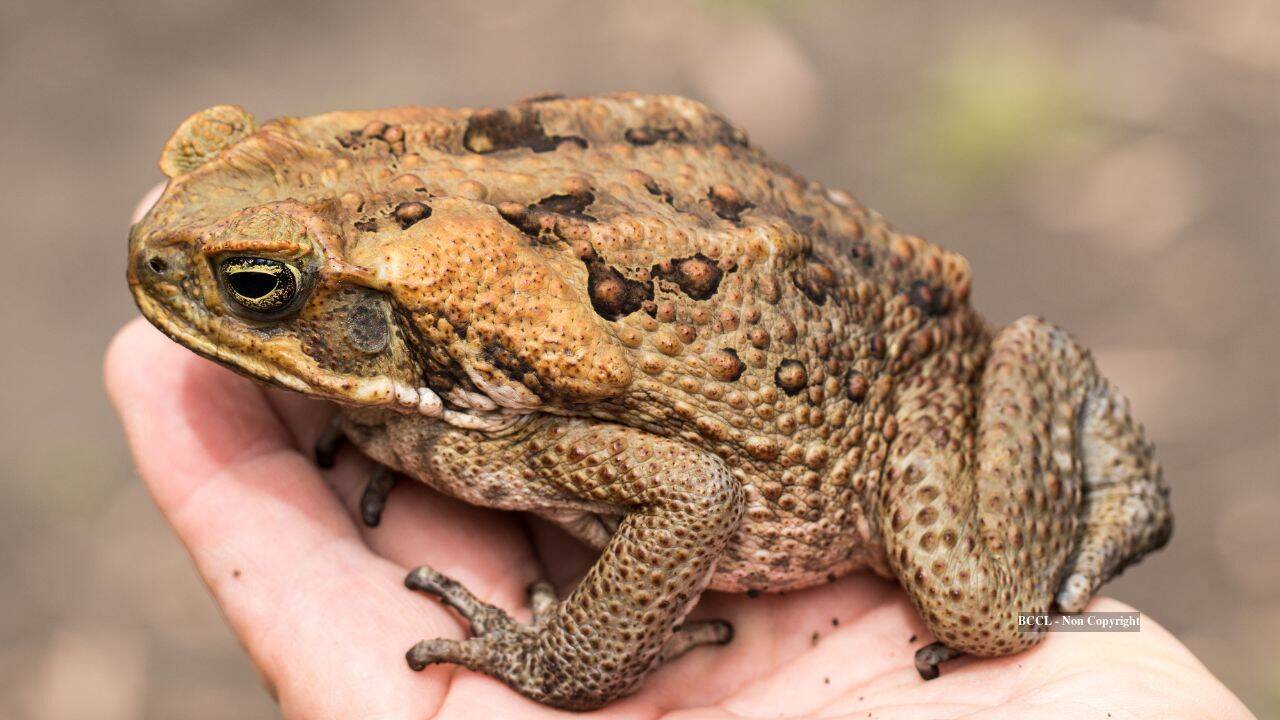
To understand why Canberra and Perth are pouring tens of millions of dollars into a remote stretch of scrubland, you have to look back at a staggering failure of ecological foresight. In June 1935, the Bureau of Sugar Experiment Stations imported just over 100 Rhinella marina—commonly known as cane toads—from Hawaii to Gordonvale, North Queensland. The mission was simple on paper. Sugar cane farmers were losing crops to the native grey-backed cane beetle, and agricultural officials believed the giant, voracious toad would solve the pest problem without chemical pesticides.
They were wrong on every count. The cane beetles lived high up on the sugar cane stalks, completely out of reach of ground-dwelling toads. Worse, the beetles were active during the day while the toads hunted at night. The two species barely interacted.
Instead of eating the beetles, the toads ate everything else. With no natural predators in Australia capable of tolerating their lethal bufotoxin, their numbers exploded from a few thousand to an estimated two billion. They marched west at roughly 50 to 60 kilometers per year, a toxic wave rolling across the Northern Territory, through Kakadu National Park, and into the Kimberley region of Western Australia.
Why the Pilbara Matters
The Pilbara is not just another stretch of Australian outback. While the world knows it primarily as the economic engine of Australia’s iron ore industry, ecologically it is a biological ark. Separated from the rest of the continent by vast deserts, the region harbors a high concentration of endemic species found nowhere else on Earth.
Its permanent freshwater pools, sheltered inside deep gorges like those in Karijini National Park, act as refuges during brutal dry seasons. These waterholes are packed with life. Native northern quolls, freshwater crocodiles, goannas, and Pilbara olive pythons rely on these isolated oases to survive.
None of these native predators evolved alongside toads. When a goanna or a quoll bites into a cane toad, glands behind the amphibian’s eyes secrete a milky white venom containing bufadienolides. The toxin causes rapid cardiac arrest. A large monitor lizard can die within minutes of grabbing a toad. In regions already colonized by the amphibians, native predator populations have crashed by up to 90 percent within a few years of the invasion front arriving.
The Geography of a Chokepoint
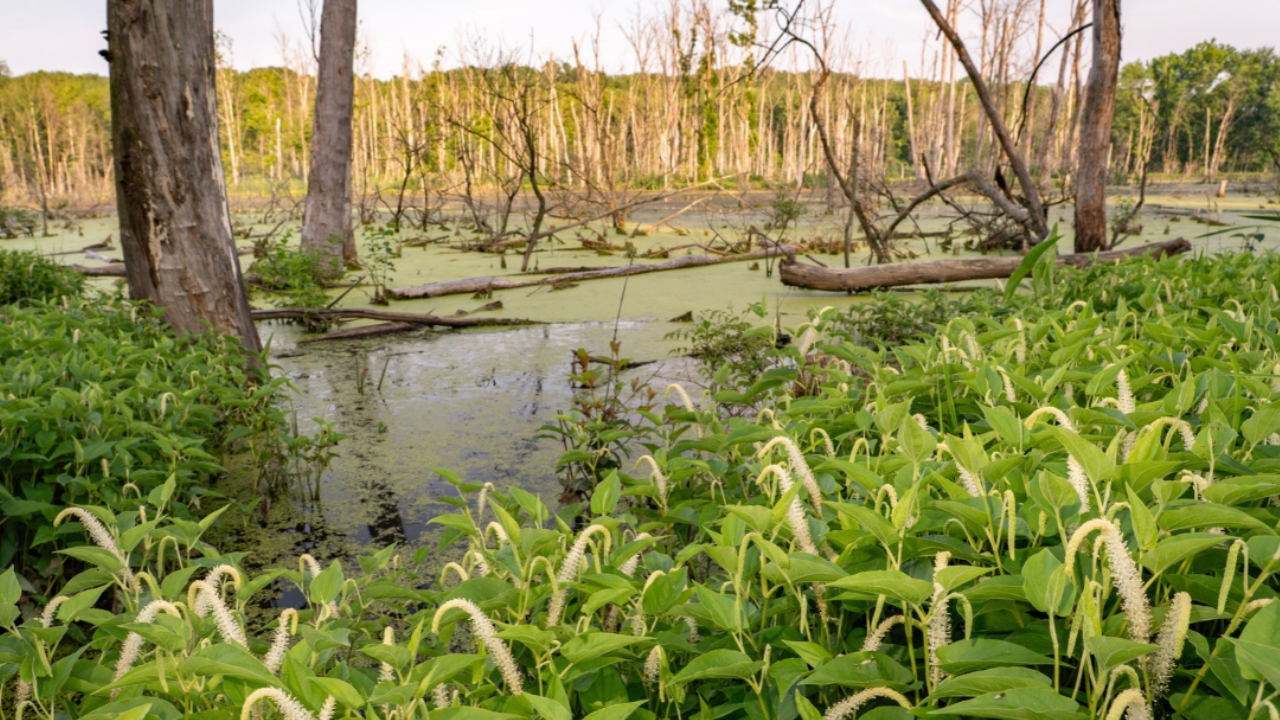
Nature, however, handed conservationists one last geographical advantage. Between the tropical Kimberley and the arid Pilbara lies a narrow strip of land known as the Eighty Mile Beach corridor. Here, the hyper-arid sands of the Great Sandy Desert push right up against the coastal salt flats.
Cane toads are amphibians. Despite evolving thicker skin and greater stamina than their South American ancestors, they still need regular access to fresh water to rehydrate and breed. In the wet tropics, they move freely across the landscape. At Eighty Mile Beach, the desert forms a natural wall.
The only way through for a toad is by hopping from one artificial water source to the next. Over the past century, cattle stations along this coastal strip have installed hundreds of bores, troughs, and earthen dams to water livestock. To a cane toad, this network of pastoral infrastructure is a highway across the desert.
The A$28 million strategy hinges on breaking that highway. Instead of trying to poison or trap millions of toads—an approach that has failed everywhere else—the project aims to modify the landscape itself. By replacing open earthen dams with elevated tanks and toad-proof fencing around cattle troughs, land managers can sever the hydration lifeline. Without water every few days, toads attempting to cross the corridor simply desiccate and die in the desert heat.
Evolution Against the Clock
The plan is sound in theory, yet wildlife biologists know they are fighting a moving target. Cane toads are not static creatures; they are actively evolving to defeat Australian geography.
Over decades of westward expansion, the toads at the invasion front have physically changed. Research led by evolutionary biologists in northern Australia revealed that vanguard toads have developed longer legs, greater endurance, and more directional movement patterns than their sedentary cousins back in Queensland. Natural selection favored the fastest, toughest individuals—the ones that reached new territory first and claimed the best breeding grounds.
This phenomenon, known as spatial sorting, means the toads approaching the Pilbara are elite athletes compared to the sluggish amphibians introduced in 1935. They travel farther in a single night. They tolerate drier conditions. They take bigger risks.
The Behavioral Trap
To counter these super-toads, the new funding also supports biological conditioning alongside physical barriers. One of the most promising weapons in the arsenal is conditioned taste aversion.
Scientists discovered that while an adult cane toad is lethal to a northern quoll or a blue-tongued skink, a tiny juvenile toad—or a specially formulated toad sausage laced with a nausea-inducing chemical—is not. When a young predator eats a small toad or a bait sausage, it gets violently ill, vomits, and survives.
The experience leaves a permanent behavioral scar. The predator associates the distinct smell and appearance of a cane toad with severe sickness. When the main invasion front arrives months later, those trained predators ignore the lethal adult toads entirely. Field trials in the Kimberley showed that trained quolls survived at dramatically higher rates than untrained ones, passing the survival advantage down through the ecosystem.
The Economics of Eradication Versus Containment
Twenty-eight million dollars sounds like a massive sum for conservation, particularly in a sector chronically starved of cash. Yet when weighed against the economic and ecological stakes, it is a bargain.
Once an invasive species establishes itself across a landscape the size of the Pilbara, eradication becomes impossible. You cannot fence off half a million square kilometers. You cannot manually remove millions of nocturnal amphibians from rugged, inaccessible gorges. After a breach occurs, taxpayers are stuck funding endless, low-yield management programs forever, while watching iconic wildlife vanish.
By concentrating resources at a single geographic bottleneck, the government is betting on prevention over cure. The funding brings together federal agencies, Western Australian state authorities, pastoralists, and Indigenous ranger groups whose deep knowledge of the country is indispensable for tracking water points and monitoring remote tracks.
The Uncomfortable Truths
Still, veteran conservationists harbor quiet doubts. Any barrier built across a wild landscape is only as strong as its weakest link, and northern Australia is notorious for extreme weather.
A single severe tropical cyclone can dump half a meter of rain on the Eighty Mile Beach corridor in forty-eight hours. Overnight, an arid desert turns into a vast, interconnected sheet of fresh water. During a major flood event, artificial water points become irrelevant. Cane toads can ride floating debris down swollen rivers or hop freely across damp sand for weeks, completely bypassing fenced troughs and dry dams.
Human error poses an equal threat. Cane toads are master hitchhikers. They crawl into swags, hide inside pallets of mining equipment, and tuck themselves into wheel wells of road trains heading south from Broome to Port Hedland. Every day, heavy trucks rumble down the Great Northern Highway carrying supplies to the Pilbara’s massive mining camps. It only takes a single pregnant female falling off a flatbed trailer near a mining camp’s wastewater pond to spark a satellite population behind enemy lines.
A Line in the Red Dust
This is the reality of modern invasive species management. There are no silver bullets, no guaranteed victories, and no clean endings. The A$28 million injection buys time, infrastructure, and boots on the ground at the last defensible chokepoint on the western half of the continent.
Land managers will spend the next several years tearing down open dams, erecting hundreds of kilometers of exclusion fencing, and dropping thousands of aversion baits from helicopters ahead of the front line. Rangers will patrol the tracks at night with headlamps, picking off vanguard toads before they can breed. If the rains hold off and the trucks stay clean, the Pilbara’s gorges might remain silent sanctuaries for quolls and goannas for decades to come—if a single cyclone hits at the wrong moment, ninety years of ecological history will wash straight across the line.