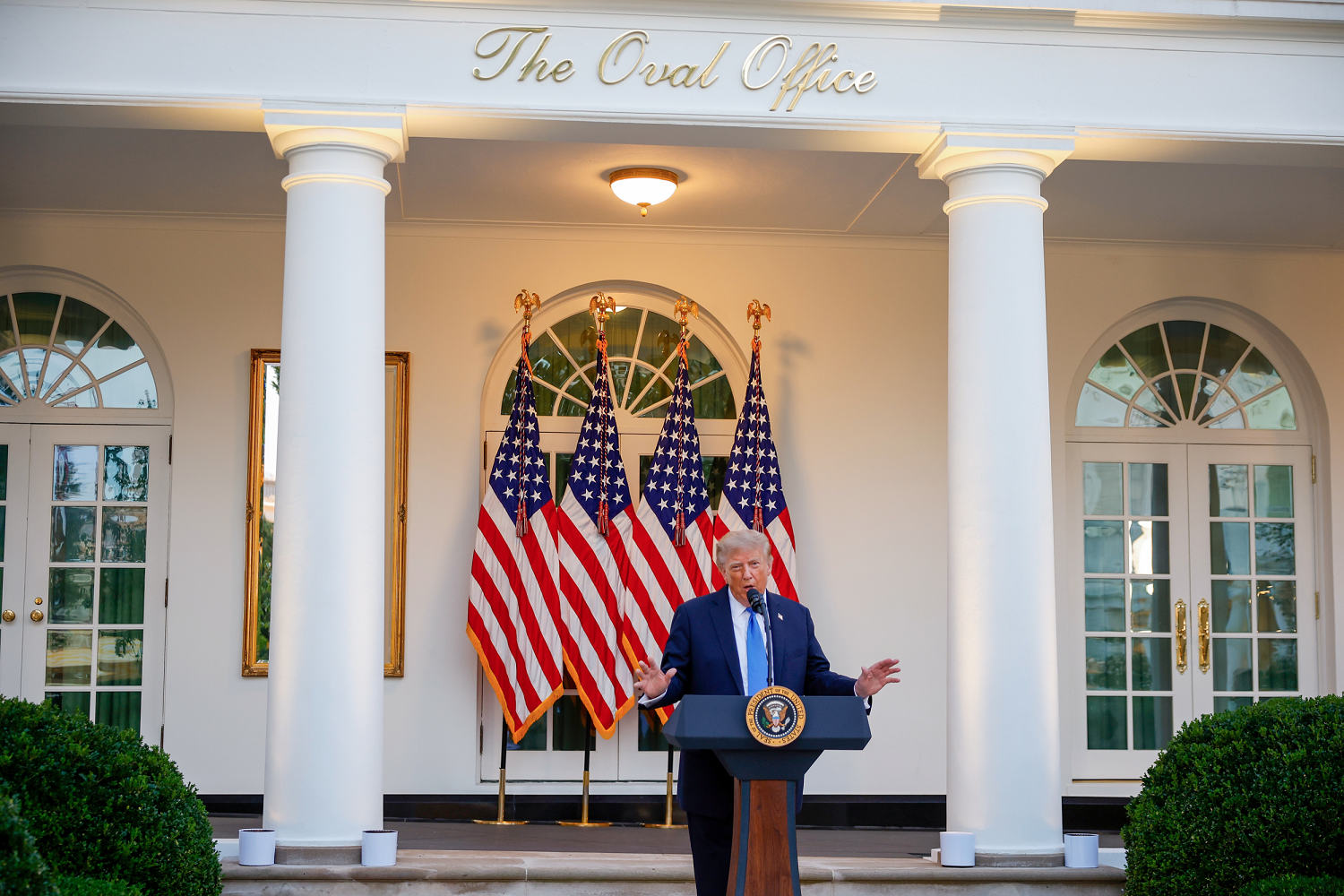
Control of Congress rarely hinges on an entire nation waking up in agreement. Instead, power usually narrows down to a handful of contentious pinpoints on a map. President Donald Trump recently announced that the entire legislative balance for the upcoming midterms comes down to roughly thirty-five specific races.
That number is not arbitrary. It represents the razor-thin margin of error in a polarized Washington, where a minor shift in suburban turnout or rural mobilization can completely rewrite committee chairmanships. Trump pledged to spend the final thirty days before the election campaigning hard in those specific battlegrounds. For an alternative view, read: this related article.
Yet, looking at thirty-five targeted contests reveals a deeper tactical puzzle. Historically, midterm elections function as a referendum on the sitting executive. When a party holds the White House, history suggests a heavy congressional penalty. Trump is attempting to defy that gravitational pull by dragging his personal brand directly into the trenches of the legislative fight.
The Arithmetic of the Thirty-Five
To understand why these thirty-five contests matter, look at the structural mechanics of modern legislative majorities. Most congressional districts are heavily insulated by partisan gerrymandering. Safe seats rarely flip. The universe of genuinely competitive territory shrinks with every decade's redistricting cycle. Similar reporting regarding this has been shared by NBC News.
A candidate running in a suburban swing district faces an entirely different electorate than someone running in a deep-red rural county. In these competitive thirty-five zones, independent voters and moderate leaners hold absolute veto power. Trump's presence in those districts introduces a volatile variable. For some voters, his endorsement acts as an energizing beacon. For others, it serves as a mobilization tool for the opposition.
The strategic calculation relies on turnout rather than persuasion. Modern data analytics allow campaigns to pinpoint low-propensity voters who share populist economic views but routinely skip midterm cycles. By focusing his physical schedule on a compressed thirty-day blitz, Trump aims to force those disengaged voters to the polls.
Past Precedent and Primary Fallout
This cycle differs markedly from traditional presidential midterm strategies. Past executives typically maintained a polite distance from messy primary brawls and targeted general election matchups to preserve party unity. Trump has taken the opposite path. His primary endorsement record spans nearly two hundred races, forcing local party structures to adapt to his personal stamp of approval.
Critics often point to mixed primary outcomes as a sign of vulnerability. Some handpicked challengers fell short against entrenched incumbents or alternative contenders. But primary dynamics rarely mirror general election dynamics. A Republican primary voter operates under a different set of priorities than a general election independent in a contested swing state.
Now, the focus shifts entirely from intra-party squabbles to the broader inter-party war. The thirty-five targeted districts and states represent the final firewall for both parties. In places where the previous presidential margins were razor-thin, local issues collide directly with national economic messaging.
Local Realities Versus National Narratives
National figures love to treat midterms as a singular referendum on the executive branch. Voters on the ground often disagree. A candidate running in a competitive agricultural district must address local water rights, commodity prices, and regional infrastructure needs just as loudly as immigration or federal tax policy.
When a national figure drops into a local district for a high-profile rally, the local narrative inevitably shifts. Media coverage follows the entourage. Complex local debates get swallowed by broader national grievances. For vulnerable incumbents trying to distance themselves from party extremes, a high-profile visit can complicate a carefully calibrated moderate image.
Conversely, for challengers fighting uphill battles against well-funded incumbents, national attention provides oxygen. Free media coverage compensates for fundraising deficits. It forces the opposition to spend defensive resources in places they expected to coast.
The Final Month Strategy
Concentrating energy into the final thirty days before the vote creates logistical nightmares for secretarial staff and local law enforcement, but it maximizes media saturation. Modern political communication runs on momentum. A packed itinerary across multiple time zones creates an inescapable news cycle right as early voting windows open.
The underlying risk remains high. By framing the midterms explicitly around his own political gravity, Trump assumes personal accountability for the outcome. If the party expands its footprint, the strategy will be hailed as a masterclass in populist mobilization. If the firewall collapses, the blame will land squarely in the same place.
The next few weeks will test whether sheer force of personality can overcome structural midterm headwinds in the most competitive zip codes in the country.