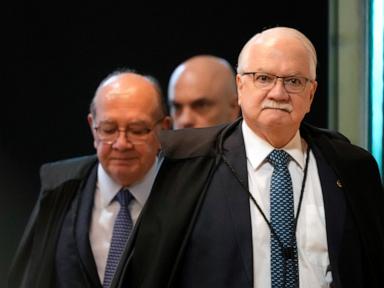
Brazil faces a structural collapse of institutional trust as the explosive fallout from the Banco Master financial fraud collides directly with the upcoming national elections. At the epicenter of this unprecedented fracture are Supreme Federal Court justices Alexandre de Moraes and André Mendonça, who have engaged in an open, bitter war of mutual sanction requests. What began in late 2025 as the liquidation of a high-risk private financial institution has rapidly evolved into a systemic governance crisis. Federal police investigations into disgraced banker Daniel Vorcaro have unearthed incriminating message logs, multi-million dollar legal contracts involving family members, and shadow negotiations that expose the fragile boundary between Brazil's financial elite and its highest court of law.
Understanding how a banking failure metastasized into a constitutional earthquake requires looking closely at the mechanics of the fraud itself. Banco Master expanded its credit portfolio from a modest R$1.4 billion to nearly R$40 billion over a five-year window. This rapid expansion relied on aggressive fixed-term deposit offerings boasting interest rates far exceeding market averages. These instruments were initially propped up by the national deposit insurance framework, but capital was systematically funneled into high-risk operations and fictitious credit portfolios. When regulatory bodies moved to block acquisitions and expose the underlying liquidity hole in late 2025, the bank collapsed, leaving a deficit exceeding R$50 billion and triggering the largest deposit insurance payout in the history of the nation.
The financial crimes investigation, code-named Operation Compliance Zero, quickly crossed the threshold from ordinary white-collar crime into political corruption when federal investigators unlocked Vorcaro's seized digital devices. Phone extractions revealed extensive text exchanges between the banker and prominent judicial figures. Metadata recovery showed Justice Alexandre de Moraes accessing and editing a massive legal-services contract tied to his wife's law firm and Banco Master. Additional communications exposed direct credit card limit arrangements and asset-sharing discussions involving private aircraft. The revelations immediately mobilized political opposition factions and legal scholars, demanding accountability from a magistrate who had previously enjoyed immense public stature for presiding over trials concerning attempts to subvert Brazilian democracy.
The institutional tension escalated sharply when Justice André Mendonça unsealed portions of the federal police dossier and proceeded to interview the imprisoned banker outside standard procedural protocols. Mendonça's actions triggered an immediate counter-offensive. De Moraes formally petitioned Chief Justice Luiz Edson Fachin to investigate Mendonça for executing an unauthorized proceeding driven by political animus, while Mendonça retaliated by requesting the suspension of de Moraes from the bench. This public hostility between two sitting members of the high court sitting mere feet apart during plenary sessions has paralyzed normal judicial functions.
The crisis extends far beyond the walls of the courthouse, deeply entrenching itself in the electoral landscape. With October's presidential and congressional elections drawing near, political campaigns are weaponizing these judicial exposures to discredit opponents. Even candidates from prominent political lineages, including Flávio Bolsonaro, have found themselves implicated in financial traces linked to Vorcaro's network, complicating their populist platforms. The alignment of economic power, political ambition, and judicial oversight has created an environment of pervasive public cynicism. International investors watching from abroad are left to weigh whether contract enforcement and regulatory predictability can survive an environment where the judiciary is fundamentally at war with itself.
Chief Justice Fachin faces the impossible task of restoring order without destroying the remaining credibility of the judiciary. Requests for impeachment proceedings against de Moraes pile up in the Senate, while executive leaders urge a complete and unsparing accounting of all implicated officials. Yet, any definitive disciplinary action risks being interpreted as partisan warfare rather than impartial justice. As the electoral clock ticks down, the Supreme Federal Court remains trapped in an existential loop, tasked with judging others while its own foundational authority crumbles under the weight of an unaddressed corruption scandal.
Supreme Court Justices Attack Master Bank Evidence Against Them!
This video provides additional context on the leaked evidentiary documents and the intense public debates surrounding the judicial disputes in Brasília.