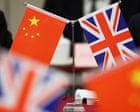
Britain's approach to China is incoherent because Whitehall treats a complex, fast-moving superpower like a series of disconnected spreadsheets rather than a unified strategic challenge, and the civil service simply lacks enough seasoned China specialists who understand the language, politics, and commercial reality on the ground. Ministers promise steady, predictable management while leaving businesses guessing between late-night security warnings and diplomatic resets. Parliamentarians and cross-party lawmakers have repeatedly sounded the alarm over this mismatch between ambition and capability, exposing a state apparatus that reacts to crises instead of anticipating them.
Spend enough years watching foreign policy debates in London and a familiar pattern emerges. Every few years, a new administration arrives swearing it will finally bring order to the relationship with Beijing, only to discover that good intentions collide with structural blind spots. A shiny phrase gets minted—whether it is a "golden era," "systemic challenge," or "progressive realism"—and then reality arrives in the form of supply chain bottlenecks, intelligence alerts, university funding pressures, and furious phone calls from exporters.
Why Whitehall Keeps Improvising on China
Walk through the corridors of power in Westminster and you will find smart people working hard inside narrow silos. The Treasury looks at trade flows and capital markets. The Foreign, Commonwealth and Development Office watches diplomatic channels and regional security. The business department fields complaints from manufacturers and exporters. Meanwhile, security agencies monitor espionage, influence operations, and sensitive technology transfer.
When those departments do not share a single operational playbook, policy turns into improvisation. A parliamentary committee warning in November 2026 captured that exact frustration, arguing that ministers have failed to deliver on their 2024 pledge of a consistent, long-term approach and instead leave decisions until the eleventh hour. Businesses cannot commit serious capital over five or ten years when the ground shifts beneath their feet every few months.
"Britain's businesses cannot plan for the future when the Government keeps making up its China policy as it goes along." — Rt Hon Liam Byrne MP, Chair of the Business, Innovation, Science and Trade Committee
Part of the confusion stems from a genuine tension that no slogan can wish away. China is simultaneously a massive export market, a source of affordable consumer goods and green technology, a vital partner on climate change, and a strategic rival with serious security and human rights concerns attached to its supply chains. Pretending those contradictions do not exist does not make Britain look pragmatic. It makes Britain look indecisive.
The Trap of Eleventh-Hour Policymaking
Reactive policymaking carries a steep commercial cost. Suppose a mid-sized British engineering firm—a hypothetical example—spends eighteen months qualifying a component supplier or building a joint venture in eastern China. Halfway through, regulatory guidance tightens around dual-use tech, customs scrutiny intensifies, or diplomatic friction flares over an unrelated dispute. If clear rules were not set upfront, the company eats the sunk cost.
The same whiplash hits universities and research labs. Higher education institutions in the UK have long leaned on international student tuition and joint scientific research to stay afloat financially, while security agencies warn about foreign interference and intellectual property risks. Telling cash-strapped universities to be careful without giving them clear, stable guardrails forces administrators to guess where national security ends and normal academic exchange begins.
The Hollowing Out of Real Expertise
You cannot run a serious China policy on generalists who rotate every two years. Deep China expertise takes years of patient immersion—learning Mandarin to a high standard, living in the country long enough to read subtext rather than just press releases, and tracking how provincial officials, state-owned enterprises, and private tech champions actually operate.
Too often, government treats regional fluency as a nice-to-have rather than a core career track. A two-week briefing course or a slide deck on Chinese industrial policy does not equip an official to negotiate in Mandarin or spot subtle shifts in Beijing's domestic politics. As lawmakers noted in parliamentary exchanges in November 2026, only a small number of officials reach advanced Mandarin proficiency over multi-year stretches, even as concerns mount over experienced China specialists leaving public service.
Consider what happens when language and lived experience thin out:
- Misreading signals: Officials rely too heavily on translated summaries or secondary commentary, missing bureaucratic infighting or local economic pressures inside China.
- Over-relying on stereotypes: Without nuanced analysis, debates swing wildly between naive optimism and blanket alarmism.
- Weakened negotiation leverage: Walking into talks without deep technical and linguistic command puts British negotiators at an immediate disadvantage.
- Short institutional memory: When seasoned staff depart, hard-won lessons about past deals, regulatory traps, and influence tactics walk out the door with them.
Classroom Theory vs. Lived Reality
There is an old truth in diplomacy that bears repeating: reading reports in London is no substitute for living the daily life of a place. You learn how rules work in practice by watching how people adapt to them on the street, in factory towns, and in business meetings. When fewer civil servants spend extended years immersed in Chinese society and language, the state's mental model of China grows flatter.
Government ministers point to training drives, cross-departmental networks, and Fast Stream pathways designed to build capability across Whitehall. Those efforts are better than doing nothing. Still, training thousands of staff on basic awareness is not the same thing as cultivating a deep bench of senior analysts and fluent negotiators who have spent a decade mastering the terrain.
The Overlooked Factors Behind the Stalemate
Most commentary blames either weak ministers or aggressive behavior from Beijing. Both play a role, yet two quieter pressures explain why Britain's China policy keeps stalling.
First, fiscal constraint shapes almost every choice in London. When public finances are tight and growth is sluggish, governments naturally look for trade and investment wherever they can find it. Yet tight budgets also squeeze civil service headcount, overseas postings, and long-term language training. The very moment Britain needs sharper analytical capacity most, austerity pressures make building and keeping that talent harder.
Second, allied coordination is messier than speeches suggest. Britain does not operate in a vacuum; it sits between Washington's tougher economic and tech restrictions and European debates over tariffs, industrial subsidies, and market access. Moving out of step with allies risks friction or market exclusion, while blindly copying another capital's playbook can ignore Britain's specific economic exposures.
| Policy Dimension | What Whitehall Often Does | What Actually Works |
|---|---|---|
| Strategy & Rules | Announces broad slogans while leaving sector guidance vague or late. | Sets clear, predictable thresholds for sensitive tech, supply chains, and trade. |
| Civil Service Talent | Rotates generalists quickly and relies on short awareness courses. | Rewards long-term language immersion, overseas postings, and specialist career tracks. |
| Business & Academia | Sends mixed signals between economic outreach and security warnings. | Pairs firm national security guardrails with transparent commercial backing. |
| Allied Alignment | Reacts ad hoc to Washington or Brussels moves under pressure. | Defines British priorities first, then coordinates selectively where interests align. |
Drawing Harder Lines Without Blindness
Fixing Britain's China approach does not require picking a single cartoon version of the relationship. Pure confrontation ignores real economic and climate dependencies. Pure engagement invites coercion, espionage, and unfair competition.
The harder, more honest path is disciplined selectivity. That means deciding plainly which technologies, infrastructure assets, and data flows are off-limits, enforcing strict rules against unfair subsidies and forced labor, and protecting democratic institutions without turning every routine commercial or scientific link into a crisis. Even then, tradeoffs will bite—especially in clean energy supply chains and university funding, where clean exits do not exist overnight.
A government that tells the public and business community the truth about those tradeoffs earns far more credibility than one pretending it can have friction-free growth and zero risk at the same time. Until Britain invests seriously in deep, patient expertise inside its own institutions and backs it with clear rules, its China policy will keep stumbling from one reaction to the next. Start by building a genuine career track for fluent, long-serving China specialists—and keep them in the room when the rules are written.