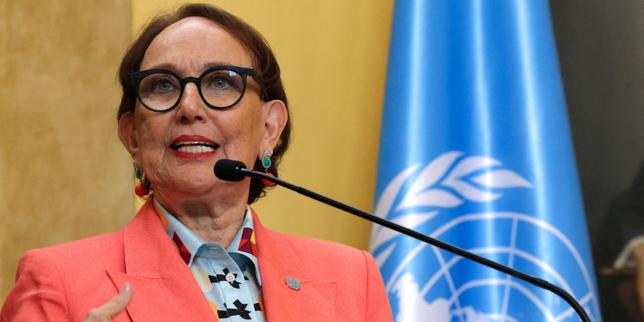
India has formally dismissed a United Nations human rights report alleging that Indian youth face retaliation for activism, dissent, and civic engagement, branding the findings as unverified hearsay. At its core, this clash exposes a widening fracture between multilateral oversight mechanisms and sovereign governments that view external human rights scrutiny as politically motivated interference. When a major democracy rejects a UN assessment outright, the dispute rarely stays confined to Geneva or New Delhi. It reshapes how young citizens assess risk, how civil society operates, and how international institutions defend their credibility without turning into political battlegrounds.
Having covered diplomatic friction and domestic politics across South Asia for decades, I have seen plenty of sharp exchanges between sovereign capitals and UN special rapporteurs. Usually, governments respond with technical rebuttals, selective statistics, or long procedural memos. Calling the allegations "hearsay" is blunt even by diplomatic standards. It signals that New Delhi is not merely contesting methodology or context; it is attacking the evidentiary foundation of the report itself.
Why Diplomatic Pushback Is Getting Sharper
Every major power bristles when outside bodies criticize internal governance. Yet the tone surrounding UN human rights assessments has grown noticeably more combative over the past decade. Governments increasingly argue that special procedures rely on activist networks, unvetted testimonies, and ideological assumptions that do not reflect complex local realities.
From New Delhi's perspective, sovereignty is not an abstract talking point. A country of more than 1.4 billion people manages overlapping security concerns, regional tensions, rapid urbanization, and fierce political competition. When a UN report paints broad conclusions about retaliation against young people, officials see a narrative that flattens nuance and hands domestic opponents or foreign critics ready-made talking points.
There is also a structural grievance at play. Many capitals contend that multilateral human rights bodies apply uneven standards, spending disproportionate energy on democratic states with open media and active courts while under-examining regimes where independent reporting is nearly impossible. Even when critics push back against that argument, the perception of double standards fuels resistance and makes outright dismissal easier to sell at home.
Still, dismissing claims wholesale carries real costs. When a government labels every unpleasant finding "hearsay," it risks forfeiting the chance to address genuine local abuses—such as overzealous policing, prolonged pre-trial detention, or heavy-handed administrative actions against student protesters—before those grievances harden into lasting alienation.
What Young Citizens Actually Experience on the Ground
High-level diplomatic jargon often misses the everyday realities shaping Indian youth. Young Indians are not a single bloc with uniform politics or uniform experiences. A college student organizing campus debates in Delhi, a young journalist covering local corruption in a smaller town, an environmental campaigner questioning an infrastructure project, and a graduate preparing for civil service exams inhabit very different worlds.
For many young people, ambition and caution coexist quietly. India has one of the world's largest youth populations, and economic opportunity remains a dominant preoccupation. Jobs, housing, education costs, and digital connectivity sit right at the top of daily concerns. Most young citizens are trying to build stable lives, not stage daily confrontations with the state.
Yet those who do step into public advocacy often navigate a complex web of legal and social pressures. Police notices, sedition or public-order provisions, university disciplinary rules, online harassment, and family anxiety can all weigh heavily on young organizers. Even when charges are later dropped or stalled in court, the process itself—summons, travel restrictions, seized devices, or reputational strain—can chill participation.
To illustrate how pressure can work without a dramatic courtroom showdown, consider a hypothetical example. Suppose a university student group organizes a peaceful seminar questioning a local land-acquisition policy. Nothing violent occurs, and the event ends on time. Weeks later, organizers receive repeated inquiries from local authorities, campus administrators warn against "unauthorized political activity," and coordinated social media accounts target the speakers. Even if no formal arrest ever happens, future students may think twice before booking a room or putting their names on a poster. That quiet deterrent effect is notoriously hard to measure in official crime statistics, which is precisely why UN experts highlight it and why governments dispute it.
The Evidentiary Tug of War Behind "Hearsay"
Labeling a UN report "hearsay" hits a nerve because evidence is the hardest part of human rights monitoring. Independent investigators rarely have unlimited access, complete state files, or time to verify every allegation to the standard of a criminal trial. Instead, they rely on interviews, affidavits, media reports, legal filings, and accounts from civil society groups.
Critics of that approach have a fair point. Second-hand accounts, anonymous tips, or advocacy briefs can contain exaggeration, missing context, or political spin. If a report treats uncorroborated claims as settled fact, a government has an opening to question its rigor.
At the same time, treating everything outside official government records as "hearsay" sets an impossible bar. Victims and witnesses often fear repercussions if they come forward publicly, especially in sensitive local disputes or politically charged investigations. When witnesses withhold names or fear retaliation, investigators face a genuine dilemma: publish accounts with appropriate caveats, or stay silent and leave potential abuses unexamined.
This tension creates a recurring stalemate:
- UN investigators argue that documenting patterns of intimidation, legal harassment, and shrinking civic space is essential early-warning work, even when full proof requires judicial proceedings.
- National governments counter that unverified allegations damage international standing, distort domestic debates, and elevate partisan claims under a UN banner.
- Ordinary citizens caught in the middle often see both sides talking past each other while practical problems—slow courts, uneven policing, and polarized media—remain unresolved.
Politics, Domestic Narratives, and Global Optics
Foreign criticism rarely lands in a vacuum. In domestic politics, a strong rebuke of a UN report can rally supporters around national pride and frame external scrutiny as meddling. Few political leaders lose votes at home by telling international bodies to mind their own business, especially when the message is wrapped in defense of national sovereignty.
Yet global optics matter too. India plays a major role in international forums, global supply chains, digital governance, and multilateral diplomacy. Frequent clashes with UN human rights mechanisms can complicate soft-power messaging, particularly when New Delhi positions itself as a leading voice for the Global South and a champion of democratic institutions.
Meanwhile, domestic debates over Indian youth and dissent are shaped heavily by media ecosystems and partisan framing. One camp views every police action or campus restriction as evidence of democratic backsliding and retaliation. Another views any criticism of state institutions as coordinated hostility aimed at weakening the country. Both narratives leave little room for sober, case-by-case accountability.
A veteran observer learns to be skeptical of sweeping absolutes from either direction. Democracies are messy, sprawling, and imperfect. Courts can be slow, local officials can overreach, and activist groups can also push agendas with sharp political edges. Pretending the system is spotless invites cynicism; pretending every disagreement is systemic oppression distorts reality.
Where Accountability Actually Lives
If international reports often trigger defensiveness rather than reform, where can meaningful accountability come from? Usually from domestic institutions working as intended—independent courts, transparent inquiries, responsive oversight bodies, and a press willing to investigate facts without partisan blinkers.
When legal remedies are accessible and timely, young citizens have real recourse when their rights are infringed. When administrative rules are clear and evenly applied, universities and local authorities have less room for arbitrary pushback. And when governments answer specific, documented cases directly instead of waving away an entire report with a single dismissal, they project confidence rather than fragility.
Whether UN human rights mechanisms adapt their methods or continue trading barbs with major capitals, the stakes for Indian youth remain grounded in everyday governance. Young people need space to debate, question, innovate, and disagree without paying a disproportionate price—and institutions strong enough to handle tough questions without flinching.