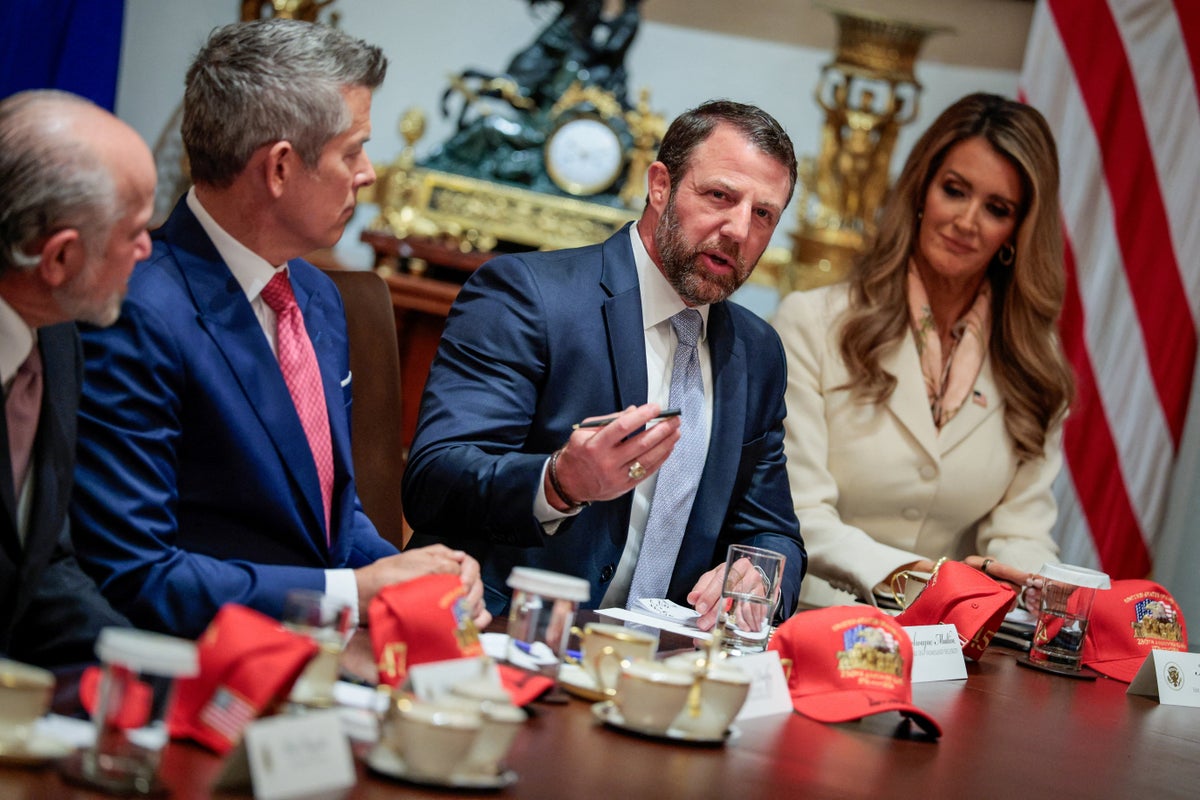
The standoff outside Delaney Hall in Newark, New Jersey, stripped away whatever thin veneer of diplomatic caution remained in the national immigration debate. Confronted with reports of a massive hunger and labor strike inside the 1,000-bed Immigration and Customs Enforcement detention facility, Homeland Security Secretary Markwayne Mullin did not offer bureaucratic platitudes. Instead, he delivered a blunt rhetorical hammer. He claimed that detainees demanding better conditions were merely holding out for their preferred ethnic foods, concluding with a line that immediately ricocheted across the political spectrum. They can go back to their country and get whatever food they want, Mullin said. The fact is, we are giving them the calories they want. This isn’t a Holiday Inn.
The immediate fallout was measured in chemical spray, rubber bullets, and arrested protesters. Yet the corporate media coverage of the incident has largely missed the structural gears turning beneath the surface. This is not just a story about a brash Cabinet secretary making a provocative comment. It is an exploration of how a multi-billion-dollar private prison apparatus interacts with a federal deportation mandate, and what happens when local sanctuary laws collide head-on with federal sovereignty.
To understand the crisis at Delaney Hall, one must look beyond the immediate political theater outside the gates. The tension had been building for days before the physical clashes erupted on the streets of Newark.
The Friction Inside the Walls
According to advocacy groups and phone accounts from inside the facility, roughly 300 to 400 detainees launched a coordinated hunger and work strike. The grievances were specific. Strikers cited inedible meals containing live insects, severe overcrowding in units lacking functional air conditioning, and a total breakdown in access to basic medical care as viral infections spread through the blocks.
Furthermore, detainees alleged that immigration judges were deliberately delaying cases and denying bonds. This tactic, they argued, was engineered to break their resolve and force self-deportation.
The response from federal authorities was swift and administrative. Activists reported that external communication lines from inside Delaney Hall were abruptly cut, a move they characterized as retaliatory. Tensions boiled over entirely when word leaked that ICE officials were attempting to transfer a key detainee organizer, Martin Soto, to a separate facility out of the area.
Outside, a human barricade of protesters formed to block the movement of transport vehicles. The scene quickly deteriorated. Masked federal agents deployed pepper spray, batons, and chemical balls to clear the exit route. In the chaos, high-profile political figures who had arrived for an unannounced oversight visit, including New Jersey Senator Andy Kim, were caught in the chemical crossfire.
The Corporate Border Matrix
The true engine of the Delaney Hall dispute is not political ideology. It is a business model. The facility is operated by the GEO Group, one of the nation's dominant private prison contractors. For corporations managing federal detention contracts, profit margins are fundamentally tied to occupancy rates and operational cost-cutting.
Every dollar saved on facilities maintenance, food quality, or medical staff is a dollar that improves the corporate bottom line. When detainees complain about rotten food or broken ventilation, they are highlighting the inevitable friction points of a privatized immigration enforcement system.
The Department of Homeland Security has aggressively disputed every claim made by the strikers and their advocates. In official statements, the agency maintained that all detainees receive three balanced meals a day evaluated by certified dieticians, alongside comprehensive healthcare and 24-hour emergency access. The department went as far as to claim that for many individuals inside the facility, the medical services provided represent the highest quality of healthcare they have ever received.
This total divergence of narratives points to a deeper systemic opacity. Because Delaney Hall is a privately managed facility operating under federal oversight, local and state officials are routinely denied entry. New Jersey Representative Mikie Sherrill noted that her formal request to inspect the facility was summarily rejected by federal authorities. This lack of transparency ensures that the actual conditions inside the walls remain an unverified gray area, hidden behind corporate protocols and federal jurisdiction.
Jurisdictional Warfare on the Streets
The clash in Newark is amplified by a profound legal conflict between state mandates and federal enforcement. In 2021, New Jersey passed a comprehensive statute banning the state and its counties from entering into or renewing contracts with private immigration detention operators. The law was intended to effectively phase out facilities like Delaney Hall within state borders.
However, federal supremacy principles allow the federal government to bypass state restrictions by contracting directly with private entities on federal or sovereign terms, leaving local authorities with minimal leverage.
This has created an environment of open hostility between federal immigration agents and local leadership. Following the violent clashes outside the gates, DHS officials openly accused New Jersey’s sanctuary politicians of staging a calculated fundraiser stunt and peddling garbage to the public.
The federal government alleged that local police departments actively refused to assist federal officers when protesters obstructed the facility’s transport routes. This operational gridlock reveals a dangerous precedent. When local law enforcement pulls back and federal agencies deploy armored vehicles to clear domestic streets, the line between civil administration and militarized enforcement begins to blur.
The Rhetoric of Deterrence
Secretary Mullin’s Holiday Inn remark reflects a calculated policy shift toward explicit, public-facing deterrence. The language is designed to signal a zero-tolerance approach to resistance within the detention system. By framing the hunger strike as a frivolous demand for specific culinary options rather than a protest against basic human rights violations, the administration seeks to insulate itself from domestic criticism.
The strategy relies on a simple premise. If the conditions of detention are perceived as harsh, uncompromising, and thoroughly uncomfortable, the incentive for self-deportation increases, while the political will to cross the border diminishes.
The flaw in this approach is that it ignores the legal reality of the population being held. Many individuals inside Delaney Hall are not individuals with final removal orders. They are asylum seekers, individuals awaiting administrative hearings, and people with clean records who are navigating a backlogged legal system. Treating the entire population through the lens of punitive deterrence bypasses the foundational principle of due process.
The administrative response to the Newark strike has set a clear trajectory for future immigration enforcement actions nationwide. The federal government has demonstrated that it will utilize physical force, rapid transfers, and strict communication blackouts to maintain operational control over its contract facilities. State-level sanctuary laws, no matter how popular locally, offer little protection when the federal apparatus decides to assert its authority. The standoff at Delaney Hall is not an isolated incident. It is the new baseline for federal immigration enforcement.