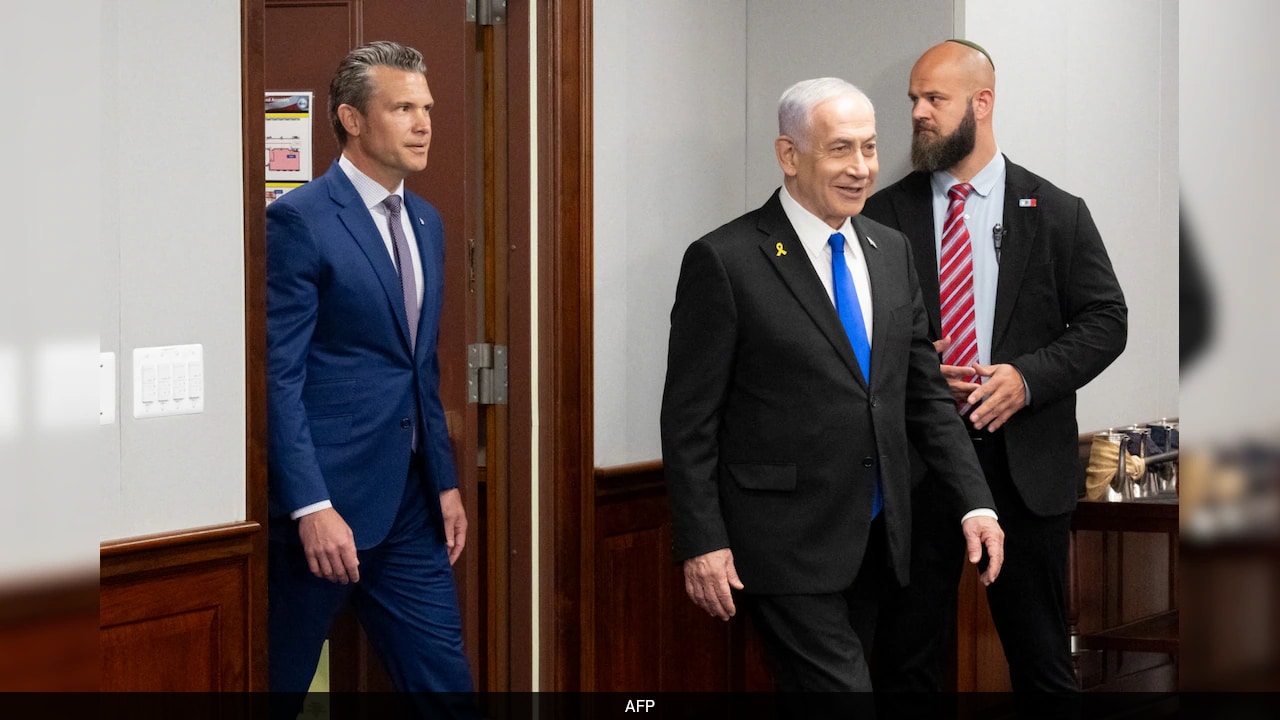
U.S. Defense Secretary Pete Hegseth slipped into Israel on an unannounced trip in mid-October 2026 to meet Prime Minister Benjamin Netanyahu at Ovda Air Base in the southern Negev desert. The meeting happened eight days before Israel's October 27 legislative elections and one day after President Donald Trump publicly endorsed Netanyahu's reelection bid. Publicly, Hegseth framed the excursion around visiting troops in the U.S. Central Command area of operations and declined to discuss what he and Netanyahu covered. Privately, defense officials and regional analysts knew a desert runway summit during an active war with Iran and a volatile Israeli election cycle is never just a routine morale stop.
Strip away the diplomatic vagueness and the meeting looks like a collision of three pressures: a bruised coalition fighting for survival at the ballot box, an American military stretched thin after launching joint strikes on Iran in late February, and a Washington leadership trying to project strength without committing to another open-ended escalation. After twenty-five years covering defense procurement, coalition politics, and back-channel diplomacy in the Middle East, I have learned to look past where leaders shake hands and ask who needed the photo before it ever hit the wire.
Why Ovda Air Base Matters More Than Jerusalem
Ovda is not a ceremonial stop. Tucked into the Negev desert north of Eilat, it is a sprawling military airfield built with American backing after the Sinai withdrawal and used for exercises, logistics, and sensitive operations far from the political theater of Jerusalem or Tel Aviv. Landing there rather than Ben Gurion Airport cuts down on motorcade optics and public protest friction. It also signals operational business.
In October 2026, Israeli Prime Minister Benjamin Netanyahu faced a tough domestic fight ahead of the October 27 vote for the 26th Knesset. Polling showed Netanyahu's religious-nationalist bloc at risk of losing its governing majority in a crowded field that featured new challengers like Gadi Eisenkot's Yashar party and Naftali Bennett's Together. A sitting prime minister meeting the U.S. defense chief on a military base does not need a joint press conference to send a message to undecided voters. The proximity itself implies Washington is dealing directly with Netanyahu on active security files.
Trump reinforced that signal on social media the day before the visit, throwing his weight behind Netanyahu and warning that if Israel chose the wrong leader, the United States would face heavier burdens on its own. That kind of public intervention cuts two ways. For Netanyahu's base, it is a reminder of alignment at the highest level of the U.S. government. For critics inside Israel, it looks like foreign thumb-on-the-scale politics right before citizens cast ballots.
When a defense secretary meets a prime minister on a desert air base eight days before an election, operational security and domestic politics are rarely separate tracks.
There is a practical catch that partisan cheerleaders on both sides tend to ignore. Even if a visit boosts a leader's image among loyalists, it cannot manufacture a Knesset majority out of thin air. Israel's proportional representation system rewards coalition math and turnout across blocs, not foreign endorsements alone. When the votes were counted on October 27, turnout reached roughly 78 percent—the highest since 1999—and no bloc cleared the 61-seat mark cleanly, leaving Netanyahu's camp with 53 seats, the Zionist opposition with 48, and Arab parties with 19. A runway meeting can shape mood in the final week. It cannot rewrite parliamentary arithmetic.
The Munitions Clock Ticking Behind Closed Doors
Any serious talk between the Pentagon and Israeli leadership in late 2026 has to run straight into hardware math. Following the joint U.S.-Israeli strikes against Iran that began in late February 2026 and months of regional clashes across the Gulf and Levant, air defense interceptors, precision munitions, and long-range strike weapons are not abstract line items in a budget book. They are finite physical objects sitting in magazines and depots.
Hegseth has spent months pushing back against alarmist headlines over U.S. weapons inventories, calling claims of a stockpile crisis overstated and insisting the military knows what it has. Yet even administration officials and defense reporting have acknowledged the harder truth underneath the rhetoric: replenishing depleted missile and munition stocks takes time—often years rather than weeks—because solid rocket motors, seeker heads, and specialized production lines cannot simply be switched on overnight.
Consider a hypothetical example of how that constraint shapes a closed-door meeting. Suppose Israeli planners want to press for a renewed, heavy wave of strikes against Iranian infrastructure, while Pentagon planners are looking at interceptor burn rates and Pacific or regional contingencies. Even if both capitals agree on the threat in principle, the conversation quickly turns from what can we hit? to how many interceptors will we have left next quarter if retaliation escalates?
That tension helps explain why public messaging from Washington sounded split in October 2026. Trump talked tough about Iran's weakened condition while White House officials reiterated that the United States was not looking to launch a new attack on Iran at that moment. In defense circles, that is not contradiction. It is resource management dressed up as statecraft.
| Strategic Factor | What Public Statements Emphasize | What Defense Reality Constrains |
|---|---|---|
| Timing of the Visit | Routine troop engagement across CENTCOM | Eight days before Israel's October 27 election, right after Trump's endorsement |
| Iran Escalation Risk | Tough rhetoric on adversary weakness and regional threats | Munitions consumption and multi-year restocking timelines |
| Israeli Political Leverage | Close bilateral partnership with the incumbent prime minister | Fragmented Knesset math where no single bloc holds 61 seats |
| Regional Fronts | Deterrence against ongoing drone, missile, and militia attacks | Overstretched air defenses and diplomatic friction across neighboring states |
What Most Coverage Misses About the Regional Chessboard
Standard wire reports tend to treat a Hegseth-Netanyahu meeting as a bilateral story about two men and one adversary. That framing is too narrow. By October 2026, the region was dealing with overlapping fronts—drone and missile exchanges involving Iran and Gulf states, lingering Gaza and Lebanon security pressures, and domestic political strain inside Israel after years of war and social division.
One overlooked dynamic is how Israeli domestic politics interacts with regional war risk. Prior to the election, observers noted that opposition figures were not necessarily softer on security than Netanyahu; in some respects, hardline rhetoric cut across party lines. Meanwhile, anti-Netanyahu voters and analysts worried heavily about international isolation and sanctions pressure, while coalition partners on the far right pushed for aggressive postures that complicated Washington's broader diplomatic balancing act.
Another blind spot is the gap between political theater and industrial capacity. A defense secretary can fly into a desert base in an afternoon, shake hands on a tarmac, and fly out before evening news cycles turn. Factory floors in the United States and Europe do not move at jet speed. Every salvo fired in a regional conflict narrows the margin for error in the next one unless production scales faster than consumption.
The Gray Areas Nobody Wants to Own
In Washington and Jerusalem alike, leaders prefer clean narratives: decisive resolve, unbreakable partnership, swift results. Real wars and real elections rarely stay neat.
If Washington leans too openly toward one Israeli leader before a vote, it risks alienating whichever coalition eventually has to govern or pass budgets—especially in a parliament where 11 parties won seats and bargaining is guaranteed to be messy. Conversely, if Washington keeps too much distance during active hostilities, adversaries may read hesitation as weakness. Neither path is risk-free, which is why leaders so often fall back on ambiguous language like visiting troops and discussing regional threats.
There is also a credibility cost when officials downplay stockpile strain in public while defense planners quietly ration high-end munitions behind closed doors. Allies notice. Adversaries watch interceptor usage closely to estimate where defense layers are thinnest. Overpromising capability is an old trap in defense politics, and it usually catches up with whoever makes the promise.
The unannounced visit to Ovda Air Base did not settle Israel's election, end the regional war, or solve the munitions math. It simply put on display a hard truth of modern statecraft: the loudest speeches happen in front of cameras, while the real limits are measured on runways and assembly lines.