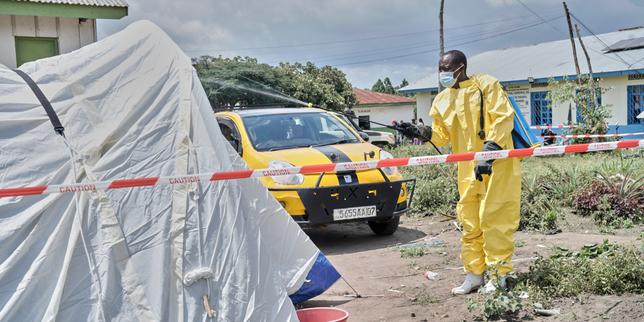
The scale of the Ebola epidemic in the Democratic Republic of the Congo (DRC) is not just a failure of medicine. It is a failure of trust. While global health organizations routinely attribute the unprecedented spread of the virus to dense populations and poor infrastructure, the deeper reality is rooted in geopolitical friction, historical exploitation, and broken local relationships. Traditional containment strategies are failing because they treat a complex social crisis as a purely biological threat. To stop the transmission, international interventions must shift from aggressive enforcement to community-led defense.
The numbers coming out of the northeastern provinces of the DRC have repeatedly alarmed global epidemiologists. Yet, the traditional playbook of quarantine, contact tracing, and ring vaccination is hitting a wall. If you enjoyed this piece, you should read: this related article.
The Myth of the Purely Biological Crisis
Public health officials often talk about virus mutations or environmental factors when explaining why an outbreak spins out of control. With Ebola in the DRC, the virus remains biologically predictable. The human environment is what has changed.
Decades of armed conflict in North Kivu and Ituri have created a deeply traumatized population. When foreign medical teams arrive in armored vehicles, flanked by government soldiers, local communities do not see aid. They see an occupying force. This militarized approach to healthcare has backfired spectacularly. Treatment centers have been attacked, and health workers have faced severe hostility. For another look on this story, check out the latest coverage from World Health Organization.
Consider how suspicion alters public health outcomes. When a government has historically neglected a region's basic security and economic needs, the sudden influx of millions of dollars aimed exclusively at a single disease breeds deep resentment. Local residents frequently ask why international entities spend fortunes on Ebola while preventable killers like malaria, measles, and cholera continue to claim lives daily without a coordinated global response.
The Failure of Top Down Communication
Information is a weapon in an epidemic, but only if the recipient trusts the source. For months, centralized health authorities flooded affected zones with standardized radio broadcasts and posters translated poorly into local dialects.
The messages failed to resonate. In many instances, they actively fueled conspiracy theories. Rumors spread that the virus was introduced intentionally to decimate the local population or to generate profit for foreign pharmaceutical companies.
Standard Approach:
Command-and-control -> Forced Isolation -> Public Hostility

Community-Led Approach:
Local Leadership -> Home-Based Care Adaptation -> Voluntary Compliance
True communication requires listening before instructing. When epidemiological teams bypass village elders, religious leaders, and traditional healers, they alienate the exact individuals who hold the power to change community behavior. Safe burial practices provide a clear example. Forcing families to abandon ancestral funeral rites without offering a culturally respectful alternative simply drives burials underground. This hidden transmission chain makes tracking the virus nearly impossible.
Security Friction and the Aid Economy
The presence of dozens of active rebel groups complicate every aspect of the medical response. However, the intersection of security and finance has created a distorted ecosystem known locally as the "Ebola business."
Large-scale humanitarian funding alters local economies overnight. Rent prices skyrocket, and lucrative driving and security contracts create sudden wealth disparities. This influx of capital sometimes creates perverse incentives. If ending the epidemic means the end of employment for hundreds of local contractors, the motivation to completely eradicate the disease diminishes among certain factions.
Furthermore, political actors have weaponized the health response. In past elections, the government used the pretext of the epidemic to cancel voting in opposition strongholds, effectively disenfranchising hundreds of thousands of citizens. This political maneuvering permanently linked the health response to state suppression in the minds of the populace.
Rethinking the Vaccination Strategy
The development of highly effective vaccines, such as rVSV-ZEBOV, was supposed to be the ultimate solution. In practice, distribution has faced massive bottlenecks.
Vaccination Barriers:
* Ultra-cold chain requirements (-60°C to -80°C) in equatorial regions.
* Supply chain vulnerabilities due to frequent ambushes on transit routes.
* Selective administration creating jealousy and suspicion among neighbors.
The strategy of ring vaccination—vaccinating contacts of confirmed cases and contacts of those contacts—relies on flawless tracking. In a war zone where populations are constantly displaced, flawless tracking is an illusion. A more expansive, geographic vaccination strategy in high-risk zones would eliminate the need for intrusive contact tracing, which many locals view as a form of state surveillance.
The Financial Disconnect
International donors are quick to pledge hundreds of millions of dollars during the peak of a crisis. This money, however, is rarely spent on building sustainable healthcare infrastructure.
Most funds go toward temporary treatment units, international staff logistics, and short-term emergency supplies. Once the headline-grabbing numbers drop, the funding evaporates. The DRC is left with the same fragile healthcare system it had before the outbreak, waiting for the next spark to ignite another crisis. True security requires permanent, well-funded local clinics capable of detecting anomalies before they escalate into regional emergencies.
Fixing this cycle requires an uncomfortable shift in power. International agencies must relinquish absolute control over budgets and strategies, handing both the funds and the decision-making power directly to local health zones. Until the response is owned by the people it aims to protect, the virus will continue to find cracks in the armor of global health bureaucracy.