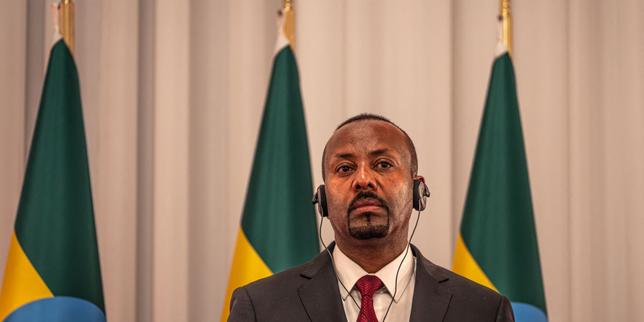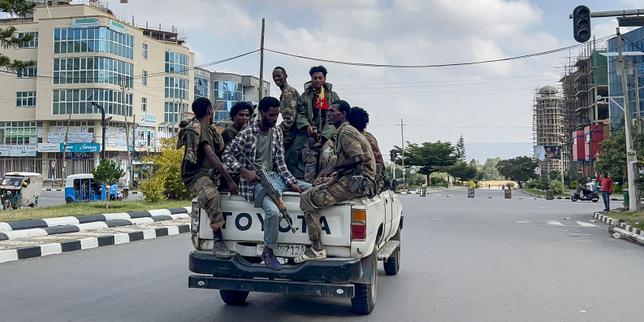
The fragile architecture holding Ethiopia together is fracturing once again. Barely four years after the signing of the Pretoria agreement—a deal meant to cap one of the bloodiest internal conflicts of the twenty-first century—federal troops and regional insurgent forces are locked in fierce multi-front combat. Prime Minister Abiy Ahmed’s federal government has managed to blunt the initial momentum of a coordinated rebel offensive, pushing back insurgent advances in the northern highlands and reclaiming strategic urban centers. Yet, this tactical containment is a long way from actual security. The underlying political fractures that catalyzed the previous cataclysm remain unhealed, and the entire Horn of Africa is bracing for a wider conflagration.
To understand why the federal military's recent battlefield victories may not translate into permanent peace, one has to examine the mechanics of the current escalation. The renewed hostilities are not merely isolated flare-ups; they represent the structural collapse of a peace process that left fundamental territorial and constitutional questions completely unresolved. When the Tigray People’s Liberation Front (TPLF) signed the cessation of hostilities in late 2022, the agreement deferred the status of disputed territories such as Western Tigray, sidestepped comprehensive accountability, and established an uneasy interim administration.
That arrangement buckled under its own weight. TPLF factions, sensing an existential threat from a centralized federal apparatus that was simultaneously moving to disarm regional special forces across the country, reorganized. Concurrently, the Amhara region descended into its own deep-seated insurgency led by Fano militias, groups that had fought alongside the federal army during the Tigray war but subsequently turned their weapons against Addis Ababa after feeling betrayed by the Pretoria terms. When these separate streams of armed opposition began coordinating tactical movements with other groups like the Oromo Liberation Army (OLA), the federal command found itself facing a multi-front nightmare.
The federal response has relied heavily on its traditional playbook: rapid mechanized redeployments and intensive drone warfare. The Ethiopian National Defense Force (ENDF) demonstrated its structural superiority in open-field engagements by blunting rebel advances, securing key transport arteries, and even pushing into the Tigrayan capital of Mekelle. From a purely military perspective, the federal high command has successfully prevented the type of rapid insurgent march on Addis Ababa that nearly brought down the government during the height of the 2020-2022 conflict.
Yet, this reliance on kinetic force carries an astronomical human and political cost. Drone strikes in densely populated rural sectors of Amhara and Tigray have exacted a heavy civilian toll, further alienating local populations who view federal intervention not as a restoration of order, but as an occupying force. In counter-insurgency warfare, holding territory is mathematically distinct from winning allegiance. Every time an urban center is recaptured or a rebel advance is repelled by air power, the pool of displaced civilians expands, deepening the grievances that feed the next generation of recruitment.
Complicating matters further is the regionalization of the conflict. Addis Ababa has increasingly accused external actors of fueling the domestic instability, pointing fingers at neighboring Eritrea—whose troops remain an active wildcard in the northern borderlands—as well as broader geopolitical friction involving Egypt over Nile water rights and Red Sea access ambitions. Whether these external allegations are taken at face value or viewed through the lens of domestic threat inflation, the reality remains that Ethiopia's internal borders are porous. Weapons flow freely across frontiers, and regional proxies have found common cause in trying to weaken Abiy’s centralized administration.
The economy, meanwhile, absorbs the shock. While macroeconomic indicators in the capital show nominal growth on paper, the rural heartlands where the fighting is concentrated are caught in a cycle of acute humanitarian distress, blocked aid corridors, and shattered agricultural cycles. Inflation driven by wartime expenditures and supply chain fractures is squeezing urban households, while foreign exchange reserves remain severely constrained.
What happens next will not be decided solely by the tactical movements of infantry brigades or the flight paths of attack drones. The fundamental dilemma facing Ethiopia is political, not military. A strategy that prioritizes the physical suppression of dissent without offering a credible, inclusive framework for regional autonomy and resource-sharing merely resets the clock on the violence. The federal army can continue to win battles on the peripheries, but unless Addis Ababa addresses the root causes of ethnic fragmentation and administrative mistrust, the state will remain permanently mobilized on a war footing, waiting for the next inevitable fracture.