Norway has signed a landmark defense pact to join France’s "forward" nuclear deterrence initiative, signaling an unprecedented pivot away from total reliance on the United States. While Norwegian Prime Minister Jonas Gahr Støre carefully maintained that NATO remains Oslo’s primary shield, the reality on the ground tells a different story. This agreement marks Norway as the ninth European nation to seek cover under Paris’s atomic umbrella, exposing deep, structural anxieties regarding Washington's long-term commitment to continental defense. Europe is quietly preparing for a future where it must defend itself.
For decades, the Arctic flank of Western Europe rested on a simple, unspoken geopolitical absolute. If Russian forces crossed the border into northern Norway, the immense, terrifying weight of the American nuclear arsenal would stand in their way.
That absolute has evaporated.
The Math of Strategic Autonomy
The deal signed in Paris by Støre and French President Emmanuel Macron is not just a symbolic handshake. It introduces concrete mechanisms that fundamentally alter the security architecture of the High North.
Under the "forward" nuclear deterrence scheme, Norway will prepare its military infrastructure to temporarily host French strategic air forces. This means French Rafale fighters, capable of carrying ASMPA nuclear-armed missiles, could routinely cycle through Norwegian airbases. The goal is to complicate the military calculus of adversaries by scattering nuclear-capable assets across the continent rather than leaving them stationed entirely on French soil.
French Nuclear Deterrence Architecture (approx. 290 Warheads)
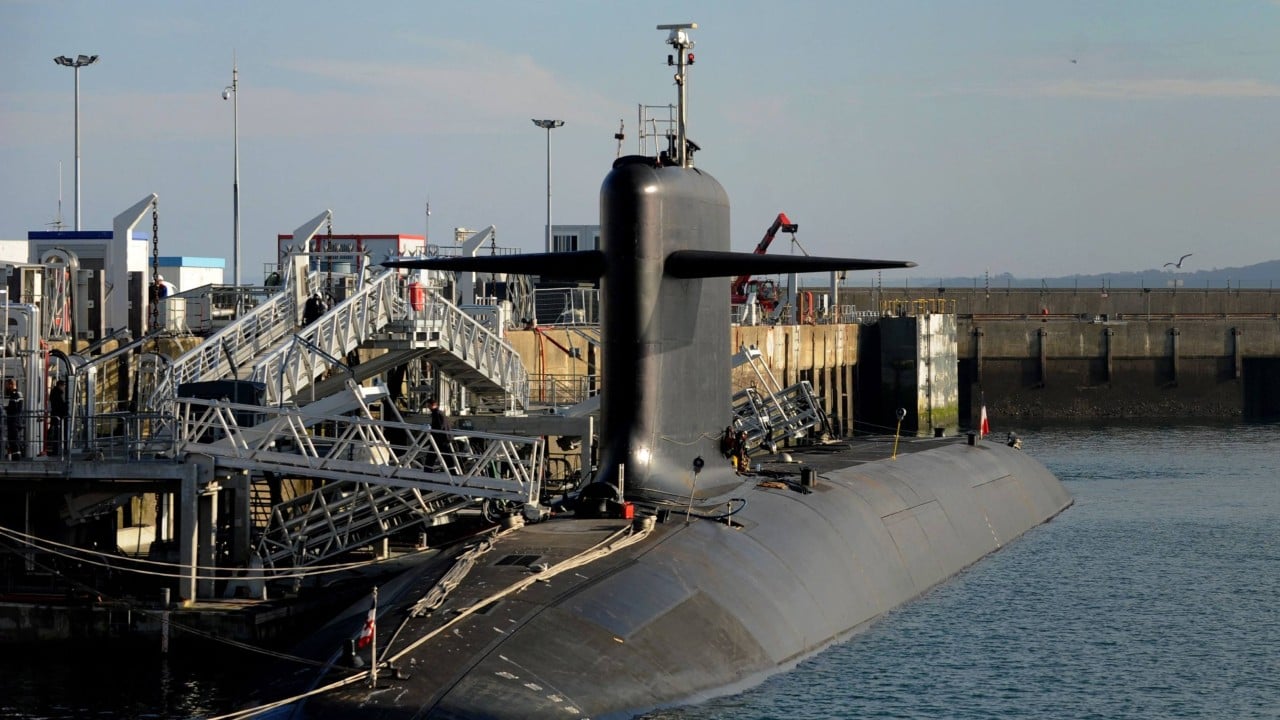
├── Force Océanique Strategic (FOST): 4 Triomphant-class SSBNs
└── Forces Aériennes Stratégiques (FAS): Rafale B / ASMPA Missiles
    └── New "Forward" Deployment: Norway, Poland, Sweden, Germany, etc.
The underlying drivers of this shift are transactional and urgent. European capitals are looking at a changing political landscape in Washington, where isolationist rhetoric is no longer a fringe opinion but a mainstream policy platform. European states are running the numbers and realizing that a localized alternative is no longer a luxury—it is an existential necessity.
The Arctic Vulnerability
Norway occupies a unique, highly perilous geographical reality. It shares a direct border with Russia's Kola Peninsula, the heavily fortified home of the Russian Northern Fleet and a massive concentration of its strategic nuclear submarines.
When Sweden and Finland joined NATO, the Nordic region was celebrated as a unified front. Yet, geographic expansion has only increased the friction points. By anchoring itself to France’s 290-warhead stockpile, Oslo is building a hedge.
If a conflict breaks out in the Arctic, the time required to mobilize a response from Washington could mean the difference between deterrence and occupation. A European-based strategic force capable of rapid forward deployment to the Nordic region cuts response times drastically.
The French Dilemma
While Macron champions this expansion as the ultimate realization of European strategic autonomy, the strategy contains a glaring structural flaw.
The French nuclear doctrine, historically known as dissuasion du faible au fort (deterrence of the weak against the strong), has always been explicitly designed to protect French national territory. Unlike the US nuclear umbrella, which is structurally integrated into NATO’s Nuclear Planning Group, France’s arsenal remains under the absolute, solitary command of the French president.
This creates a psychological gap. Would a French president actually risk Paris to save Kirkenes?
By bringing Norway, Germany, Poland, and the UK into this shared framework, France is trying to convince adversaries that its vital interests are now inextricably linked with the rest of the continent. But without a centralized, treaty-bound command structure that guarantees an automatic response, the arrangement relies entirely on political trust—a fragile currency in times of war.
A Fragmented Continent
The rush to join France's initiative reveals a deeper fragmentation within Europe itself. Oslo has signed defense pacts with Germany, the UK, and now France all within the last six months.
This rapid-fire bilateral diplomacy suggests that European leaders no longer view centralized institutions as sufficient. Instead, they are weaving a complex, overlapping web of minilateral agreements to patch the holes left by a retreating superpower.
This approach carries significant risks. A patchwork of competing defense agreements can lead to logistical confusion, duplication of effort, and conflicting chains of command during a crisis. It also risks creating a two-tier security system within Europe, separating those wealthy enough to participate in advanced deterrence schemes from those left on the periphery.
The illusion of a single, monolithic Western security architecture is dead. In its place is a raw, pragmatic scramble for survival, where even the most loyal Atlanticists are quietly placing bets on alternative protectors. Norway’s entry into the French nuclear orbit is the clearest sign yet that the continent is preparing to stand alone.