Europe is losing its grip on the orbital commons, trapped between institutional inertia and a commercial revolution it failed to fund a decade ago. While public attention fixes on headline-grabbing rocket debuts, the structural plumbing of the continent's space apparatus is fracturing under the weight of geopolitical necessity. Brussels wants orbital autonomy, but it is attempting to buy a twenty-first-century space economy with twentieth-century bureaucratic tools.
To understand why Europe's push to compete in space is moving at half-speed, look no further than the structural tension between the European Space Agency and independent commercial upstarts. For decades, institutional procurement favored massive, geographically distributed manufacturing models where every component was built across multiple member states to satisfy political stakeholders rather than economic realities. That approach birthed legendary heavy lifters like the Ariane series, yet it left the continent entirely unprepared for the high-cadence, cost-obsessed reality ushered in by private American providers. For a closer look into this area, we recommend: this related article.
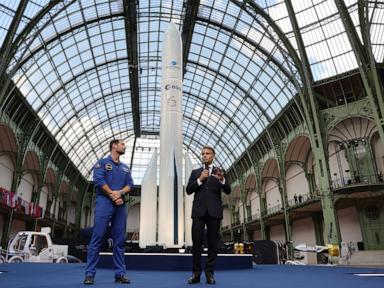
The consequences of this lag became glaringly apparent as constellations multiplied in low Earth orbit. When conventional supply chains wobbled and political realignments severed access to reliable foreign rockets, European payload operators found themselves stranded on long waiting lists. The debut of the Ariane 6 heavy launcher in its two and four-booster configurations provided a vital baseline of heavy-lift capability, backed by fresh commercial contracts announced out of Paris. Yet, heavy lifters alone do not make a resilient space ecosystem.
A quiet reckoning is underway across continental test sites. The European Launcher Challenge—backed by substantial subscriptions channeled through recent ministerial councils—has forced a reluctant pivot toward private-sector competition. Startups in Germany, Spain, and elsewhere are finally securing multi-million-euro service contracts designed to build a commercial microlauncher market from scratch. The maiden orbital flight of Isar Aerospace's Spectrum vehicle from the Andøya Spaceport in Norway proved that continental soil can successfully host private orbital launches. For additional background on this development, in-depth coverage is available on Engadget.
However, funding a handful of commercial challengers does not instantly erase a structural funding gap. When the European Space Agency proposed ambitious architecture upgrades for its heavy rockets, member states routinely slashed the requested envelopes by more than half, prioritizing short-term national budgets over deep generational investment. This chronic undercapitalization forces companies to scrape together private capital in markets far more risk-averse than their American counterparts.
Consider a hypothetical commercial satellite operator based in Munich trying to book a dedicated slot for an Earth-observation cluster. In an optimal market, they would choose among multiple domestic providers offering standardized pricing and rapid turnaround. In reality, that operator navigates a complex labyrinth of institutional subsidies, export controls, and constrained launch slots, often forcing them to look toward foreign vendors despite political pressure to keep payloads on European vehicles.
Compounding this industrial friction is the geographic isolation of Europe's premier spaceport. Kourou, nestled in French Guiana, offers unmatched equatorial advantages for heavy-lift efficiency, but it introduces logistical overhead and security vulnerabilities that continental launch sites are desperate to bypass. Developing northern spaceports in Norway and Scotland solves part of the geographic equation, yet these facilities face severe weather constraints and complex maritime integration hurdles that restrict flight frequency.
The path forward demands more than political slogans about strategic sovereignty. It requires a fundamental restructuring of how risk is shared between public agencies and private entities. If institutional authorities continue to treat commercial space firms as traditional bureaucratic contractors rather than agile partners, the continent will remain a secondary player in an orbital economy dominated by agile foreign syndicates.
The rockets are finally clearing the pad, but the bureaucratic machinery behind them must evolve or risk being left behind in the exosphere.