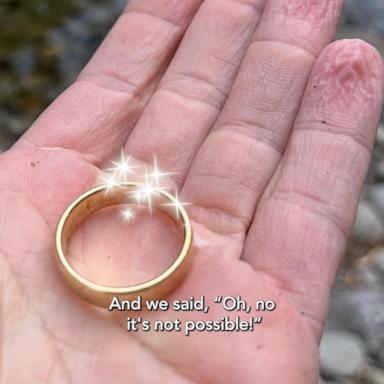
When three divers recently spent hours scouring the murky floor of a waterway to recover a lost wedding ring—eventually returning it to its owner 1,000 miles away—viral headlines framed the feat through a playful pop-culture lens, dubbing the trio modern-day "hobbits" on a quest. Beneath the novelty of a feel-good social media clip lies a sophisticated, physically demanding, and largely misunderstood subculture of volunteer recovery specialists who treat lost-item retrieval like an unpaid forensic operation.
Losing a small metallic object in a lake, river, or coastal surf zone is generally considered a permanent loss. Water refracts light, currents shift sediment within minutes, and silt swallows dense metals like gold, platinum, and tungsten almost immediately upon impact. Yet a decentralized network of recreational scuba divers and free-divers equipped with specialized underwater metal detectors routinely beats those odds, recovering high-value heirlooms without charging a dime.
The Physics of a Vanishing Ring
To understand why a three-hour search for a piece of jewelry is an extraordinary feat rather than a casual swim, you have to understand what happens the second a ring slips off a wet finger.
Gold has a specific gravity roughly nineteen times that of water. Unlike a plastic bottle or a pair of sunglasses, a wedding band does not drift gently to the bottom. It drops like a lead sinker. Once it hits the substrate—whether that is soft river silt, shifting ocean sand, or a tangled bed of aquatic weeds—gravity continues to pull it downward. Every passing boat wake, tidal surge, or river current acts like a sluice box, vibrating the surrounding sediment and allowing the dense metal to sink deeper out of sight.
Visibility drops to zero almost instantly. Even in crystal-clear spring water, the act of a diver hovering inches above the bottom kicks up a blinding cloud of organic debris known as "silt-out."
Searchers cannot rely on their eyes. They rely entirely on pulse induction and multi-frequency electromagnetic induction technology. Standard land-based metal detectors fail miserably underwater, particularly in saltwater, because the conductive minerals in the water trigger constant false signals. Submersible units must be engineered to withstand immense hydrostatic pressure while filtering out ground mineralization, isolating the distinct conductivity signature of precious metals buried up to twelve inches beneath the mud.
Anatomy of an Underwater Grid Search
Amateur treasure hunters swim in random loops, hoping to get lucky. Veteran recovery divers operate with the rigid discipline of commercial salvage crews. When a multi-diver team enters the water to locate a single lost ring, they are executing a calculated spatial containment strategy.
Establishing the Datum
Before a single tank is strapped on, the team interviews the victim with the precision of an accident investigator. Memory is notoriously unreliable during moments of panic, so divers cross-reference landmarks on the shore, sun angles, water depth at the time of the drop, and the direction of the current. This establishes the datum—the highest-probability center point of the search zone.
Line-Tending and Lane Discipline
Because disorientation happens within seconds in zero-visibility water, divers rarely free-swim during a serious recovery. Instead, they deploy weighted fiberglass measuring tapes, anchor lines, or PVC grid markers along the bottom.
A diver works a strict lane, sweeping the detector coil in slow, overlapping arcs while keeping it level and just millimeters above the substrate. If the coil swings too high at the end of an arc, a deep target is missed. If it hits a rock, it triggers a false chirp. When three divers coordinate a search, they divide the grid into parallel corridors or concentric circles, communicating via tactile line pulls or underwater acoustic signals to ensure no square foot of river bottom goes unexamined.
Target Extraction in Zero Visibility
Hearing the high-pitched whine of a valid target through waterproof bone-conduction headphones is only half the battle. Extracting a tiny ring from thick mud without burying it deeper requires a specialized technique called hand-fanning or using a perforated stainless-steel sand scoop.
The diver pinpoints the signal using a handheld submersible pinpointer, then gently waves a hand over the spot to create a localized current that lifts the silt away. In heavy gravel or clay, they scoop blindly, bringing the load up into the water column to shake out the debris while listening for the target to rattle against the steel mesh.
Why Strangers Spend Thousands to Work for Free
The viral story of three divers traveling or shipping a recovered ring 1,000 miles highlights an economic anomaly that baffles outsiders. Underwater recovery gear is brutally expensive. A reliable submersible metal detector costs between $1,200 and $3,000. Add scuba certification, tank fills, drysuits for cold water, underwater flashlights, and travel expenses, and a dedicated recovery diver easily invests $5,000 to $10,000 into their kit.
Despite these costs, organizations like The Ring Finders—a global directory of independent metal-detecting specialists—and countless regional scuba clubs operate largely on a "reward-only" or strictly volunteer basis.
The motivation is rarely financial. For seasoned divers, searching for a specific, real-world target provides an objective that standard recreational diving lacks. Swimming over a reef for the fiftieth time can become routine; hunting for a needle in a muddy haystack turns a local quarry or murky river into a high-stakes puzzle.
There is also a distinct psychological payoff. Most hobbies produce nothing tangible beyond personal enjoyment. Returning an heirloom wedding band, a deceased parent's signet ring, or a lost prosthetic device creates an immediate, profound emotional impact on another human being. That moment—watching someone's disbelief turn into tears when a piece of their personal history is placed back in their palm—serves as the primary currency of the community.
The Gray Areas of Underwater Salvage
While mainstream viral stories paint underwater metal detecting in universally glowing terms, the reality on the ground is far more complicated. The hobby sits at the intersection of murky property laws, environmental regulations, and historical preservation battles.
Not every body of water is open for business. In the United States and across Europe, federal and state laws strictly prohibit metal detecting and artifact recovery on protected public lands, national parks, and historic shipwreck sites. Laws like the Archaeological Resources Protection Act make it a felony to remove historical items over 100 years old from public property, regardless of whether the diver intends to sell them or keep them.
Even in municipal lakes and public beaches, local ordinances vary wildly. Some park districts welcome volunteer divers because they remove hazardous trash—rusted fishhooks, broken glass, sharp pull-tabs, and lead weights—alongside lost jewelry. Other municipalities ban digging or bottom disturbance entirely, arguing that fanning sediment disrupts benthic ecosystems and clouds the water for other recreational users.
Ethical recovery divers navigate these gray areas by obtaining explicit permission from property owners or local authorities before entering the water, focusing strictly on recent losses rather than historical sites, and practicing a strict "pack it out" rule for every piece of metallic garbage they unearth.
What to Do When You Lose Valuables in the Water
Most people ruin their chances of recovering a lost item within the first five minutes after it slips away. Panic leads to thrashing, and thrashing kicks up sediment that buries the object deeper while pushing it away from the drop zone.
If you drop a ring, watch, or set of keys into the water, freeze immediately. Do not kick your feet or swipe blindly at the bottom.
Take a mental snapshot of your exact position by lining up two stationary objects on the shore—such as a specific tree aligned with a building corner or a dock piling—and then turn ninety degrees to find a second set of alignment points. Drop a heavy, non-metallic marker like a water bottle filled with sand or a bright dive weight right at your feet if you can do so without disturbing the bottom.
Once you exit the water, record the exact time of day. For coastal losses, knowing the precise minute of the drop allows recovery divers to calculate the tidal height and current direction, narrowing a massive stretch of beach down to a manageable twenty-foot strip. Contact a verified local recovery network rather than posting publicly on neighborhood forums, as unscrupulous opportunists occasionally monitor public lost-and-found boards to poach high-value targets for themselves.
The viral fascination with three divers acting out a fantasy quest misses the real story. There is nothing mythical about what happens beneath the surface. It is cold, dark, methodical work performed by people who have mastered specialized acoustics, underwater navigation, and fluid dynamics just to hand a stranger back a piece of their life.