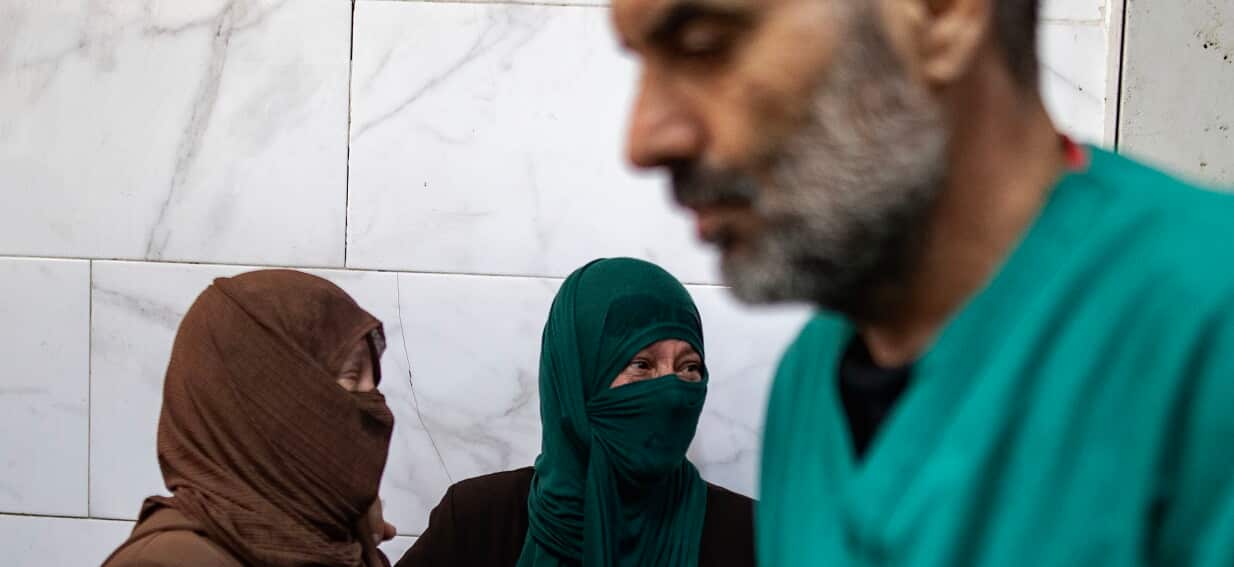
An Israeli airstrike targeting a tent encampment in Al-Mawasi, a supposedly secure humanitarian zone west of Khan Younis, killed six-year-old Mennatallah Abu Libda and 31-year-old Hanan Mahmoud on Monday. The attack, reportedly carried out by low-flying military helicopters, tore through nylon and canvas shelters, wounding 17 others, mostly women and children.
While the incident was reported across wire services as another isolated tragedy of the ongoing conflict, it highlights a structural failure in the international diplomatic architecture. This strike did not occur during open warfare. It happened under the umbrella of a highly publicized ceasefire brokered late last year by the United States.
The political theater of a diplomatic truce has created a lethal paradox on the ground. While global headlines broadcast a negotiated pause, the actual terms of the armistice allow specialized kinetic operations that yield high civilian casualties. According to data provided by local medical authorities in the enclave, at least 900 Palestinians have been killed in targeted strikes since the October truce officially went into effect.
The Deadlock and the Buffer Zones
The fundamental flaw lies in how the truce agreement was drawn up and how it is being enforced. The diplomatic framework left Israel in direct administrative and military control of more than half of the Gaza Strip. The remaining population and the remnants of Hamas's civil governance are crammed into a narrow coastal strip.
Because the second phase of the agreement—which demands the total disarmament of militant groups and a phased withdrawal of the Israeli army—remains permanently stalled, the armistice line has become a dynamic combat zone.
+-------------------------------------------------------------+
|               THE CEASEFIRE PARADOX IN NUMBERS              |
|          (Stats recorded since the October Truce)          |
+-------------------------------------------------------------+
| Palestinian Casualties (Gaza Health Authorities)  |   900   |
+-------------------------------------------------------------+
| Israeli Military Fatalties (IDF Reports)            |     4   |
+-------------------------------------------------------------+
| Displaced Persons Encampments Target Baseline       | Mawasi  |
+-------------------------------------------------------------+
The Israeli military maintains that its operations do not violate the spirit of the truce. The official defense policy stipulates that any strike conducted post-ceasefire is either a preemptive measure to block an imminent attack or an enforcement mechanism to prevent displaced persons from crossing the armistice line.
Following Monday's strike in Khan Younis, the Israel Defense Forces (IDF) issued a brief statement noting they had targeted "militants in the area." They provided no further intelligence summaries to justify the use of heavy aerial munitions in a crowded displacement camp.
Hours later, the military announced a separate, successful strike in the Nuseirat refugee camp that killed Mohammad Abu Mallouh, described as a senior operative within Hamas’s weapons manufacturing division. According to Palestinian medical workers, that specific apartment strike also killed Abu Mallouh’s wife and their six-month-old child. Hamas, keeping with standard operational security, has not confirmed the administrative rank or combat status of the deceased men.
The Illusion of Secure Space
For the families living in these tent cities, the term "humanitarian zone" has become a cruel misnomer. Al-Mawasi was designated early on as a sanctuary for those fleeing the destruction of northern and central Gaza. Instead, it has transformed into a high-density zone where the lack of solid infrastructure turns small-scale explosions into mass-casualty events.
A standard military strike against a fortified structure localized the blast radius. When munitions hit a collection of temporary shelters made of wood, plastic sheet, and canvas, the kinetic energy and shrapnel travel horizontally through dozens of tents unimpeded.
"There is no ceasefire, nothing at all," stated Khader Abu Libda, a relative of the six-year-old girl killed in the strike, during her burial procession. "It's all just deceiving people, nothing more and nothing less."
The tactical reality is that the Israeli air force continues to utilize armed drones and attack helicopters to patrol these designated safe areas. When intelligence units identify a high-value asset or a suspect approaching a restricted perimeter, the command structure authorizes strikes based on rules of engagement that accept high ratios of collateral damage, even during an official truce.
A Regional Strategy of Kinetic Attrition
The disconnect between diplomatic declarations and military actions is not unique to the Gaza Strip. A parallel breakdown is occurring along the northern front in Lebanon, where an extension of a separate ceasefire has done little to halt structural violence.
Just days before the Al-Mawasi strike, an Israeli double-tap drone strike in southern Lebanon killed three medical first responders and a Syrian toddler. The tactical signature of these operations reveals a policy of attrition that prioritizes the elimination of low-level targets over the preservation of fragile diplomatic arrangements.
By striking a moving target, such as a motorcycle or a temporary vehicle, and then hitting the same site when local emergency services arrive, the military neutralizes immediate threats but hollows out the local humanitarian infrastructure. Over 120 medical personnel have been killed in Lebanon under similar circumstances, establishing a precedent where international legal protections for medics and children are routinely subordinated to tactical necessities.
The international community's reliance on "phases" in peace agreements often guarantees failure. By treating a cessation of hostilities as a multi-step process dependent on political concessions that neither side is willing to make—such as Hamas surrendering its remaining arsenal or Israel abandoning strategic corridors—mediators create a gray zone. In this zone, the media reports peace, politicians claim diplomatic victories, and the military continues to execute its target banks.
The ongoing strikes prove that the current agreement is not a peace process. It is a managed conflict, where the costs are borne almost entirely by civilians who have run out of places to run.