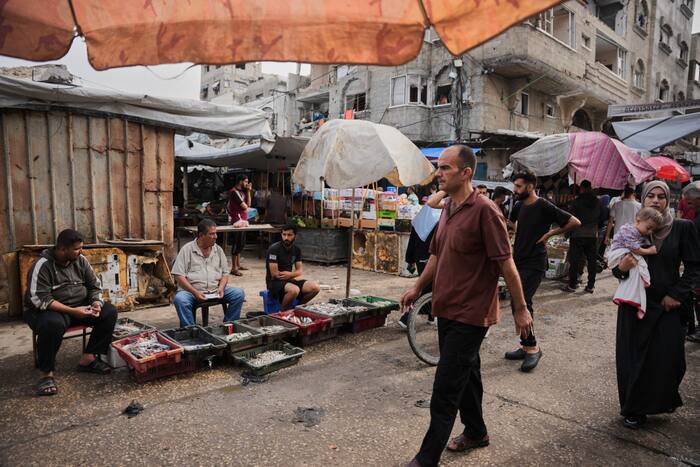
When commercial goods stop moving into Gaza, the immediate consequence is not simply an empty stall in a neighborhood market; it is a rapid price shock that strips basic groceries out of reach for families who already have almost no cash. Humanitarian aid and private commercial goods do different jobs inside a battered economy, and confusing the two leads straight to bad policy and worse reporting. Aid keeps people from starving on rations, while private trade stocks everyday staples—fresh produce, eggs, cooking supplies, and household essentials—that keep local markets functioning.
Surface-level coverage usually treats a halt on commercial goods as a simple on-off switch flipped at a border gate. After covering supply chains and border crises across conflict zones for years, I have learned that the real breakdown happens long before a truck reaches the inspection lane. Permits stall, traders hesitate over security and extortion risks, and dual-use inspection lists quietly choke off everything outside a narrow band of approved food.
Why Commercial Goods Matter More Than Headline Truck Counts
Politicians and commentators love a clean truck tally. It fits on a chyron and sounds like progress.
In reality, counting trucks without separating commercial goods from humanitarian relief distorts what is actually happening inside Gaza. A shipment of donated flour or shelter tarps is a lifeline, yet it does not replace a neighborhood grocer buying eggs, vegetables, or lentils to sell at market prices. When commercial entries drop sharply or pause altogether, shelves thin out within days and traders who hold remaining stock raise prices the moment rumor of a closure spreads.
Consider a simplified, hypothetical example to see how the math works on the ground. Suppose a Gaza family has 100 shekels for the week and receives a modest ration of dry goods from an aid group. If commercial shipments keep local eggs, cooking oil, and fresh vegetables flowing, that 100 shekels stretches across several basic meals. Shut off the commercial lane, and the same carton of eggs or bag of flour jumps in price because supply is trapped behind a bottleneck while anxiety spikes. Families with savings buy ahead; families living day to day simply drop items off their list or skip meals.
| Supply Channel | Primary Role Inside Gaza | Main Bottleneck When Restricted | Direct Impact on Residents |
|---|---|---|---|
| Humanitarian Aid | Emergency food parcels, medical items, shelter relief | Crossing quotas, inspection delays, distribution access | Prevents acute destitution, though rations often fall short of full monthly needs |
| Commercial Goods | Everyday food variety, household items, market restocking | Halted coordination, security/extortion threats, strict cargo rules | Sharp price spikes, thin market shelves, uneven access based on cash |
| Dual-Use & Repair Items | Tools, materials, equipment for shelter and upkeep | Expanded restriction lists and security vetoes | Stalled repairs, winter exposure, unsafe living conditions |
The Hidden Mechanics Behind Border Halts
Anyone who has watched border trade in the Levant knows that closures rarely come from a single cause. Sometimes the halt is an official suspension of private-sector coordination by authorities controlling the crossing. Other times, merchants themselves pull back when routes become unviable, when payments get tangled in a severe liquidity crisis, or when armed actors and extortion demands turn transport into a gamble.
Security enforcement is a legitimate concern in any active or fragile conflict zone. Inspectors worry about smuggling, weapons components, and dual-use items that could serve military purposes alongside civilian ones. Yet when inspection criteria expand without clear predictability, legitimate commercial goods get caught in the crossfire. A merchant cannot plan a shipment if a load that passed last week is rejected this week, or if a truck sits waiting for days while perishable food spoils.
- Unpredictable customs rules: Shifting definitions of restricted or dual-use cargo turn routine imports into high-risk bets for private traders.
- Fragile cash and banking: Even when goods appear in a market, families with shrunken incomes and limited liquidity struggle to pay inflated prices.
- Road and storage limits: Without steady power for refrigeration and intact local transport, fresh food cannot be stockpiled for long.
Price Gouging vs. Genuine Scarcity
When prices shoot up during a halt on commercial goods, residents often blame local merchants for profiteering. That anger is understandable when you are watching the price of a staple climb while your wallet stays empty.
Still, the economics are messier than pure greed. When a trader knows the next shipment is uncertain, selling off remaining inventory at normal prices can mean going out of business entirely. Higher prices ration scarce goods in the short term, even as they lock out poorer households. Blaming traders alone misses the structural choke point at the border; blaming the border alone ignores how fear and thin supply amplify price swings inside the territory.
What Aid Alone Cannot Fix
There is a persistent myth in crisis management that if enough humanitarian aid trucks cross the line, commercial trade is secondary. It is not.
Aid agencies operate on fixed mandates, donor budgets, and standardized relief baskets. They are built for emergencies, not for running a diverse retail economy for more than two million people. Private merchants source a wider range of foods, respond faster to local demand, and keep small businesses alive—provided rules are clear and enforcement is clean.
A territory cannot rebuild normal daily life on emergency rations alone, nor can it sustain a healthy market when commercial access turns on and off by the week.
👉 See also: The Cheap Sky Over the Desert
Even when food shipments resume or stabilize, winter weather and damaged infrastructure expose what a food-only mindset leaves behind. Cold rain, flooding risks, and crumbling structures hit hardest when repair materials, shelter supplies, and everyday household goods remain tightly restricted. Fixing commercial goods access requires transparent inspection standards, credible security along transit routes, and a realistic way for ordinary families to earn enough to buy what reaches the stall.
Restarting commercial goods on paper after a brief pause does little to restore trust if the next closure is always one security incident or administrative order away. Real stability only begins when predictable rules replace ad-hoc freezes and market prices stop acting as a weekly shock to people who have no cushion left.