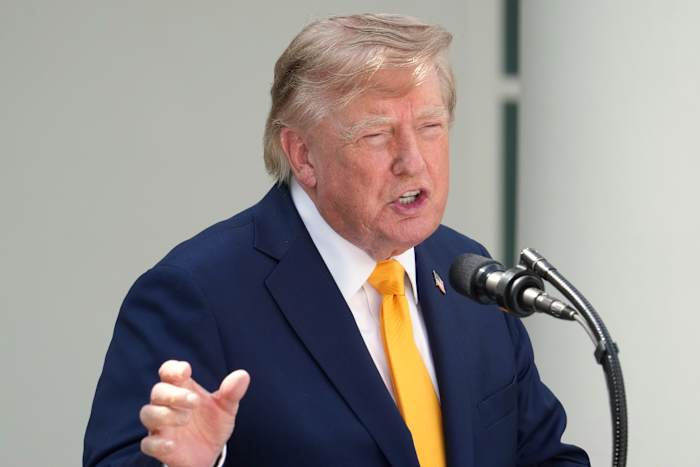
President Donald Trump floated a proposal to rename Lake Ontario as "Lake America", using cartographic provocation as a weapon in a rapidly escalating trade dispute with Canada. The announcement, delivered via social media, arrives on the heels of collapsed bilateral negotiations and the imposition of heavy fifty percent tariffs on billions of dollars worth of Canadian goods. While public attention fixates on the theatrical absurdity of renaming a shared transboundary body of water, the underlying mechanics reveal a dangerous unraveling of the most integrated supply chains in modern industrial history.
The Anatomy of a Breakdown
Trade disputes rarely erupt overnight, but the speed at which Washington and Ottawa transitioned from diplomatic friction to economic warfare caught seasoned analysts off guard. Talks broke down after the White House introduced strict demands regarding Canadian trade autonomy, sovereignty protections, and cultural exemptions, particularly concerning French-language rights in Quebec. Canadian Prime Minister Mark Carney walked away from the table, declaring that American negotiators expected Canada to act as a mere economic subsidiary rather than an equal partner. For a different look, read: this related article.
Retaliation was immediate in rhetoric and swift in policy. Following the implementation of steep American tariffs on approximately twenty billion dollars of Canadian imports, Ontario emerged as the primary bullseye. As Canada's most populous province and the beating heart of its automotive sector, Ontario bore the brunt of both executive vitriol and economic targeting. Provincial leadership traded fiery insults with Washington, transforming a complex structural disagreement over industrial policy into a bitter personal feud.
Beyond the Map Lines
The suggestion to christen Lake Ontario with a nationalist moniker echoes previous symbolic gestures, such as the administration's unilateral redesignation of the Gulf of Mexico. Yet maps drawn in Washington hold no legal weight in Ottawa, nor do they alter the physical reality of hydrology. Lake Ontario spans an international boundary, serving as a shared resource governed by decades of joint environmental stewardship, transit treaties, and commercial navigation agreements. Related reporting on this matter has been provided by TIME.
Renaming a shared lake via executive declaration changes nothing about who controls the shoreline or how cargo vessels transit the St. Lawrence Seaway. It does, however, signal a profound philosophical shift in how foreign policy is conducted. Diplomacy has been replaced by naming rights and economic coercion. By explicitly stating that the United States does not anticipate conducting meaningful commerce with Ontario moving forward, the administration is signaling a willingness to fracture regional interdependencies that took nearly a century to construct.
The Industrial Toll on the Ground
Away from the podiums and social media feeds, manufacturers on both sides of the border are staring down a logistical nightmare. Modern industrial production does not respect national boundaries when a single automobile part crosses the border multiple times before final assembly. A Warren, Michigan furniture manufacturer recently noted that dismissing Canada as unnecessary is fundamentally dishonest, pointing to integrated supply chains that sustain blue-collar employment throughout the American Midwest.
Steel, aluminum, energy grids, and agricultural products form an intricate web of mutual reliance. When tariffs spike to fifty percent on core industrial inputs, factories in Ontario and Michigan face identical cost pressures. Margins evaporate, consumer prices climb, and long-term capital investment grinds to a halt as executives try to forecast regulatory environments that shift by the hour.
Ottawa is preparing targeted countermeasures designed to protect domestic workers without triggering an unmitigated spiral of inflation. Yet as political lines harden and leaders exchange insults rather than concessions, the window for a negotiated de-escalation narrows. Cartographic posturing makes for striking headlines, but it offers cold comfort to the workers whose livelihoods depend on the border staying open.