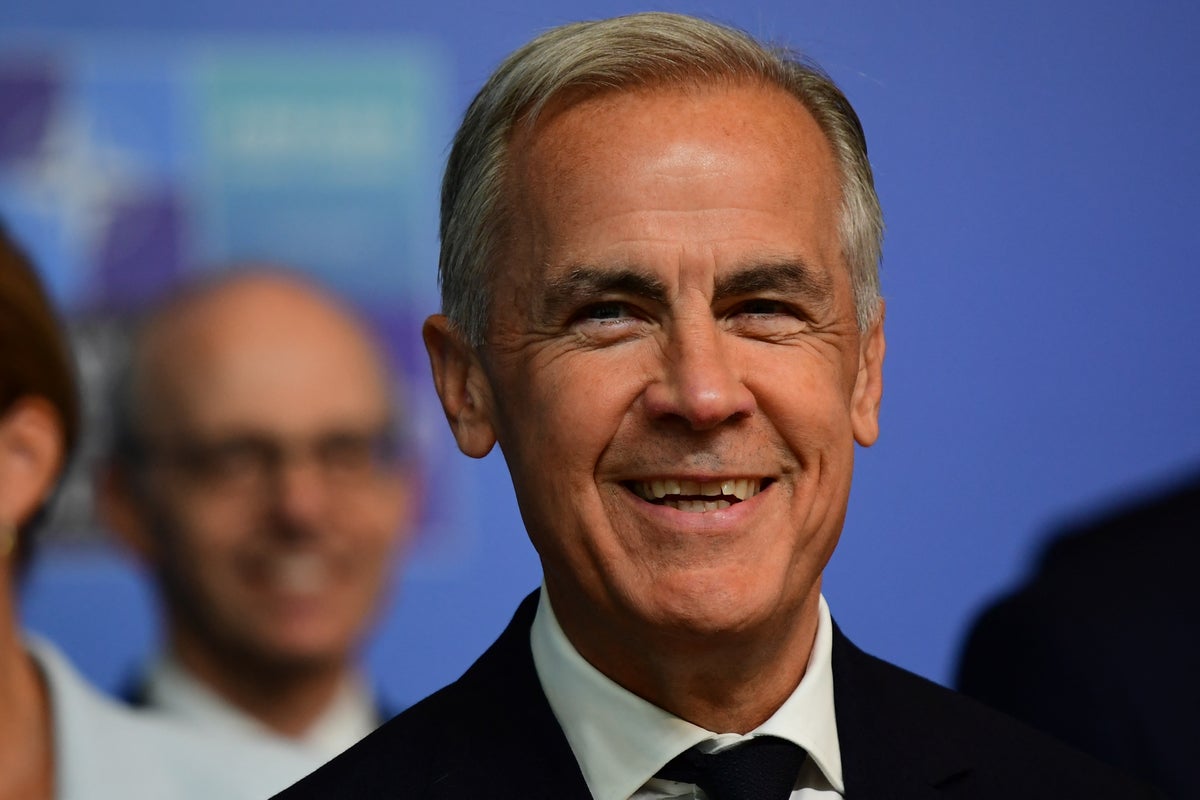
Canadian Prime Minister Mark Carney turned a routine technical hiccup into a calculated geopolitical signal during a housing policy address in Toronto, mocking U.S. President Donald Trump’s past grievances over equipment malfunctions. When the text screens died mid-sentence, Carney paused, smiled, and told the room that unlike a certain American counterpart, he did not view the sudden blackout as a deep-state conspiracy.
The room laughed. Washington did not. Beneath the surface humor lies a chilling indicator of how deteriorated the diplomatic channel between the White House and Ottawa has become. Decades of polite, predictable neighborly relations have fractured into open public sparring, driven by structural economic pressures and clashing visions of global power.
The Anatomy of a Calculated Quip
To write off Carney's teleprompter joke as mere stand-up comedy misses the entire machinery of modern political communication. Leaders do not improvise foreign policy friction on a whim. Every public utterance is filtered through layers of advisors, pollsters, and strategic goals.
When Carney referenced Trump’s infamous United Nations General Assembly meltdown—where the U.S. President demanded a formal investigation into a halted escalator and a dead teleprompter—he was doing more than scoring cheap points. He was projecting psychological composure. In the arena of asymmetric diplomacy, appearing unshakeable while your larger neighbor imposes crippling tariffs is a vital asset.
Canada faces an existential economic squeeze. With the White House pushing broad tariffs on Canadian exports—spanning everything from construction cement to industrial lumber and consumer goods—and openly floating absurd proposals about Canada becoming the fifty-first state, Ottawa's leadership has been forced to pivot. Carney’s lighthearted handling of a dead piece of hardware contrasts sharply with the heavy-handed economic coercion coming from south of the border.
Deconstructing the Economic Chasm
The friction is rooted in cold, hard numbers rather than petty personality clashes. For generations, the Canadian economy operated on the comfortable assumption of frictionless integration with the United States market. Supply chains crossed borders multiple times before a finished product rolled off an assembly line.
That architecture is now crumbling. Carney has made it clear through policy actions that Canada must aggressively diversify its trade partnerships, weaning itself off an American addiction that has turned dangerous. Trade ministers in Ottawa are currently scrambling to find alternative alignments across Europe and the Indo-Pacific, knowing full well that reliance on a volatile Washington administration is a systemic vulnerability.
The weapons being deployed today are not traditional infantry divisions. They are regulatory penalties, sudden tariff walls, and strategic supply chain blockades. When major powers weaponize economic integration, middle powers like Canada find themselves in a precarious bind. They either bend the knee or build alternative economic corridors. Carney has chosen the latter, even if the transition path is fraught with inflation and domestic industrial pain.
The Death of the Rules-Based Order
Carney’s broader international speeches have repeatedly warned of a structural shift in global affairs. The post-Cold War consensus built around multilateral trade agreements, predictable dispute-resolution mechanisms, and institutional norms is effectively over. In its place stands a transactional, zero-sum arena where might makes right and economic size dictates compliance.
This reality explains why a minor teleprompter outage in Toronto commands global headlines. It serves as a microscopic reflection of a macroscopic fracture. When the leader of a G7 nation mocks the leader of another over technical paranoia, it signals that the traditional diplomatic guardrails have eroded completely. Mutual respect has been replaced by calculated public deterrence.
Ottawa's strategy carries immense risk. Antagonizing a protectionist U.S. administration can trigger immediate retributions that hit ordinary Canadian workers hardest. Yet, capitulating to demands for annexation or structural economic subordination is politically fatal. Carney walks a razor-thin line, using sharp rhetoric to rally domestic morale while his trade negotiators work behind closed doors to salvage whatever bilateral stability remains before impending tariff deadlines hit.
The laughter that filled the Toronto auditorium will fade quickly. What remains is a hard-edged reality where economic survival demands absolute vigilance, and where even a blank teleprompter becomes a battlefield in the ongoing war for national sovereignty