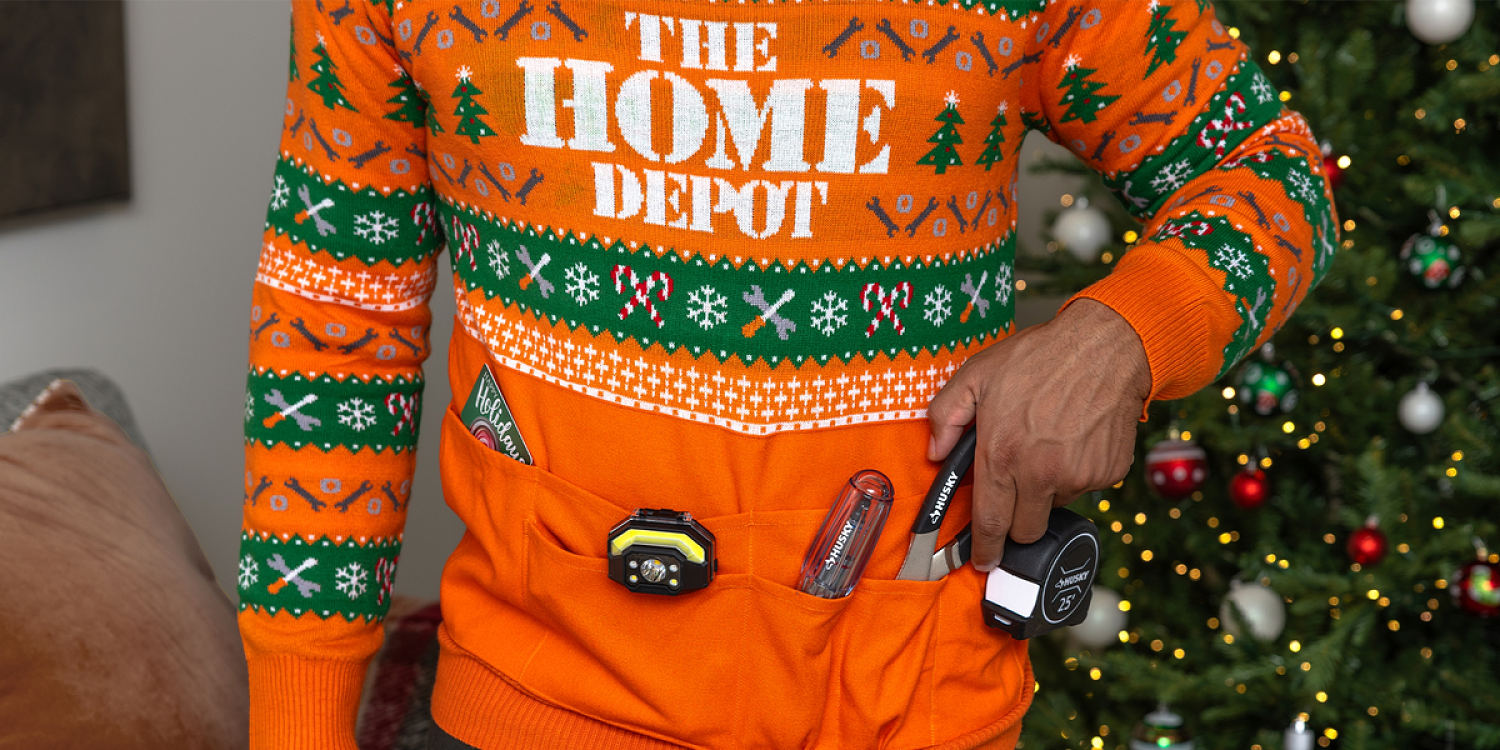
The return of the Home Depot holiday sweater is rarely about knitwear. It is about manufactured urgency, brand extension, and a hardware giant turning its signature orange apron into seasonal street cred. Every autumn, shoppers scramble to track down a novelty garment from a store known for drywall, lumber, and plumbing fittings, convinced that inventory will vanish overnight.
To understand why a home improvement retailer commands cult-level devotion over an ugly Christmas sweater, you have to look past the festive motifs and examine how modern retail actually works. Scarcity sells. Nostalgia sells even harder. When a billion-dollar chain drops a limited-run novelty item, it tests how far brand equity can stretch before the joke wears thin. If you enjoyed this article, you should look at: this related article.
How a Hardware Giant Became a Seasonal Fashion Drop
Most people walk into a home improvement store because a pipe burst, a deck needs staining, or a room needs new trim. They do not go there looking for holiday wardrobe staples. Yet over the past several years, novelty seasonal apparel from big-box retailers has shifted from cheap clearance-bin afterthoughts to social media events.
The Home Depot holiday sweater sits squarely at that intersection. By translating recognizable store imagery—tool belts, buckets, seasonal motifs, and bold color blocking—into knitwear, the company turns everyday utility into an inside joke. You are not just buying acrylic yarn. You are buying a wink. For another perspective on this event, refer to the latest update from MarketWatch.
That wink carries real commercial weight. Retailers spend millions trying to stay top-of-mind during the fourth quarter when consumer attention fractures across dozens of gift guides and flash sales. A viral novelty sweater does work that traditional display ads struggle to match. People photograph it. They wear it to office parties. They tag friends who spend half their weekends in the garden center.
When a hardware chain sells out of a seasonal sweater, the real prize is not the margin on the garment. It is the free media coverage and brand warmth that money cannot easily buy.
Still, there is a mechanical side to the hype. Limited production runs create real bottlenecks. When a retailer orders a finite batch of a seasonal item to test demand or avoid being stuck with unsold winter inventory in January, stockouts happen naturally. Once shoppers see posts claiming a drop is selling fast or returning after a sellout, buying behavior shifts from casual browsing to defensive grabbing.
Consider a hypothetical example. Suppose a mid-sized regional retailer releases five thousand novelty sweaters with zero marketing budget, and four thousand sell in the first ten days. To a shopper watching online chatter, that looks like a runaway smash. Internally, the merchant might simply be relieved they did not over-order a risky item that could sit on racks until spring.
The Scarcity Playbook Behind Seasonal Sellouts
Retail scarcity is part logistics, part psychology. Nobody likes feeling late to a party, especially a cheap, cheerful holiday party where everyone is supposed to be in on the joke.
When coverage frames a seasonal release around urgency—telling readers to grab it before it disappears again—it taps into loss aversion. Shoppers often react more strongly to the fear of missing out on a quirky item than they do to the actual utility of owning it. A sweater you might wear twice a year suddenly feels urgent because other people are talking about it.
From an industry standpoint, this dynamic is fascinating because novelty apparel has notoriously thin staying power. A great cordless drill can earn lifelong loyalty. A tacky holiday sweater usually has a shelf life measured in weeks. Yet the short lifespan is precisely why urgency matters. If you miss November and December, waiting until next year feels like losing a season.
Inventory Risk and Margin Reality
Big-box merchants live and die by inventory turnover. Every square foot of shelf space and warehouse capacity has an opportunity cost. If a chain overcommits to a novelty SKU and demand cools early in the season, markdowns eat the profit fast.
Under-ordering, by contrast, protects margins and fuels buzz. If a batch sells through quickly, the retailer avoids dead stock and gets headline coverage about high demand. That creates a win-win on paper, though it frustrates customers who show up late and find empty virtual shelves.
There is a catch, though. Manufacturing lead times for seasonal goods are long. Factories overseas often lock in production schedules months in advance. A sudden "return" of a popular design is rarely a spur-of-the-moment reaction to a single viral post; it usually reflects planned waves, restocked allocations, or multi-season recycling of winning themes.
Why Shoppers Chase Store-Branded Novelty Gear
Walk past any office holiday gathering or neighborhood get-together and you will see the same pattern. People gravitate toward clothing that signals personality without taking itself too seriously. A Home Depot holiday sweater checks that box immediately. It is loud, unmistakable, and slightly absurd.
There is also a distinct demographic appeal. Homeownership, DIY projects, and weekend yard work carry a certain badge-of-honor energy. Wearing something tied to a home improvement store lets a shopper project practicality and humor at the same time. Even renters and apartment dwellers join in because the aesthetic feels nostalgic and grounded.
Price plays a role, too. Novelty holiday sweaters are typically impulse buys rather than major investments. When the price point stays accessible, the barrier to entry is low. A shopper does not need to deliberate for weeks over a seasonal gag garment the way they might over a winter coat or a major appliance.
The Fine Line Between Clever and Cliché
Novelty trends have a predictable arc. First comes surprise. Then comes adoption. Eventually comes fatigue.
When too many brands chase the exact same seasonal gimmick, the novelty dulls. What felt fresh and cheeky three years ago can start looking predictable if every retailer releases a wink-and-nod sweater with the same visual playbook. Shoppers are sharper than marketers sometimes give them credit for; they can spot a tired formula even when it comes wrapped in festive colors.
Quality is another pressure point. Novelty knitwear is often made from synthetic blends designed to hit a specific retail price rather than last a decade. That is fine for a fun seasonal piece, provided expectations stay realistic. Anyone expecting heirloom craftsmanship from a novelty holiday sweater is shopping the wrong aisle.
What Smart Buyers Actually Do Instead of Panicking
If you genuinely want a Home Depot holiday sweater for an upcoming party, family photo, or gift exchange, panicking over sellout rumors is rarely the best move. Impulse buying under pressure often leads to paying inflated resale prices or settling for knockoffs that miss the mark.
Start by checking official channels directly rather than relying on secondhand markups. Sizing in novelty apparel can run boxy, cropped, or inconsistent depending on the cut, so checking size charts and return policies matters more than rushing through checkout in thirty seconds.
Think about how you will actually use it. If you plan to wear it once to a white elephant exchange or a casual gathering, spending top dollar on the secondary market makes very little sense. If you love collecting quirky seasonal pieces and know you will pull it out every December, buying early at normal retail prices is the smarter play.
Retailers will keep staging seasonal drops because novelty sells attention, and attention drives traffic across the rest of the store. Watch the hype with clear eyes, buy only what you actually want to wear, and leave the panic to the algorithms.