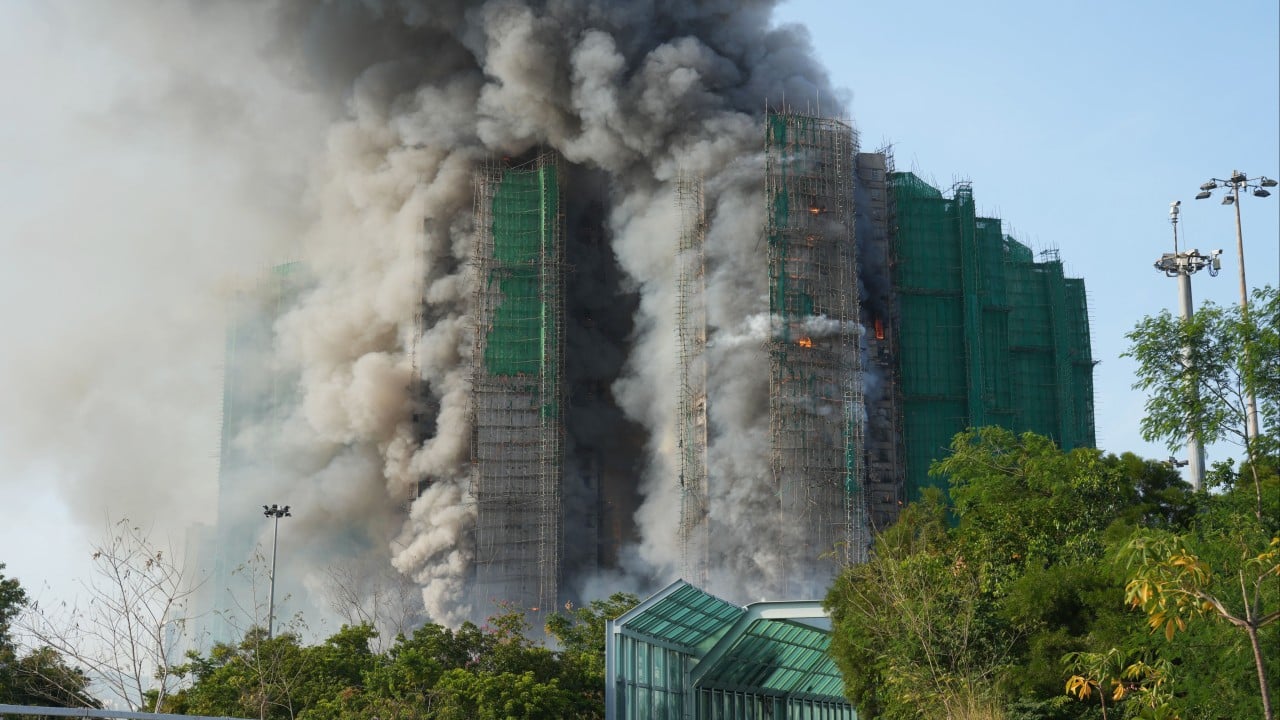
Hong Kong's top security official has pledged to dismantle entrenched bid-rigging networks through a dedicated multi-agency task force, targeting collusive tender practices that artificially inflate construction and building maintenance costs across the city. While the government's enforcement push signals a renewed focus on anti-competitive behavior, historical precedent and market mechanics show that task forces alone rarely cure the structural vulnerabilities that allow tender collusion to thrive.
For decades, the mechanics of Hong Kong's property maintenance and public works sectors have created fertile ground for price-fixing cartels. When mandatory building inspection schemes or government-subsidized renovation grants flood the market with capital, owners' corporations—often run by volunteer residents with zero procurement experience—suddenly hold the purse strings to contracts worth tens of millions of dollars. That mismatch between vast sums of money and amateur oversight is where syndicates make their living. If you liked this article, you might want to look at: this related article.
How Cartels Actually Operate Behind Closed Doors
To understand why a security-led task force faces an uphill battle, you have to look at how bid-rigging actually works on the ground. It rarely looks like a smoky backroom handshake with bags of cash. Instead, it relies on legal corporate structures, shell companies, and procedural manipulation that mimic genuine competition on paper.
Consider a hypothetical example of a typical residential estate renovation tender. An owners' corporation issues a call for bids to refurbish exterior facades and upgrade fire safety systems. Ten contractors submit proposals. To the untrained eye, the process appears fiercely competitive. In reality, a single syndicate controls seven of those ten companies through layered directorships, shared administrative offices, or silent financial backers. For another angle on this development, check out the recent coverage from The New York Times.
The syndicate deploys a technique known as cover bidding. Six of the controlled firms submit artificially inflated quotes—deliberately priced 20% to 40% above fair market value. The seventh firm submits a bid that is still vastly overpriced, perhaps 15% above legitimate market rates, but looks like a bargain compared to the six decoys. The three genuinely independent contractors, meanwhile, either get squeezed out through rigged technical scoring criteria or are quietly paid off—a practice known as bid suppression—to withdraw their proposals before the final vote.
The Role of Tainted Consultants
The weakest link in the procurement chain is rarely the contractor; it is the project consultant. Under standard Hong Kong building management practices, layperson committees hire engineering or surveying consultancies to draft tender specifications, vet applicants, and score submissions.
When a syndicate compromises the consultancy, the game is over before the first tender box is even opened. A rogue consultant can tailor technical requirements so narrowly that only cartel-affiliated contractors qualify. They might demand obscure proprietary materials, impose arbitrary minimum capital thresholds, or weight subjective "management capability" metrics heavily enough to disqualify any independent bidder offering a lower price.
Once the inflated contract is awarded, the financial extraction continues through variation orders. A contractor bids aggressively low to win the tender, only to collude with the supervising consultant to approve dozens of "unforeseen" structural repairs once scaffolding goes up. By the time the project finishes, the final bill routinely doubles the original contract sum.
Why Enforcement Alone Hits a Wall
Deploying a high-profile task force involving police, anti-corruption investigators, and competition regulators brings undeniable investigative firepower. Raids, digital forensics, and financial tracing can disrupt active syndicates and put high-profile operators behind bars. Yet veteran observers of Hong Kong's construction and property sectors recognize a recurring pattern.
Enforcement is reactive by design. By the time investigators gather enough admissible evidence to prove beyond a reasonable doubt that two seemingly separate companies coordinated their pricing, the scaffolding is down, the money has been laundered through layers of sub-contractors, and elderly homeowners have already liquidated their savings to pay inflated levies.
Criminal prosecution requires proof of intent and overt coordination, whereas economic survival in a cartelized market often relies on tacit understanding that leaves no paper trail.
There is also the problem of market concentration. Hong Kong's specialized contracting sector is relatively small. Even when a syndicate's front companies are blacklisted or dismantled, the actual pool of licensed tradespeople, scaffolding suppliers, and material vendors remains largely unchanged. New corporate shells register within weeks, staffed by the same site foremen and project managers who operated under the previous banner.
The Evidentiary Bottleneck
Investigators face a steep legal climb when separating legitimate parallel pricing from illegal collusion. Construction costs in Hong Kong are notoriously volatile, driven by labor shortages, strict safety regulations, and fluctuating material import prices. When five contractors submit nearly identical quotes within a 2% margin of one another, defense lawyers inevitably argue that all five firms calculated their bids using the exact same industry cost estimators and supplier price lists.
Proving otherwise requires whistleblowers, leniency applicants, or covert surveillance. While Hong Kong's competition framework includes leniency policies that grant immunity to the first cartel member to confess, breaking the code of silence in a tight-knit local industry carries severe commercial and personal risks. Subcontractors who cooperate with authorities often find themselves quietly frozen out of future work across the entire sector, regardless of formal witness protection mechanisms.
The Economics of Vulnerability
If criminal enforcement only addresses the symptoms, what drives the underlying disease? The answer lies in the structural asymmetry of Hong Kong's urban landscape.
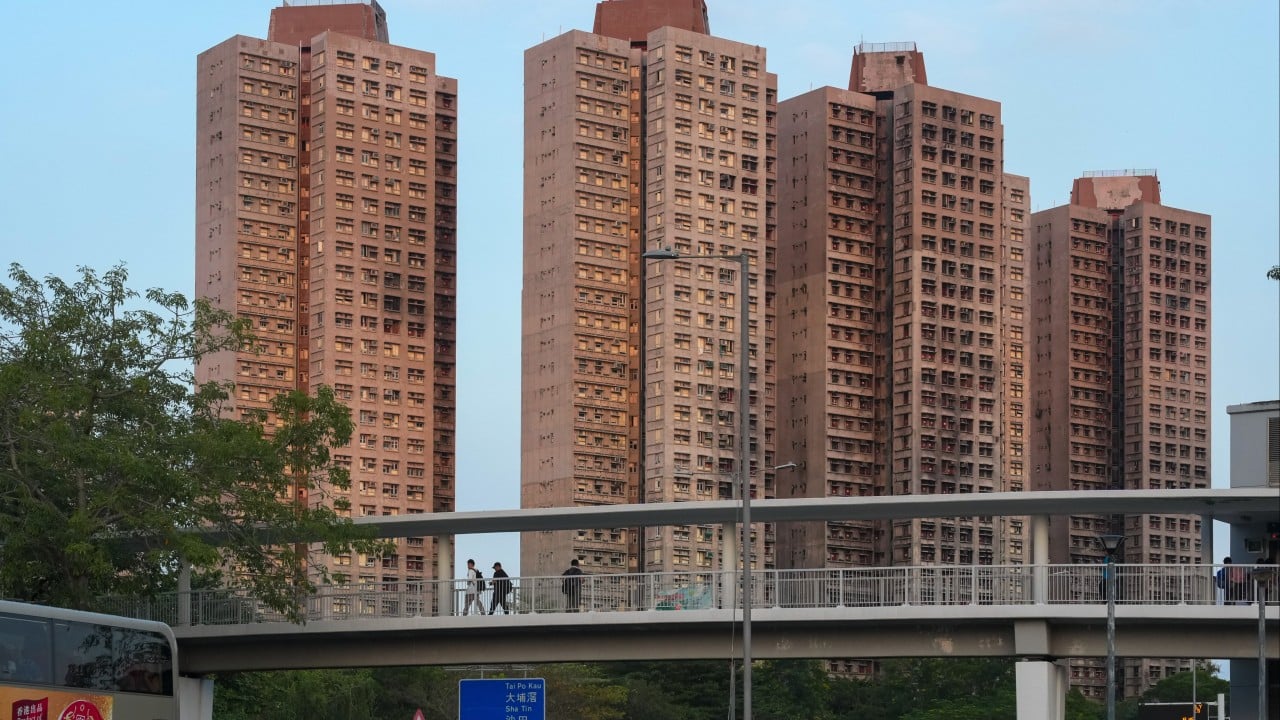
Hong Kong has one of the highest concentrations of aging high-rise residential buildings in the world. Thousands of private residential blocks built between the 1960s and 1980s require mandatory structural and fire safety upgrades. Unlike commercial skyscrapers managed by institutional real estate trusts with in-house quantity surveyors and legal teams, these older residential towers are governed by owners' corporations composed of ordinary residents—retirees, clerks, teachers, and small shopkeepers.
When the government issues a statutory repair order, these committees are legally obligated to procure multi-million-dollar engineering works within a strict timeframe. They lack the technical literacy to read a bill of quantities, the legal expertise to spot predatory contract clauses, and the time to vet the corporate registries of every bidding firm.
The Proxy Vote Loophole
This governance vacuum invites external manipulation long before tender documents are drafted. In numerous documented disputes across older districts, syndicate-linked operatives have actively intervened in building management elections. By aggressively canvassing absentee landlords and collecting proxy votes, outside factions can stack an owners' corporation committee with compliant members.
Once an entrenched committee holds the majority vote, it controls the selection of the property management company, the engineering consultant, and ultimately the main contractor. Dissenting residents who raise alarms about skyrocketing renovation quotes frequently hit a brick wall of procedural stonewalling, facing intimidation at general meetings or expensive civil litigation if they challenge the committee's authority.
Where Current Reforms Fall Short
Over the past decade, authorities and statutory bodies like the Urban Renewal Authority have introduced several defensive measures. Electronic tendering platforms, standardized tender documents, and independent cost estimation services have made crude, obvious price-fixing harder to pull off.
Yet these administrative guardrails remain largely optional for private buildings not receiving specific public subsidies, or they get bypassed through clever workarounds.
- Information Asymmetry Persists: Even when an independent body provides a market cost estimate, syndicates frequently counter by convincing worried homeowners that the independent estimate ignores "critical safety upgrades" or uses "inferior materials." Fear is a powerful sales tool when dealing with aging concrete and fire hazards.
- Subcontracting Opacity: A clean main contractor winning a bid means very little if 80% of the actual physical labor is sub-let down a multi-tiered chain of smaller firms. Cartels easily capture the revenue stream at the second or third tier of subcontracting, completely invisible to the initial tender evaluation.
- Delayed Deterrence: Complex financial and anti-collusion investigations routinely take three to five years from initial complaint to courtroom verdict. In the meantime, the corporate entities involved have often been wound up, leaving victims with zero civil recourse to recover stolen funds even after a criminal conviction is secured.
Rewriting the Rules of Procurement
Dismantling bid-rigging permanently requires shifting the focus from catching criminals after the money is gone to engineering a procurement environment where collusion cannot function profitably.
First, transparency must become mandatory rather than advisory. Every entity bidding on a major building maintenance or public works contract should be legally required to disclose ultimate beneficial ownership alongside a full list of affiliated companies and past joint-venture partners. Automated cross-referencing of corporate registries, shared directors, common registered addresses, and overlapping IP addresses for electronic tender submissions can flag suspicious bid clusters instantaneously—before any contract is signed.
Second, the role of the independent consultant needs a complete structural overhaul. As long as project consultants are paid a percentage of the total construction cost, their financial incentives remain aligned with inflated budgets rather than cost control. Moving toward fixed-fee structures paired with strict statutory liability for negligent or biased tender scoring would immediately sever the financial logic behind consultant-contractor collusion.
Third, proxy voting mechanisms in residential building management require tight statutory caps and independent verification. Limiting the number of proxies a single individual can hold and requiring digital or verified registration for major capital expenditure votes would strip syndicates of their ability to hijack owners' corporations from within.
Finally, enforcement agencies must pair criminal prosecutions with aggressive civil asset recovery and immediate director disqualifications. Fine-tuning penalties to hit the personal wealth of the actual beneficiaries—rather than levying fines against hollow corporate shells that simply declare bankruptcy—changes the risk-reward calculation overnight.
A task force with broad investigative powers can certainly clear out the current crop of bad actors and send a sharp warning through the industry. Without stripping away the opacity of shell companies, reforming consultant fee structures, and fortifying layperson committees against hostile takeovers, however, the next generation of syndicates will simply wait for the headlines to fade before printing new business cards.