The Strait of Hormuz is no longer a functioning waterway. It is a hostage cell. On Wednesday, the Islamic Revolutionary Guard Corps (IRGC) boarded and seized two major container ships—the MSC Francesca and the Epaminondas—just hours after the White House announced an indefinite extension of a temporary ceasefire. This wasn't a random act of piracy. It was a calculated, asymmetrical response to a tightening American naval blockade that has turned the Persian Gulf into a pressure cooker.
The seizure of these vessels, both linked to the Mediterranean Shipping Company (MSC), signals a brutal shift in Iranian strategy. Tehran is no longer content with merely threatening to close the world’s most vital oil artery; they are now actively harvesting the commercial assets of the West to use as leverage in a stalled peace process. While President Donald Trump paused airstrikes to allow for mediated talks in Islamabad, the U.S. Navy maintained a stranglehold on Iranian ports. Tehran’s message is clear: if their ships don't move, nobody's ships move.
The Mirage of the Ceasefire
Publicly, the ceasefire was framed as a diplomatic window. Privately, it has been a period of intense maritime attrition. The U.S. blockade, initiated on April 13, has successfully choked off the majority of Iran’s official exports. However, investigative data suggests the "shadow fleet" hasn't been entirely neutralized. At least 34 vessels linked to Iran have managed to slip through the dragnet since the blockade began, carrying an estimated 10.7 million barrels of crude.
This leak in the blockade infuriated Washington, leading to the interception of an Iranian-flagged container ship just days ago. The U.S. claimed the vessel was carrying dual-use technology from China—specifically chemicals capable of fueling the very ballistic missiles the IRGC has been parading through the streets of Tehran. This "police action" by the U.S. gave the IRGC the pretext it needed to strike back at commercial shipping.
The IRGC doesn't see the current state as a ceasefire. They see a "war by other means." By seizing the MSC Francesca and the Epaminondas, they have effectively neutralized the political benefits of Trump’s strike moratorium.
Why MSC is the Primary Target
There is a reason the IRGC keeps hitting MSC-linked vessels. It is not just about their size or the $90 million in cargo they typically carry. Tehran has long alleged that MSC maintains deep financial ties to Israeli interests. In a conflict where Israel and the U.S. are viewed as a single entity, targeting the world's largest container line provides maximum visibility with "justifiable" political cover in the eyes of Iranian hardliners.
- MSC Francesca: A Panama-flagged giant, intercepted while attempting to exit the Strait.
- Epaminondas: A Greek-operated, Liberia-flagged vessel that reported taking heavy fire to its bridge before being boarded.
- The Euphoria: A third ship targeted on Wednesday that managed to escape to the UAE, though not without sustaining damage.
The choice of targets demonstrates a high level of intelligence. These aren't just random boats; they are the logistical backbone of European and Asian trade. By holding these crews and hulls, Iran is forcing the insurance markets to do what their navy cannot: shut down the Strait through sheer financial impossibility.
The $500 Million a Day Toll
The economic fallout is staggering. European markets are losing an estimated €500 million daily due to the disruption. While the U.S. remains somewhat insulated thanks to domestic energy production, its allies in Europe and Asia are bleeding.
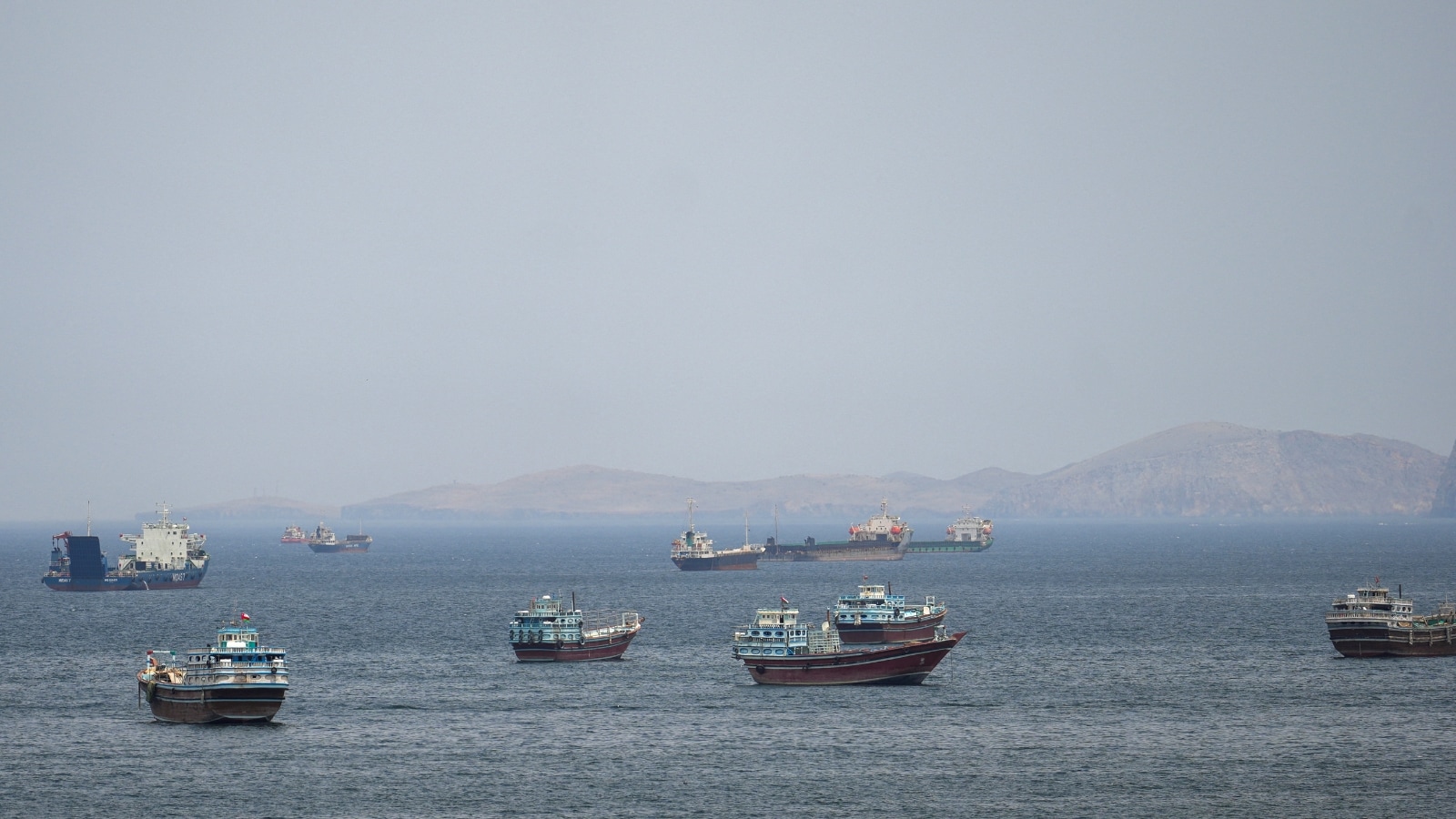
The Strait of Hormuz normally handles 20% of the world’s traded oil and liquefied natural gas. Today, that volume has slowed to a trickle. Tankers are currently anchored in massive clusters outside the danger zone, waiting for a clarity that isn't coming. Insurance premiums for transiting the area have skyrocketed to the point where a single voyage can cost more in coverage than the cargo is worth.
Navigation as a Weapon
Iran’s tactical execution in the Strait has evolved beyond simple gunboat harassment. They are now utilizing sophisticated GNSS jamming and satellite spoofing.
Ships attempting to navigate the narrow channels of the Strait are finding their GPS coordinates drifting by miles, sometimes placing them "on paper" inside Iranian territorial waters when they are actually in international lanes. This creates a legal "red zone" that the IRGC uses to justify seizures for "maritime violations."
The Islamabad Deadlock
The diplomatic path is currently blocked by a fundamental disagreement over what constitutes "peace."
- The U.S. Position: Airstrikes stop, but the blockade remains until Iran surrenders its remaining ballistic missile stockpile and allows unfettered nuclear inspections.
- The Iranian Position: No talks will occur until the "hostage-taking of the economy" (the blockade) ends and reparations for the February strikes are paid.
Mohammad Bagher Ghalibaf, the speaker of the Iranian parliament, has stated that reopening the Strait is "impossible" as long as the U.S. blockade persists. This creates a circular crisis. The U.S. won't lift the blockade until the Strait is safe; Iran won't make the Strait safe until the blockade is lifted.
The Shadow of the 2024 Precedent
This isn't the first time Iran has used this playbook, but it is the most aggressive. The 2024 seizure of the MSC Aries was a warning shot. Today’s actions are a full-scale offensive. Unlike previous years, the IRGC is now operating with a fractured leadership in Tehran that is increasingly desperate. With the Supreme Leader gone and the military calling the shots, the traditional diplomatic guardrails have vanished.
The U.S. Navy finds itself in a precarious position. It can attempt to escort every commercial vessel, but the sheer volume of traffic makes this a logistical nightmare. Furthermore, an escort mission that ends in a direct exchange of fire with Iranian shore batteries would likely collapse the fragile ceasefire entirely, leading back to the high-intensity bombing campaigns of early March.
The Brutal Reality for Seafarers
Lost in the talk of oil prices and geopolitical chess are the hundreds of seafarers currently held in Iranian ports. The crews of the Francesca and Epaminondas—comprising Ukrainians, Filipinos, and Montenegrins—are now pawns.
Shipping companies are being approached with "protection" offers—fraudulent messages promising safe passage in exchange for massive cryptocurrency payments. It is a descent into lawlessness. The Strait of Hormuz has transformed from a global commons into a private fiefdom of the IRGC.
The move by Iran to seize these ships is a definitive signal that they have no intention of retreating to the pre-war status quo. They are betting that the global economic pain will eventually force the U.S. to blink and lift the blockade. Until that happens, or until a new escalation resets the board, the Strait remains a no-go zone. The world is learning a hard lesson: a ceasefire that only exists in the sky is no ceasefire at all.
For the shipping industry, the takeaway is grim. There is no such thing as an "open" Strait of Hormuz when one side is willing to use the entire global supply chain as a kinetic weapon. Expect more seizures, higher prices, and a long, cold wait for a diplomatic breakthrough that looks further away than ever.