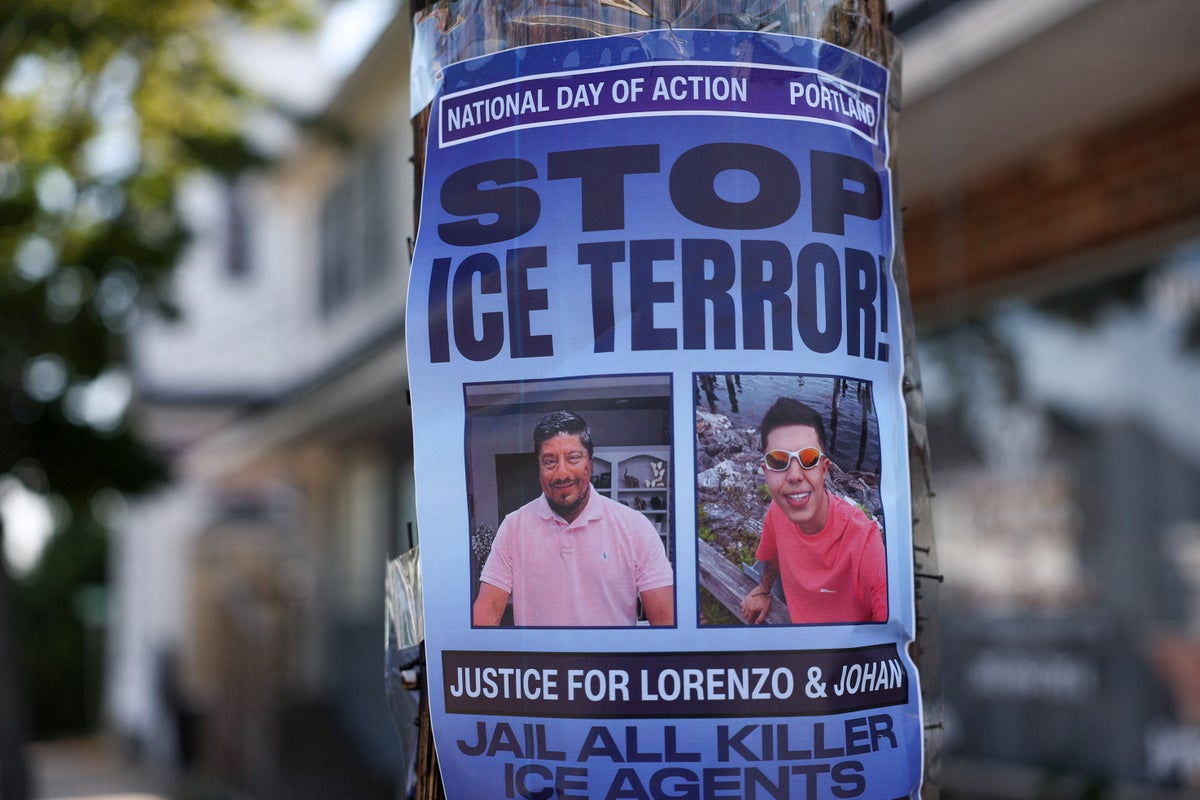
Federal immigration enforcement is locked in an escalating crisis of accountability, highlighted by border czar Tom Homan admitting a lack of clarity regarding whether Immigration and Customs Enforcement agents involved in fatal shootings remain on active duty. When federal law enforcement officers deploy lethal force during domestic operations, tracking their administrative status should be an administrative certainty, not an open question for television interviews. Yet, transparency within rapid-surge enforcement operations remains fragmented, leaving both the public and oversight bodies in the dark.
To understand why this happens, we must look at the structural mechanics of federal law enforcement oversight. Local police departments operate under municipal internal affairs divisions and state laws that mandate immediate administrative leave following an officer-involved shooting. Federal agencies function under a different legal architecture. When an Immigration and Customs Enforcement agent discharges a weapon, the incident triggers internal reviews by the Department of Homeland Security Office of Inspector General, local law enforcement cooperation protocols, and federal grand jury reviews. This multi-layered bureaucracy creates institutional blind spots where administrative tracking easily stalls.
An agent involved in a high-profile use-of-force incident might be reassigned to desk duty, placed on administrative leave, or quietly rotated to a different field office without a public-facing confirmation. For decades, federal agencies have relied on operational security and privacy protections for personnel as a shield against public disclosure. Critics argue this institutional opacity protects the agency at the expense of public trust. Defenders counter that premature public statements or administrative rushes to judgment can compromise internal investigations and violate the due process rights of federal employees.
The operational reality on the ground has intensified these friction points. Following high-intensity crackdowns in major metropolitan areas, including operations in Minneapolis and Houston, field agents face heightened threat environments. Agency leadership frequently emphasizes that officers operate under strict use-of-force policies authorizing deadly fire only as a last resort to protect life. However, when those policies are tested in fast-moving street encounters, the gap between official protocol and on-the-ground execution widens dramatically.
Consider a hypothetical scenario common in urban enforcement operations. An enforcement team conducts a vehicle stop on a busy thoroughfare. The subject attempts to drive away, creating a split-second assessment for the agent standing near the bumper. Does the vehicle constitute a lethal weapon threatening the officer's life, or is it an evasive maneuver away from the officer? Federal training curricula emphasize officer safety, yet outside independent oversight bodies frequently challenge whether every such encounter justifies lethal outcomes. When leadership cannot readily clarify whether the shooter is still drawing a federal paycheck or carrying a badge, public confidence erodes rapidly.
Congressional oversight committees have repeatedly demanded tighter reporting mandates for federal law enforcement agencies operating within domestic jurisdictions. Lawmakers argue that personnel carrying federal authority on American streets must be subject to the same public accountability standards as local municipal police. Proposals to mandate body-worn cameras across all Immigration and Customs Enforcement operations have gained traction, yet implementation timelines remain uneven across different regional field offices.
The core of the problem extends beyond a single administrative oversight failure. It reflects a systemic tension between national security enforcement directives and domestic civil policing norms. When immigration enforcement is scaled up rapidly with significant funding boosts, training pipelines compress, and thousands of new personnel deploy into complex urban environments. In this climate, the mechanisms designed to monitor and discipline use-of-force infractions struggle to keep pace with the sheer volume of daily operations.
Transparency is not merely a public relations hurdle for federal agencies. It is the fundamental baseline required to maintain legitimacy in a democratic society. If leadership cannot confirm the active duty status of agents involved in fatal encounters, public suspicion hardens into institutional cynicism. Resolving this transparency deficit requires modernizing federal oversight so that accountability is swift, traceable, and visible to the citizens these agencies are mandated to protect.