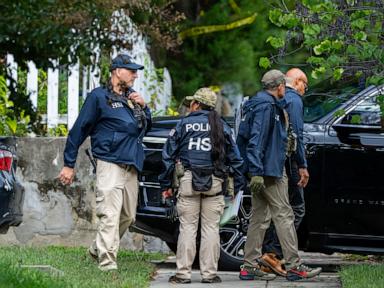
Attorneys for Rep. Ilhan Omar demanded that the Justice Department immediately return property seized during a federal search of her Washington, D.C., residence, calling the action unjustified and unlawful. Homeland Security Investigations agents executed the warrant on October 12, 2026, three weeks before the midterm elections, taking boxes of records along with her phone, laptop, notebooks, and passport as part of a federal immigration fraud inquiry. Omar has not been charged with a crime, and her legal team argues the investigation and search violate her constitutional rights and threaten the separation of powers.
A surface reading of this standoff stops at partisan fury and a demand for property back. In Washington, though, the real fight is over digital custody, congressional guardrails, and pre-election timing. When investigators walk out of a lawmaker's house with a phone and laptop, the battle shifts from what happened years ago to who gets to read legislative and personal communications right now.
Why Seized Devices Trigger a Constitutional Alarm
Seizing a sitting member of Congress's cell phone and laptop raises immediate questions that rarely appear in routine criminal searches. A member's personal life, constituent correspondence, political strategy, and official oversight work often sit side by side on the same hardware.
Even when a magistrate judge authorizes a warrant with special conditions tied to a lawmaker's office, execution is where disputes ignite. Omar's lawyers accused the Justice Department of violating court-imposed restrictions by failing to notify her or the House's top lawyer and by initially blocking her from reaching counsel after agents arrived. Justice Department officials rejected those claims as false and maintained they followed every court order and legal obligation.
A search warrant grants authority to look for evidence of a suspected crime, not a blank check over every file stored on a personal device.
Consider a hypothetical example that shows how fast device searches collide with governance. Suppose a federal investigator obtains a warrant tied to an old family paperwork question and takes a lawmaker's phone. Inside that device are text messages with committee staff about an upcoming appropriations vote, notes from constituents seeking visa help, and private family chats. Sorting out what is covered by the warrant, what touches separation of powers concerns, and what belongs to third parties can take weeks or months before a prosecution team ever sees the raw material.
The Filter Problem Nobody Sees on Cable News
When agents cart away boxes and electronics, public attention focuses on the drama on the front steps. Inside the courthouse, the fight turns technical fast. Defense attorneys push for immediate return or strict privilege and responsiveness review so sensitive materials are quarantined rather than mixed into an investigative file.
Prosecutors, meanwhile, argue that once a federal judge signs off on probable cause, agents have the right to collect and examine items within the warrant's scope. In high-profile cases involving public officials, disputes over how electronic media is searched and who conducts the initial review often become central battles long before any charging decision is made.
The Sixty-Day Rule and Pre-Election Optics
Timing turned an already sensitive investigative step into a major institutional flashpoint. Agents searched Omar's home on October 12, roughly three weeks before the November midterms, a window that drew sharp pushback from Democrats and scrutiny from former federal prosecutors.
For decades, Justice Department guidance has urged prosecutors and agents to be careful with overt investigative moves involving candidates within roughly 60 days of a primary or general election. That norm exists to keep federal law enforcement from becoming a thumb on the scale while voters are casting ballots.
- The norm's purpose: It aims to prevent overt actions during the final stretch of a campaign from shaping coverage or voter perception without a clear, urgent operational need.
- The government's defense: Justice Department filings stated that the attorney general approved the search and that its timing was not intended to affect the election, while President Donald Trump told reporters hours afterward that he had nothing to do with it and left it to the Justice Department.
- The political reality: Omar easily won reelection, yet the optics of an overt search three weeks before voting day still fueled accusations of selective enforcement and political intimidation.
Veteran prosecutors know the sixty-day guideline is a policy norm, not a constitutional shield. If investigators believe evidence is at risk or an investigation has reached a critical juncture, leaders sometimes argue that waiting is impractical. Still, breaking that norm carries a steep institutional cost because critics see timing as proof of motive rather than necessity.
Public Rhetoric Versus Sealed Court Records
A sharp tension has emerged between what officials say in public and what remains locked behind seal in federal court. Top administration figures, including Vice President JD Vance and Homeland Security Secretary Markwayne Mullin, have publicly discussed aspects of the Omar investigation, while Omar has denounced the probe as an effort to target political rivals and weaponize federal law enforcement.
In court, however, government lawyers have urged caution about unsealing materials that could expose investigative details. That split creates a predictable information gap. Outside the courtroom, narratives harden around retributive prosecution on one side and alleged immigration fraud on the other. Inside the courtroom, judges weigh public transparency against grand jury secrecy and ongoing investigative sensitivity.
| Battleground | Defense Argument | Government Position | Institutional Trade-Off |
|---|---|---|---|
| Seized property | Demands immediate return of phone, laptop, and items taken during an unlawful search | Asserts agents acted under a signed warrant and followed court orders | Delays access to potential evidence while risking overreach into protected material |
| Search execution | Alleges failure to notify Omar or House counsel and early limits on contacting a lawyer | Denies those allegations as false and stands by compliance with judicial restrictions | Tests judicial oversight over how warrants are carried out against sitting lawmakers |
| Election timing | Points to execution three weeks before the midterm vote as politically motivated | Says the attorney general approved it with no intent to influence the election | Erodes public trust in prosecutorial neutrality even when a candidate wins |
| Court transparency | Media and legal groups seek access to underlying warrant records | Urges caution and redactions so sensitive investigative details are not exposed early | Balances public accountability against protecting an active inquiry |
What Gray Areas Remain Before Any Charges
Reporters who cover federal investigations know the hardest part of any story is resisting certainty before charges exist. Omar has not been charged, and reports indicate authorities have issued more than a dozen grand jury subpoenas, including to some relatives, while looking into past immigration paperwork and finances.
Investigating childhood immigration records decades later presents real evidentiary hurdles. Paper trails get thin over time, memories blur, and questions of willfulness or materiality often decide whether a case belongs in criminal court, civil proceedings, or nowhere at all. Even when federal agents gather boxes of records and digital files, turning raw material into proof beyond a reasonable doubt is a steep climb.
Equally unresolved is how courts will handle the clash between executive branch investigative reach and congressional independence. Until judges rule on property disputes, compliance with search conditions, and record unsealing requests, the fight over what was taken from Omar's home remains a live test of where presidential enforcement ends and constitutional boundaries hold. Watch the unsealed docket filings and any judicial rulings on device handling closely; that paperwork will show whether this clash turns into a lasting legal precedent or fizzles out quietly once the review battles are done.