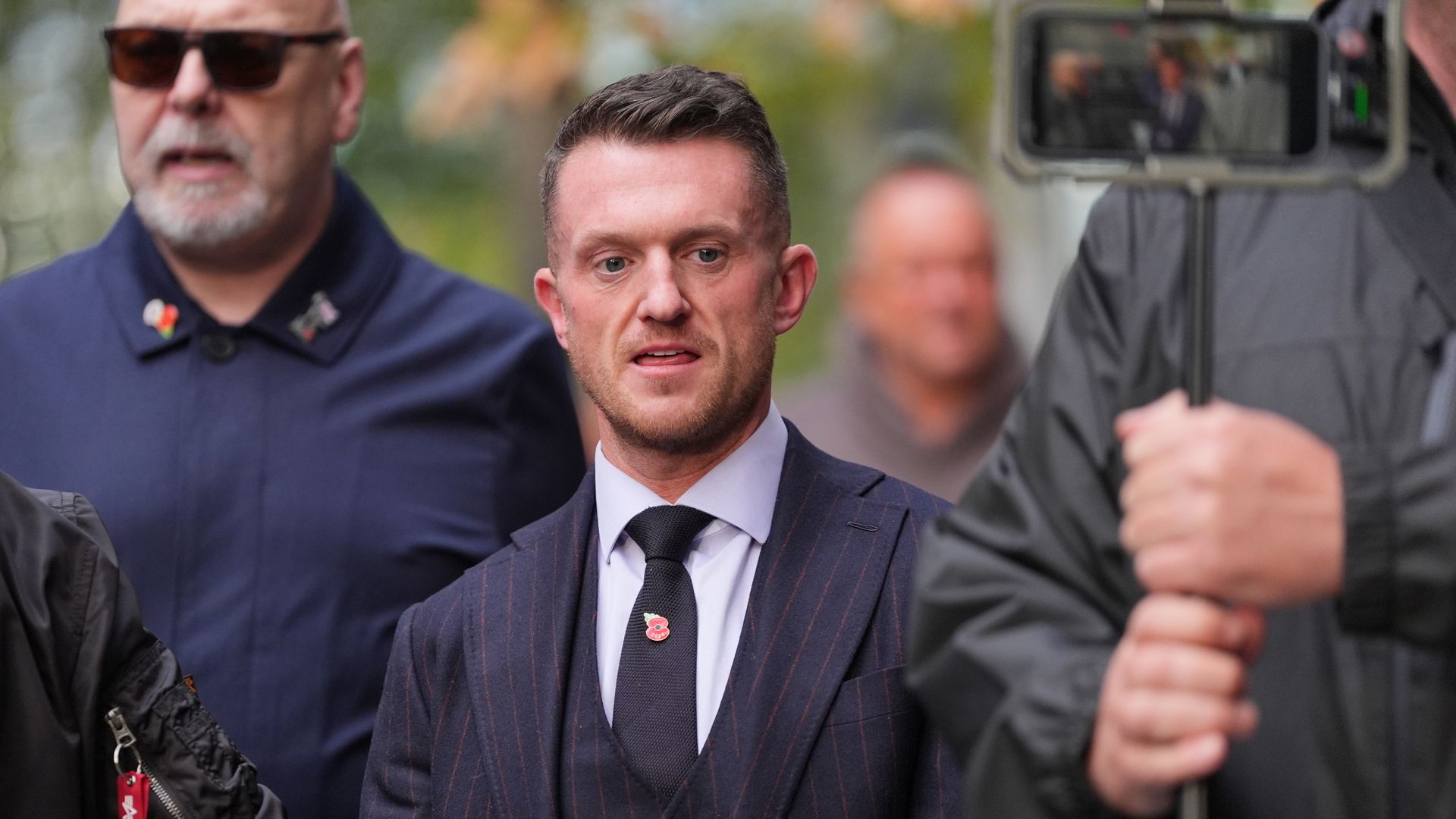
A Southwark Crown Court jury convicted British far-right activist Stephen Yaxley-Lennon, widely known as Tommy Robinson, of two counts of harassment causing fear of violence against two journalists on October 28, 2026. The verdict followed a high-profile trial over messages, calls, and social media activity in August 2024 targeting MailOnline investigative reporter Andrew Young and Daily Mail editor Jacob Dirnhuber. Facing a maximum penalty of 10 years in prison ahead of a sentencing hearing scheduled for December 16, 2026, Robinson was granted bail while Mr Justice Cavanagh indicated all sentencing options—including a custodial sentence—remain open.
Courtroom coverage of the verdict tends to treat this case as an isolated flashpoint between a polarizing street agitator and two national newspaper reporters. That framing misses the bigger picture. Over more than two decades in British public life, harassment of critics and reporters has not been an accidental side effect of Robinson's brand. It has operated as a deliberate, repeatable pressure tactic.
Anyone who has covered political extremism and press freedom in Britain for years recognizes the pattern immediately. When a figure builds a following around grievance and defiance, targeting individual reporters at their homes becomes a way to raise the personal cost of scrutiny. You do not need to win a libel battle in court if you can make a reporter's family feel unsafe on their own doorstep.
How Private Investigators and Doorstep Threats Work
Harassment of this kind rarely relies on a single angry tweet. Prosecutors and court reporting in the case highlighted a combination of direct contact, social media posts aimed at a wide audience, and efforts to locate personal addresses. According to reporting on the proceedings, the charges stemmed from conduct between August 5 and August 7, 2024, following coverage that touched on Robinson's family holiday location in Cyprus. Reports from the trial stated that Robinson hired private investigators to track down home addresses connected to Young, Dirnhuber, and Daily Mail editor-in-chief Ted Verity, while telling Young on a phone call that he would go to his house and saying, "I'm coming to get you," and messaging Dirnhuber on X that he would be knocking at his door.
Look closely at the mechanics of that sequence. A public post names a journalist and frames them as an enemy of the movement. A private call or direct message hints at physical proximity or arrival at a private residence.
Even when a defendant insists they only wanted a confrontation on camera or wanted to challenge coverage, the effect on the target is shaped by context. A reporter with a large online following does not experience a message about their front door in a vacuum. They know how online mobs operate. They know a single post or photo can turn a private street into a gathering point.
During the trial, court reports noted that journalists and their families took security precautions and, in some cases, left their homes, while security had to escort reporters from court after a supporter threatened one inside the building. That detail captures the real leverage in harassment cases. The threat does not have to be carried out in full to change behavior. The mere possibility that strangers might show up outside a family home forces immediate, exhausting disruptions to normal life.
The Gray Area Between Provocation and Crime
British law draws a sharp line between robust political criticism and harassment that causes fear of violence. In practice, defendants often try to blur that line by claiming they are simply doing their own form of journalism, holding mainstream outlets to account, or retaliating against perceived unfairness.
Robinson's defense at trial pushed back against allegations of intending violence or encouraging harm, arguing instead that he wanted to confront reporting and pointing to grievances over coverage of his own family. That argument touches on a genuine tension in modern media and public life. Public figures frequently complain about intrusion into their private lives or family trips, and debates over where legitimate public-interest reporting ends and intrusion begins are real.
Yet legal systems do not treat perceived grievances as a blank check to terrorize someone else. A majority verdict of 10 to two shows the jury weighed the evidence carefully rather than rubber-stamping the prosecution's narrative. What separates harsh commentary from a crime of this severity is sustained, targeted conduct that crosses into intimidation and puts a person in genuine fear of violence.
There is also an uncomfortable gray area for news organizations themselves. Outlets that cover aggressive political actors often face a double bind. If they report aggressively on a figure's movements or associates, they may provoke retaliation against staff. If they pull back out of fear for reporters' safety, they hand intimidators a veto over public reporting.
Consider a hypothetical scenario to see how newsroom risk calculations play out. Suppose an investigative desk assigns two reporters to examine a campaign's funding network, and the subject responds by publishing the reporters' partial neighborhood details online while hinting at future visits. Even if police assess the immediate risk of physical attack as low, the newsroom still has to pay for home security checks, relocate family members temporarily, or reassign coverage. That hidden tax falls on editors and reporters every week, long before a verdict is ever reached.
Why Past Sanctions Rarely End the Cycle
This conviction lands against a long history of legal clashes and prior sanctions involving Robinson. Over the years, he has accumulated convictions and court orders across different offenses, including earlier harassment proceedings and a five-year stalking protection order in 2021 after shouting abuse outside a journalist's home and threatening to return.
Why do court orders and prior convictions so often fail to stop repeat behavior? Partly because online amplification rewards escalation. For a figure whose relevance depends on constant conflict with institutions, courts, and legacy media, every prosecution can be repackaged as proof of persecution.
Social media algorithms and sympathetic commentary networks compound the problem. A message sent on a platform like X can reach tens of thousands of people almost instantly, turning one person's grievance into a distributed pile-on. Even if a legal judgment later penalizes the original sender, the emotional toll on the targeted journalist happens in real time.
Courts can impose restraining orders, fines, or prison sentences. They cannot easily undo the memory of looking out a window wondering who is watching the house.
What Sentencing in December Will Test
When Robinson returns to Southwark Crown Court on December 16, 2026, Mr Justice Cavanagh will decide whether the punishment is custodial—either immediate or suspended—or takes another form. A maximum sentence of 10 years hangs over the offense under UK law for harassment causing fear of violence, though actual sentences depend on guidelines, facts, and mitigating or aggravating factors.
Sentence length matters, of course. A custodial term removes an offender's immediate freedom of movement and signals judicial seriousness.
Still, prison walls do not solve the broader vulnerability of working journalists. Reporters covering contentious beats—from organized crime and local corruption to extremist movements—will continue to face doorstep intimidation, doxxing, and online abuse regardless of any single courtroom outcome.
Newsrooms that treat personal security as an afterthought leave their staff exposed. Real protection requires practical measures before a crisis peaks: clear protocols for scrubbing personal data, rapid security support when threats emerge, legal backing when reporters are targeted for doing their jobs, and editorial solidarity that refuses to let intimidation dictate what gets published.
When a jury finds that harassment caused journalists to fear violence, the legal question is settled for that case. The harder test begins the next morning, when the next story is assigned and another reporter picks up a notebook.