Rome Facing a Dual Constitutional Breakdown
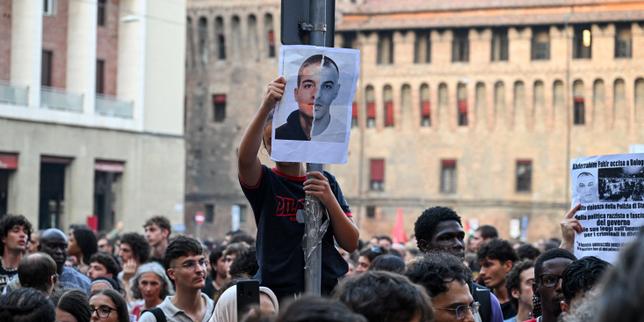
Italy is trapped in a dangerous cycle where police misconduct and high-level political attacks on the judiciary feed directly into one another. When violent clashes erupt on urban streets, the immediate response from executive power is rarely institutional introspection. Instead, ministers launch public assaults against magistrates who dare to enforce statutory limits on executive overreach or scrutinize police conduct. This creates an environment where civil liberties erode while accountability mechanisms are dismantled, threatening the foundational balance of powers within the Italian republic.
The tension between executive authorities, law enforcement agencies, and the judiciary has reached an inflection point. For decades, the Italian justice system operated on an delicate equilibrium established after the fall of Fascism, designed explicitly to prevent the concentration of coercive power within any single branch of government. Today, that equilibrium is fraying under sustained political pressure. Meanwhile, you can read other developments here: Why Thailand Cannot Hand Over Chinese Journalist Bai Zhaodong.
The Mechanism of Executive Pressure on Magistrates
The strategy employed by political leaders against independent judges follows a precise, repeatable pattern. When a magistrate issues a ruling that contradicts executive policy—whether regarding the detention of migrants in offshore facilities, the legality of public protests, or the prosecution of security personnel—the reaction is swift and personal.
Executive figures publicly accuse judges of political bias, identifying them by name in national media outlets. This is not casual political discourse; it is a structural attempt to delegitimize the judiciary as an institution. To explore the full picture, check out the detailed analysis by The New York Times.
By framing legal checks and balances as subversion of the democratic mandate, political actors create a climate where judicial oversight carries heavy professional and public costs. Magistrates who apply strict constitutional standards find themselves branded as enemies of public safety or ideological activists.
+-------------------------------------------------------------------+
|                    THE DYNAMICS OF DELEGITIMATION                 |
+-------------------------------------------------------------------+
| 1. Judicial Ruling Issues (Limits Executive Power/Protects Rights) |
|                                 ↓                                 |
| 2. Executive Attack (Public Naming, Framing as "Political Bias")  |
|                                 ↓                                 |
| 3. Institutional Chill (Pressure on Magistrates, Reduced Oversight)|
|                                 ↓                                 |
| 4. Security Deterioration (Unchecked Enforcement, Street Clashes) |
+-------------------------------------------------------------------+
This dynamic creates an immediate chilling effect across lower courts. Judges evaluating the legality of police detentions or issuing arrest warrants face immense structural pressure to align with executive priorities rather than strict statutory interpretation.
Police Misconduct and the Vacuum of Internal Oversight
On the street, this lack of judicial protection for citizens translates into unchecked police actions during public demonstrations and routine operations. Italian law enforcement agencies—primarily the State Police and the Carabinieri—have long operated with minimal independent civilian oversight.
Unlike many European counterparts, Italy lacks a dedicated, autonomous civilian body equipped with full investigative powers to inspect police misconduct. When abuses occur during public protests or inside detention facilities, investigations are overwhelmingly handled internally or by peer agencies.
This structural insularity breeds impunity. Officers involved in controversial interventions routinely benefit from procedural delays, vague operational guidelines, and protective institutional solidarity.
The Role of Identification Identifiers in Public Order
A long-standing point of friction remains the refusal to implement visible identification numbers on police uniforms during public order operations. While international human rights bodies have repeatedly urged Rome to mandate individual numerical identifiers for riot control officers, legislative proposals to enforce this standard remain stalled.
Without mandatory uniform identification:
- Victims of excessive force cannot reliably identify individual perpetrators.
- Internal disciplinary boards lack the evidentiary basis required to hold specific officers accountable.
- Entire units absorb collective blame, worsening public distrust and escalating tensions during future encounters.
The structural refusal to mandate basic transparency measures demonstrates an institutional preference for protecting agency reputation over enforcing individual accountability.
Legislative Expansion of Coercive Power
Parallel to the rhetorical pressure on judges and the defense of police impunity is an ongoing expansion of legal frameworks governing public order. Recent legislative initiatives have focused on penalizing traditional forms of non-violent protest while granting security forces broader latitude in managing public assemblies.
Passive resistance tactics—such as road blockades, sit-ins, or occupying public infrastructure—have seen their legal classification upgraded from administrative infractions to criminal offenses carrying mandatory prison sentences. At the same time, legal protections for officers involved in weapon use or physical coercion during public order operations have been fortified.
This asymmetric legal shift fundamentally alters the relationship between the state and the citizen. By criminalizing civil dissent while immunizing enforcement personnel from scrutiny, the state redefines public security not as the protection of civil rights, but as the absolute preservation of state authority.
The Broader European Implications
Italy’s internal crisis does not exist in isolation; it represents a test case for democratic resilience across the European continent. When a founding member state of the European Union permits the systematic delegitimation of its judiciary and tolerates structural police opacity, it weakens European legal standards as a whole.
The European Court of Human Rights has repeatedly cited Italy for issues ranging from prison overcrowding to the absence of adequate torture statutes prior to recent reform efforts. Yet, structural implementation of European judicial standards remains selective.
When national political leadership treats judicial rulings as optional barriers to be circumvented or attacked, the principle of the rule of law across the European judicial area suffers critical damage.
The Structural Choice Facing Rome
The ongoing conflict between the executive, police forces, and magistrates is not a series of isolated political skirmishes. It is an organized attempt to alter the constitutional balance of power without formally altering the constitution itself.
Reversing this trajectory requires concrete structural reforms rather than political rhetoric:
- Mandating visible, unique identification numbers for all law enforcement personnel deployed in public order operations.
- Establishing a genuinely independent, fully funded civilian oversight body to investigate allegations of police abuse.
- Ceasing executive attacks on individual judges and respecting judicial rulings regarding executive power and human rights.
- Repealing legislation that disproportionately criminalizes non-violent public protest and peaceful civil disobedience.
Until these measures are implemented, the confrontation on Italian streets and within Italian courtrooms will continue to deepen, leaving both the rule of law and basic civil liberties vulnerable to executive overreach.