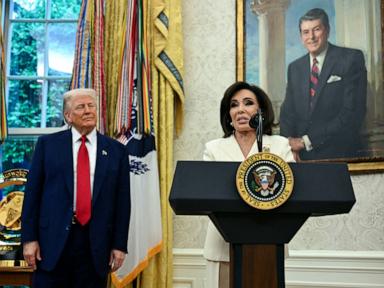
Power dynamics in the nation's capital rarely unravel in plain sight, yet a high-stakes Oval Office confrontation between President Donald Trump and U.S. Attorney for the District of Columbia Jeanine Pirro exposed a major administrative fracture. The tension erupted after Pirro’s office formally moved to dismiss criminal vandalism charges against former Olympic canoeist David Hearn, who had been accused of ripping the lining of the newly renovated Lincoln Memorial Reflecting Pool. Instead of blaming civilian vandalism, prosecutors filed a comprehensive court document pointing the finger directly at the Interior Department, citing a rushed construction schedule and flawed installation work by contractors rather than criminal destruction.
President Trump responded with sharp public rebukes, telling reporters that Pirro had "folded like an umbrella" and suggesting she "choked" under pressure from the judiciary. Behind closed doors, however, the conflict was far more explosive. Pirro arrived at the West Wing carrying a physical box filled with documentation, receipts, and internal communications to demonstrate to the president and Interior Secretary Doug Burgum that her office had been working with incomplete information provided by the Park Police. The fallout illuminated deep structural friction between executive ambitions and the evidentiary constraints required inside a court of law.
The Anatomy of a Flawed Project
When the multimillion-dollar renovation of the historic pool concluded, it was championed as a triumph of modernization and administrative execution. Yet cracks appeared almost literally within weeks. Visitors and officials noticed bubbling materials, peeling liners, and water loss, prompting immediate accusations of malicious mischief. The public narrative focused heavily on public disorder and the targeting of national monuments, a theme that aligned with broader administration crackdowns on urban crime.
Law enforcement agencies quickly pursued suspects, culminating in high-profile arrests. Prosecutors initially relied on statements from the Interior Department alleging that witnesses saw individuals tampering with the pool’s infrastructure. However, the legal threshold for a criminal conviction requires absolute proof beyond a reasonable doubt, a standard that began to crumble as defense attorneys demanded discovery documents.
The Discovery Phase Collision
In standard legal practice, the discovery process often forces state agencies to hand over raw internal logs that can completely alter the trajectory of a prosecution. As Pirro's career prosecutors dug deeper into the administrative history of the project, they uncovered National Park Service engineering reports warning of defective adhesive applications long before the alleged vandalism incidents occurred.
Furthermore, records indicated that project managers accelerated construction timelines to meet deadlines tied to national historical milestones. This compressed schedule resulted in sub-optimal curing times for the lining materials. When Pirro’s team realized the evidence pointed to structural failure rather than intentional sabotage, they faced a stark ethical choice. Continuing a prosecution with known contradictions risks severe judicial sanctions and ethical violations for misleading the court.
The Oval Office Showdown
The decision to file a twenty-page motion dismissing the case triggered an immediate emergency response from executive leadership. Secretary Doug Burgum defended the integrity of the project's oversight, insisting that external interference had indeed damaged the site. This created a direct blame-shifting dynamic between the Department of the Interior and the U.S. Attorney's Office.
During the ensuing White House meeting, Pirro defended her office's independent evaluation of the evidence, bringing forward documentation intended to prove that the initial reports supplied to federal prosecutors lacked crucial context. While public speculation swirled regarding potential dismissals or forced resignations, the retention of long-standing professional alliances ultimately prevented an immediate termination. The episode highlights the unpredictable friction that occurs when high-profile political priorities collide with the unyielding evidentiary realities of criminal jurisprudence.
The administrative fallout continues to reverberate across federal agencies, forcing a quiet re-evaluation of how public infrastructure projects are monitored, defended, and litigated when things go wrong.