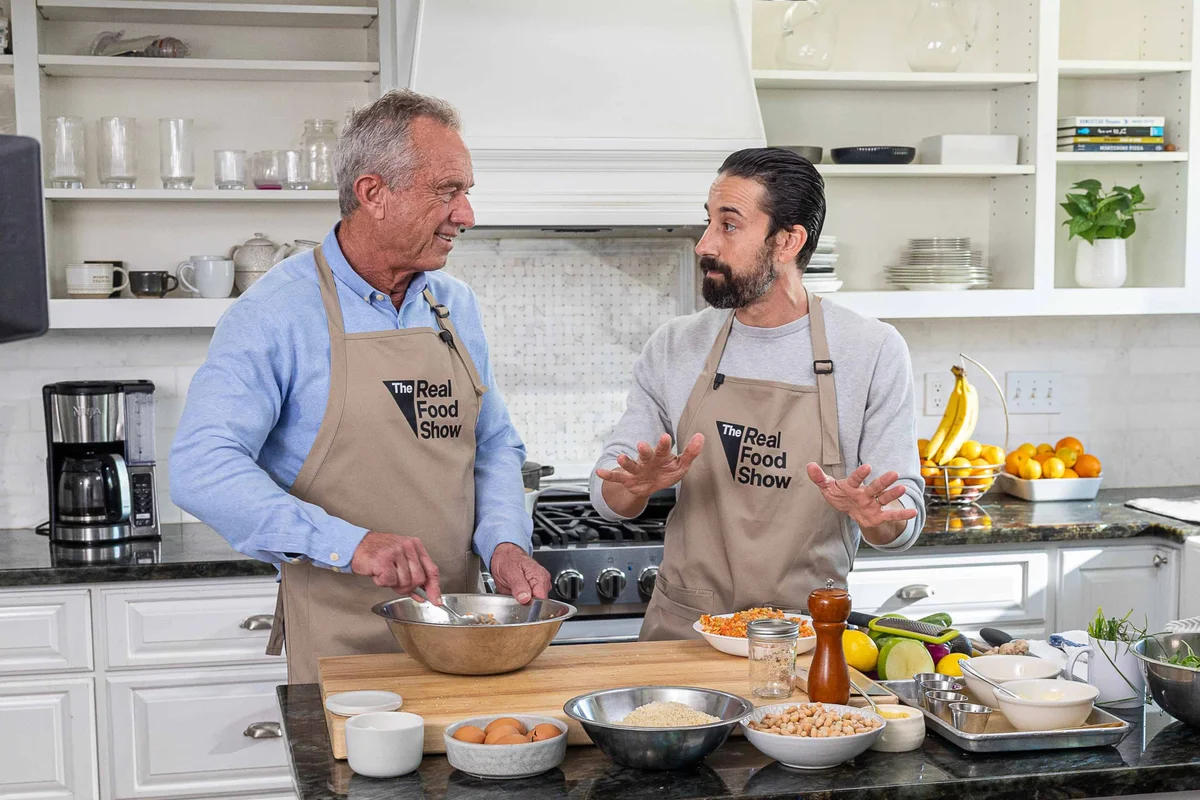
Robert F. Kennedy Jr. has launched a cooking show centered entirely around his idiosyncratic, sauerkraut-heavy diet, transforming a private nutritional routine into public-facing media strategy. This digital pivot by a major political figure is not a random culinary hobby. It is an calculated effort to weaponize domestic imagery for political branding. For years, politicians have used the kitchen as a stage to project relatability, transforming pots, pans, and raw vegetables into props for voter acquisition. When a high-profile public figure with a controversial health platform starts chopping cabbage on a screen, the goal is never just teaching a recipe. The kitchen becomes a laboratory for public image rehabilitation.
We have watched this performance for decades. Richard Nixon bowling, George HW Bush buying milk at a supermarket, and various candidates burning pancakes at local diners. Cooking shows offer a unique advantage over traditional campaign stops because they bypass hostile questioners. There are no press conferences in a home kitchen. There are only ingredients, a cutting board, and an uninterrupted monologue delivered directly to an audience seeking authenticity in an era of hyper-filtered media.
The Chemistry of Political Relatability
Food is personal. What we eat defines our cultural loyalties, our economic status, and our moral frameworks. When a political figure invites cameras into their kitchen to showcase a strict dietary regime, they are attempting to project discipline, control, and moral superiority.
Consider the core of the Kennedy food philosophy. Fermented foods, raw dairy, and pasture-raised meats occupy a specific space in the modern wellness economy. They are expensive, time-consuming to source, and reject standard industrial food production. By focusing an entire series on sauerkraut and ancestral eating habits, the production does something subtle. It signals alignment with the anti-establishment wellness community while carefully avoiding mainstream nutritional consensus.
Dietary choices act as tribal markers. If you eat ultra-processed foods, you belong to the system. If you ferment your own cabbage in a stoneware crock, you are part of the resistance. This dichotomy drives the appeal of political cooking content. It turns dietary habits into a political vote.
Yet, the execution reveals the friction between elite lifestyles and mass appeal. Most working households do not have the hours required to maintain an artisanal fermentation schedule or track down specific raw agricultural products. The show operates as an aspirational broadcast rather than a practical guide for the electorate. It preaches to a choir of wellness adherents who already view conventional food systems with deep suspicion.
Why Politicians Love the Screen
Traditional campaign rallies are expensive and increasingly ineffective at shifting public opinion. Audiences tune out standard stump speeches. They filter out talking points delivered from podiums draped in flags.
Digital video platforms change the delivery mechanism. By wrapping political ideology in the cozy aesthetic of a culinary tutorial, creators bypass the normal skepticism reserved for political ads. Viewers sit down expecting entertainment or instruction. They lower their guard. That is when the messaging lands.
The production value of these segments matters less than their perceived spontaneity. Even when heavily edited, a kitchen video feels intimate. A chef wearing an apron appears harmless. How dangerous can a man be when he is explaining how to salt shredded cabbage? This weaponization of domesticity disarms critics. It makes policy critiques look petty when juxtaposed with a simmering pot of bone broth.
We must examine the mechanics of how these projects come to life. Behind every home-style video lies a production team, lighting rigs, audio engineers, and public relations advisors. The casual messiness is staged. The spontaneous anecdotes are rehearsed.
The Economics of Alternative Health Media
The wellness industry generates billions of dollars annually, operating parallel to traditional medical and agricultural economies. Figures who champion alternative health models quickly realize that mainstream media channels will either ignore them or mock them. Building independent digital infrastructure becomes necessary.
Launching a cooking show serves multiple financial and ideological functions. First, it captures attention spans migrating away from cable television toward digital video platforms. Second, it creates a direct line of communication with consumers who buy supplements, organic produce, and alternative literature. Third, it monetizes personal lifestyle habits through merchandise, sponsorships, and platform ad revenue.
The focus on sauerkraut is not accidental. Fermentation carries historical weight, evoking a simpler time before mass-produced chemical preservatives filled grocery store aisles. It represents a tangible action individuals can take to reclaim control over their bodies. In a political climate defined by a profound lack of trust in institutions, taking control of your dinner plate feels like a revolutionary act.
The risk, however, lies in polarization. When health habits become tied to specific political factions, science gets dragged into the culture wars. Nutrition ceases to be a matter of biochemistry and epidemiology. It turns into a loyalty test.
The Illusion of Transparency
Transparency is the ultimate currency in modern politics. Every campaign promises it. Few deliver it. A cooking show offers the ultimate illusion of transparency because it strips away the formal suit and tie.
When a public figure stands over a cutting board in a casual shirt, sleeves rolled up, revealing their hands and kitchen counters, the audience experiences a psychological shortcut. We assume that someone who shows us their food is showing us their true self. This is a cognitive trap.
Journalists who cover the intersection of food and politics must look past the charm of the wooden spoons. We need to ask who benefits from the promotion of specific dietary narratives. We must interrogate the supply chains behind the ingredients on screen and the financial interests of the platforms hosting the content.
The rise of the political cooking show signals a deeper shift in how power communicates. Policy papers are boring. White papers do not trend on social media feeds. But a jar of bubbling cabbage juice, held up to a camera by a famous name, captures millions of views and drives the national conversation for forty-eight hours.
As long as audiences reward performance over policy debate, the kitchen will remain the most effective stage in politics. The cutting board is the new podium, and every meal is a campaign speech disguised as dinner.