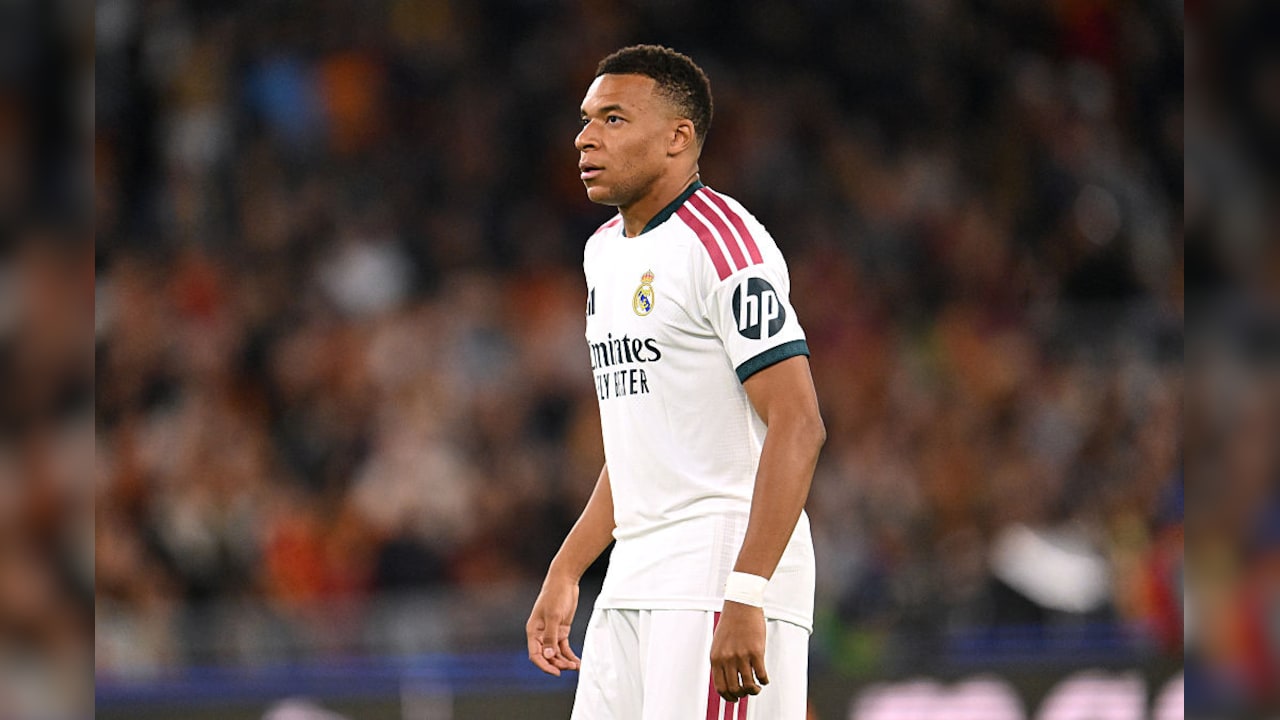
In July 2024, Real Madrid issued a formal public apology on the Chinese social media platform Weibo after an offensive meme featuring new signing Kylian Mbappé circulated online and drew widespread backlash from Chinese netizens. The incident began when a fan account posted an altered image depicting Mbappé alongside sensitive political imagery tied to Chinese leadership, sparking outrage across domestic platforms and forcing the Spanish football giant into rapid damage control. Within hours, Real Madrid's official Chinese account disavowed the post, condemned the content, and reaffirmed its respect for Chinese fans and sovereignty.
It was a textbook case of modern sports diplomacy colliding with internet culture. A single doctored JPEG, uploaded thousands of miles away by an anonymous user with zero official affiliation to the club, managed to threaten one of the most lucrative commercial relationships in global football.
Anatomy of a Digital Firestorm
To understand how a fringe internet joke escalated into an international corporate crisis, you have to look at the mechanics of cross-border social media. Western internet humor thrives on edgy, often political satire. In football Twitter—now X—players are routinely photoshopped into absurd, provocative, or historically sensitive contexts for cheap engagement. During the summer of 2024, as hype around Mbappé’s long-awaited arrival at the Santiago Bernabéu reached a fever pitch, memes portraying him as an all-powerful "dictator" or supreme ruler of the dressing room became a running gag among rival fans and troll accounts.
That specific trope wasn't new. Throughout his final years at Paris Saint-Germain, critics and rival supporters nicknamed Mbappé "Emir Mbappé" or "Dictator Mbappé" to mock his perceived influence over club transfers and managerial decisions. When he finally signed for Real Madrid, the internet simply recycled the template.
The problem started when an unknown creator took the "dictator" meme a step too far, superimposing Mbappé’s face onto imagery associated with Chinese political figures and historical iconography. On Western platforms, the post barely registered as anything more than standard, tasteless shitposting. Once screenshots of the meme crossed the Great Firewall onto Weibo, Douyin, and Bilibili, the context evaporated instantly.
Chinese internet users did not see a niche European football joke about dressing-room politics. They saw a foreign entity mocking their national leadership and political system using the face of Real Madrid's newest superstar.
Outrage spread with terrifying speed. Hashtags linking Real Madrid and the offensive imagery began climbing Weibo’s hot search lists. Influential sports bloggers and nationalist commentators demanded answers, questioning how a club that profits so heavily from Chinese sponsors and merchandise sales could allow its brand to be associated with such disrespect. Even though Real Madrid had nothing to do with creating or sharing the image, the distinction between official club channels and rogue fan accounts rarely survives the first wave of online fury.
Why Real Madrid Could Not Afford to Stay Silent
For decades, Real Madrid has operated not merely as a football club, but as a global entertainment conglomerate. And in the balance sheets of European superclubs, China represents a tier-one commercial market that cannot be jeopardized under any circumstances.
The financial stakes are massive. Real Madrid maintains extensive commercial partnerships across Greater China, ranging from regional telecommunications and gaming sponsors to lucrative licensing deals, flagship retail stores, and pre-season exhibition tours. According to industry estimates, the Asia-Pacific region—anchored heavily by mainland China—accounts for tens of millions of euros in annual commercial revenue for top European clubs through broadcasting rights, merchandise, and brand activations.
When a crisis hits in Beijing or Shanghai, silence is viewed as arrogance. And arrogance is fatal to brand equity.
We have seen this movie play out before across global sports and entertainment. In 2019, a single tweet from Houston Rockets general manager Daryl Morey expressing support for Hong Kong protesters cost the NBA hundreds of millions of dollars, resulting in a years-long blackout of games on state broadcaster CCTV and the immediate cancellation of major Chinese sponsorships. More recently, in 2023, Real Madrid itself faced scrutiny in China after a video circulated showing a club supporter singing a vulgar chant aimed at Chinese women outside Wembley Stadium following the Champions League final. In that instance, the club also had to scramble to distance itself from the individual's behavior after the Chinese Embassy in Spain lodged formal complaints.
By July 2024, Real Madrid’s communications team knew the playbook inside and out. Wait too long, and state media picks up the story. Once state media weighs in, corporate sponsors pull out to protect themselves, merchandise gets delisted from e-commerce giants like Tmall and JD.com, and years of market-building vanish overnight.
So Madrid blinked first. Their official Weibo statement was swift, unambiguous, and carefully calibrated for a domestic Chinese audience. The club stated clearly that the offending content did not originate from any official Real Madrid channel, strongly condemned any behavior that insults or disrespects China, and reiterated its deep appreciation for its Chinese fanbase. Noticeably, the statement was published exclusively on Chinese platforms—a standard PR tactic known as localized containment.
The Structural Vulnerability of Global Sports Brands
The Mbappé meme controversy exposes a massive, unsolvable flaw in how modern sports franchises manage their intellectual property and public image.
Clubs spend hundreds of millions of dollars cultivating global superstars precisely because players like Kylian Mbappé transcend the sport. Mbappé is a walking media ecosystem. His face, likeness, and personal brand generate astronomical engagement across every corner of the planet. Yet the moment a player signs for a club like Real Madrid, the club assumes reputational liability for how the internet uses that player’s image—even when the club has zero control over the medium.
Consider the asymmetry at play here. A corporate marketing campaign takes months of legal vetting, cultural consulting, and executive sign-off before a single graphic goes live. Meanwhile, an anonymous teenager with a basic photo-editing app can manufacture a geopolitical incident in four minutes.
The Localization Trap
Western brands operating in China constantly walk a tightrope between two incompatible media environments. On one side, they have to maintain an authentic, irreverent, and globally appealing voice on platforms like X, Instagram, and TikTok, where irony and meme culture are the primary currencies of attention. On the other side, they must adhere to strict political and cultural red lines enforced by Chinese regulators and fiercely policed by domestic netizens.
To bridge this gap, clubs hire specialized digital agencies in Shanghai or Beijing to run localized accounts on Weibo and Douyin. These teams translate press releases, produce bespoke Lunar New Year videos, and monitor sentiment around the clock.
What those agencies cannot do is police the rest of the global internet.
When a meme created in Madrid, London, or Lagos gets screenshotted and imported into the Chinese ecosystem, the local PR team is forced to clean up a mess they didn't make. Worse, issuing an apology on Weibo carries its own risks. If Western media outlets pick up the story, the club faces a secondary wave of criticism back home from fans and pundits accusing them of bowing to censorship or prioritizing authoritarian money over free expression.
This is why localized containment is the preferred strategy. By keeping the apology strictly inside the Chinese firewall—avoiding any mention of it on English or Spanish channels—Real Madrid tried to extinguish the fire in Beijing without starting a new one in Europe.
The Illusion of Brand Control in the Meme Era
There is an uncomfortable truth that sports executives rarely admit publicly: brand safety in the age of generative AI and hyper-viral memes is largely an illusion.
Five years ago, doctoring an image convincingly required time and technical skill. Today, anyone with a smartphone can swap faces, clone voices, and place any athlete into any conceivable scenario in seconds. As Kylian Mbappé’s profile continues to grow at Real Madrid, the volume of user-generated content featuring his likeness will only multiply. Most of it will be harmless fan edits, highlight reels, and celebration graphics. A tiny fraction of it will be toxic, politically charged, or deliberately engineered to provoke outrage.
And bad actors know exactly where the pressure points are.
Internet trolls have realized that dragging a global brand into a geopolitical controversy is the ultimate form of amplification. You don't need millions of followers to hurt a multi-billion-dollar institution anymore. You just need to hit a sensitive nerve in a lucrative market and let algorithmic outrage do the heavy lifting.
For Real Madrid, the July 2024 episode ended without lasting financial damage. The Weibo apology largely defused the immediate backlash, Chinese fan clubs accepted the explanation that the meme came from an external troll, and commercial operations continued uninterrupted. Mbappé’s jersey still sold out across Asian retail outlets, and broadcast viewership numbers remained strong.
Yet the underlying vulnerability remains completely intact. Real Madrid’s communications apparatus can monitor Weibo 24 hours a day, draft flawless diplomatic statements in Mandarin, and brief executives on cultural sensitivities before every international tour. None of it stops the next anonymous user from opening an editing app, slapping a superstar's face onto a prohibited symbol, and hitting post.