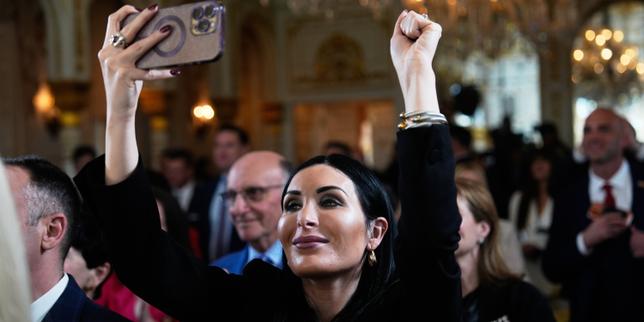
Right-wing political activist and prominent Donald Trump surrogate Laura Loomer has executed a jarring, highly scrutinized reversal on the war in Ukraine, transforming from a vehement Kremlin-aligned critic into an outspoken defender of Kyiv after a boots-on-the-ground visit to the warzone. This sudden about-face by a figure with direct access to the Oval Office exposes the volatile mechanics of digital echo chambers and raises profound questions about how fringe conspiracy theories migrate into mainstream American conservative policymaking.
For years, the activist's multi-million-follower apparatus served as a high-volume megaphone for anti-Ukraine talking points. She routinely amplified narratives accusing Kyiv of harboring neo-Nazis, dismissed military aid packages as a waste of American taxpayer capital, and castigated Ukrainian President Volodymyr Zelenskyy using harsh, unsparing rhetoric. Those digital pronouncements did not exist in a vacuum. They circulated freely within insulated social media subcultures, influencing segments of the America First movement and shaping the information diet of everyday voters.
Then came the physical journey to Eastern Europe.
Stepping off a train into Kyiv and experiencing firsthand the terrifying concussion of an air raid siren shattered the abstract digital framework. Faced with the stark, unfiltered reality of falling ordnance and displaced civilian families, the commentator publicly acknowledged that her previous worldview had been shaped by manufactured falsehoods. She admitted to her millions of followers that she had been trapped in a digital bubble, fed a diet of distorted narratives designed to minimize civilian suffering and justify external aggression.
The political ramifications extend far beyond one influencer's personal reckoning. In modern media ecosystems, ideological alignment is often treated as a rigid doctrine where backtracking is viewed as an unforgivable betrayal. When a prominent ideologue breaks ranks, the shockwaves ripple instantly across the digital landscape. Hardline factions quickly accused her of abandoning core principles, while defenders pointed to the intellectual honesty required to evaluate a geopolitical crisis with direct, empirical observation rather than screen-filtered propaganda.
The Mechanics of Cross-Border Disinformation
Understanding how foreign influence operations penetrate high-level American political circles requires looking past partisan talking points and examining structural vulnerabilities in the digital information marketplace. Modern attention economies reward emotional extremis. Nuance generates low engagement; outrage drives algorithmic distribution.
Foreign actors understand this algorithmic architecture intimately. By seeding specific narratives into Western alternative media ecosystems—such as exaggerated claims regarding internal corruption or fabricated historical grievances—these operations exploit pre-existing domestic skepticism toward foreign interventions. Independent commentators, eager for high-engagement content, often ingest these talking points without verifying primary sources.
When these unverified claims are repeated by individuals with close proximity to executive power, they transition from fringe internet lore to actionable political pressure points. Lawmakers monitoring public sentiment observe the high volume of online outrage and adjust their legislative stances accordingly. The feedback loop closes, reinforcing the original disinformation campaign with domestic legislative friction.
The activist's pivot highlights the fragility of this entire architecture. When an influential voice crosses physical borders and confronts verifiable reality, the digital illusion fractures. Bomb shelters cannot be faked with deepfakes, and missile impacts cannot be recontextualized as computer-generated graphics.
Re-Evaluating the Domestic Political Cost
The fallout within the broader political ecosystem has been swift and unforgiving. Purity spirals within insular political movements demand absolute conformity. Any deviation from established orthodoxy is met with immediate excommunication.
By meeting directly with Ukrainian leadership and validating the human cost of the conflict, the commentator invited intense blowback from anti-interventionist hardliners who view any support for Kyiv as anathema to nationalist principles. This tension exposes a deeper structural split within contemporary conservative politics. One faction remains deeply committed to isolationist frameworks, viewing foreign entanglements purely as a drain on domestic prosperity. Another faction, jarred by changing geopolitical alliances and direct intelligence briefings, begins to weigh the long-term security implications of unchecked territorial expansion.
History shows that ideological conversions driven by direct exposure are rarely quiet affairs. They force followers to re-examine their own information consumption habits and question the reliability of the digital feeds they consult every single day.
The consequences of this high-profile conversion remain to be seen in legislative halls. While a single commentator's change of heart will not single-handedly rewrite foreign policy, it injects severe friction into established narrative pipelines. As high-access figures begin questioning the origin of the information they consume, the barrier protecting insular echo chambers from external reality weakens.
The smoke clears slowly over Kyiv, and the digital battle lines continue to shift in real time.