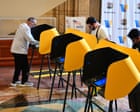
The debate over American voting access has shifted from the polling booth to the statutory text. Mainstream commentary frequently frames Donald Trump’s political apparatus as a blunt-force instrument aimed at dismantling democratic norms. This view misses the actual mechanics of the operation. The real strategy is not a chaotic assault but a highly sophisticated, multi-state legislative campaigns designed to rewrite the granular rules of election administration before a single ballot is cast.
By focusing on procedural minutiae rather than overt suppression, this legal strategy alters who counts the votes, how signatures are verified, and when mail-in ballots can be disqualified.
The Shift From Voter Access to Ballot Processing
For decades, political battles over voting rights centered on the front end of the system. Disagreements focused on voter identification requirements, the availability of polling places, and registration deadlines. The modern strategy pursued by the Republican National Committee and allied legal groups has shifted the frontline to the back end of the process.
This involves targeting the mechanics of ballot processing, signature matching, and county-level certification.
Consider the battle over signature verification. In many jurisdictions, election workers must match the signature on a mail-in ballot envelope with the signature on file in the voter registration database. This sounds straightforward. In practice, it introduces immense human subjectivity. New laws in several states have tightened these requirements, mandating strict conformity without providing standardized training for the temporary workers tasked with making these calls.
The consequences are mathematical. Minor discrepancies, such as a signature written hastily by an elderly voter or a college student whose handwriting has changed, can result in immediate ballot rejection. While the public debates the rhetoric of stolen elections, the actual outcomes are decided by the technical rules governing which ballots survive the initial sorting process.
The Weaponization of Local Election Boards
The most significant structural change involves the systematic realignment of local election boards. Historically, county election boards functioned as administrative bodies, tasked with the ministerial duty of certifying vote totals provided by precinct workers. They were not designed to be investigative units.
A wave of recent state-level statutes has altered this dynamic by granting county boards expanded powers to delay certification pending independent inquiries.
In practice, this decentralizes the conflict. Instead of a single high-profile challenge at the state supreme court level, the system now faces the prospect of dozens of localized disputes. If three or four populous counties delay certification based on unspecified administrative anomalies, the entire statewide timeline is thrown into jeopardy.
This mechanism relies on a fundamental vulnerability in the Electoral Count Act. The federal framework assumes that state actors will operate in good faith to meet statutory deadlines. By giving county-level officials the legal cover to hold up certification, the strategy creates structural bottlenecks that can be exploited to challenge the legitimacy of the final state tally.
The Strategy of Proactive Litigation
The courtroom is no longer a venue for post-election grievances. It is used to shape the electorate in advance. The legal teams aligned with the conservative movement have initiated dozens of pre-emptive lawsuits targeting voter roll maintenance.
The core argument centers on the National Voter Registration Act of 1993, which requires states to maintain accurate voter lists. The litigation strategy uses this mandate to force aggressive purges of inactive voters.
- The Purge Mechanics: States use interstate databases to identify voters who may have moved. If a voter fails to respond to a single confirmation notice and misses two subsequent federal elections, they can be removed.
- The Margin of Error: Data matching across state lines is notoriously imperfect. Common names frequently lead to false positives, resulting in the accidental removal of eligible citizens who only vote in presidential cycles.
- The Timing: When these purges occur within months of an election, affected voters often do not discover their status until they arrive at the polls, at which point it is too too late to register under strict state laws.
This is a war of attrition conducted through bureaucratic filing systems. The objective is not necessarily to block specific demographics from voting, but to introduce enough friction into the system that marginal voters drop out of the process entirely.
The Funding Disparity in Election Infrastructure
While the legal framework changes, the physical infrastructure of American elections remains chronically underfunded. This vulnerability interacts directly with new legislative restrictions.
When state legislatures ban private philanthropic grants for local election offices, a practice that became widespread after the 2020 cycle, they create an immediate resource vacuum. Wealthier, suburban counties can absorb these restrictions through local tax revenues. Poorer urban and rural counties cannot.
The result is a stark divergence in the voting experience. Urban centers face reduced budgets, fewer polling locations, and longer wait times. When combined with new laws that criminalize offering water or food to voters standing in line, the physical act of voting becomes a test of endurance.
This is where the legal engineering meets reality. A law does not need to explicitly ban a citizen from voting if it makes the physical process of doing so logistically unfeasible for working-class individuals who cannot afford to spend four hours in a queue.
The Counterweight of Bureaucratic Resilience
The strategy is comprehensive, but it faces a major obstacle in the decentralized nature of the American electoral system. The United States does not have a single election system. It has more than 10,000 distinct jurisdictions, each managed by local civil servants, many of whom view their work through a deeply rooted lens of professional neutrality.
These local administrators have spent the last several years building operational redundancies. They have digitized tracking systems, increased the transparency of ballot-counting rooms via public livestreams, and refined chain-of-custody protocols for every paper ballot.
This bureaucratic resilience means that attempting to subvert an election result requires navigating a dense web of local regulations and bipartisan oversight. In many states, every single ballot box requires signatures from both a Democratic and a Republican observer to be opened. The sheer volume of human capital required to manipulate this process at scale remains the most significant safeguard against systemic interference.
The real danger is not a sudden, dramatic collapse of the voting system. The risk is a slow, steady erosion of public confidence driven by deliberate administrative friction, where the rules become so complex and the penalties for minor clerical errors so severe that the system suffocates under its own legal weight.