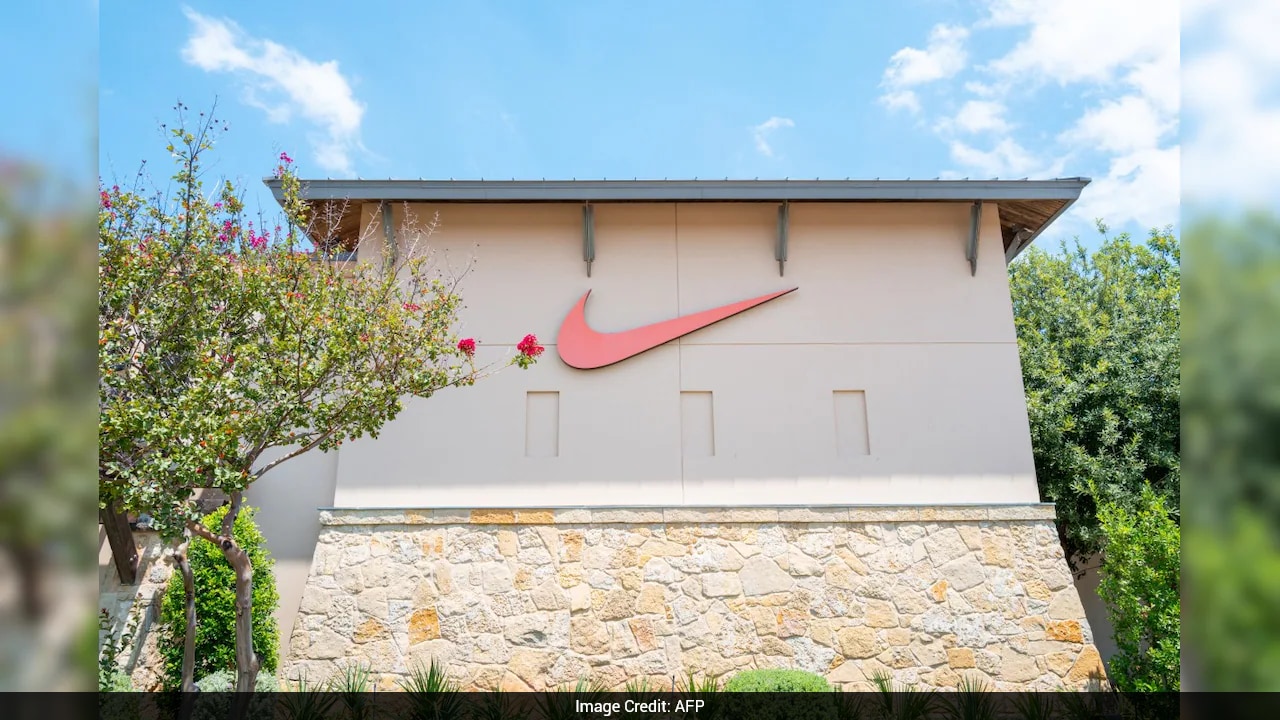
In Libya, an Islamic religious ruling—or fatwa—circulated online and across local networks declaring the purchase, sale, and wearing of Nike products impermissible under Islamic law. The core argument is blunt. The brand takes its name from Nike, the ancient Greek goddess of victory, and its famous Swoosh logo allegedly represents her wing, turning everyday athletic wear into an unintentional endorsement of polytheism (shirk).
To Western observers, this reads like an absurd cultural flashpoint. To anyone who has spent decades tracking global brand risk, geopolitical commerce, and the weaponization of religious edicts in fractured states, it is a textbook case of how corporate iconography collides with local theological politics.
The Theology Behind the Swoosh
You cannot understand the Libyan fatwa without understanding the linguistic and historical baggage attached to the Beaverton, Oregon sportswear giant. In 1971, graphic design student Carolyn Davidson created the Swoosh for $35, explicitly modeling the curved checkmark after the wing of the Greek goddess Nike. Phil Knight, the company's co-founder, initially wasn't thrilled with the design, famously saying he didn't love it, though he hoped it would grow on him.
It grew into one of the most recognizable corporate symbols on earth. Along with it came the mythological origin story, printed on shoeboxes, taught in marketing textbooks, and celebrated in corporate museums.
In strict Salafi and conservative Sunni jurisprudence, the concept of tawhid—the absolute oneness of God—leaves zero margin for ambiguity. Associating partners with God, known as shirk, is the single gravest sin in Islam, the one transgression that places a believer outside the fold of the faith if unrepented. Scholars operating within ultra-conservative frameworks routinely scrutinize foreign imports for hidden pagan, Christian, or polytheistic symbolism.
The logic applied in the Libyan fatwa follows a rigid syllogism. First, the word "Nike" is the proper name of a pagan deity worshipped in antiquity for triumph in war and athletics. Second, the logo is a stylized depiction of that deity's physical attribute. Third, wearing the name or symbol of a false god—even out of ignorance or fashion—constitutes honoring or propagating paganism. Therefore, buying, selling, or wearing the gear is haram (forbidden).
This is not a theological invention cooked up overnight. Similar rulings have surfaced sporadically across the Middle East and North Africa for decades, targeting everything from video games featuring mythological pantheons to luxury watch brands using celestial iconography. What changes is not the theology, which remains static, but the political environment that amplifies it.
Who Actually Issues a Fatwa in Libya
When Western headlines scream that "Libya" has banned Nike, they betray a fundamental misunderstanding of how religious authority works in a fragmented nation. Libya does not have a single, universally obeyed Vatican-style authority capable of snapping its fingers and clearing shelves from Tripoli to Benghazi.
Since the 2011 collapse of Muammar Gaddafi's regime, Libya has remained politically and militarily divided between rival administrations in the east and west, with dozens of localized militias, tribal councils, and competing religious institutions vying for legitimacy.
In this vacuum, the Dar al-Ifta (the highest religious authority in Tripoli, led for years by Grand Mufti Sadiq al-Ghariani) and rival clerical bodies in eastern Libya frequently issue fatwas covering everything from central bank interest rates to women traveling without a male guardian. Alongside these state-adjacent bodies operate independent Salafi clerics—many aligned with the Madkhali trend, which wields significant influence over local security apparatuses and morality policing units—who regularly publish rulings on social media, Telegram channels, and Friday sermons.
A fatwa is not a secular statute passed by a parliament. It is a non-binding legal opinion issued by a qualified Islamic jurist (mufti) in response to a specific question. Its real-world power depends entirely on two factors:
- The personal piety of the consumer who chooses to obey it.
- Whether an armed local faction decides to enforce that religious opinion at gunpoint in local markets.
In areas controlled by hardline religious militias, a viral fatwa quickly transitions from a theological debate into a commercial reality. Shopkeepers do not wait for a formal court summons when men with rifles frown at the inventory in their storefront windows. They pull the sneakers down themselves to avoid trouble.
The History of Nike's Collisions With Islamic Sensibilities
Nike is no stranger to this terrain. In fact, few global corporations have stumbled into religious controversies quite as frequently—or as expensively—as the Oregon giant.
In 1997, the company faced a massive backlash from the Council on American-Islamic Relations (CAIR) over a line of summer basketball shoes—including the Air Bakin', Air Melt, Air Grill, and Air B-Que. The stylized flame lettering on the heel of the sneakers closely resembled the Arabic script for "Allah" (God). Nike initially claimed the design was merely meant to look like flames, then apologized, recalled roughly 38,000 pairs of shoes worldwide, diverted the stock away from sensitive markets, and donated $50,000 to an Islamic elementary school in the United States.
History repeated itself in 2019. An online petition garnered hundreds of thousands of signatures demanding Nike recall the Air Max 270, arguing that the stylized "Air Max" script printed on the outsole—directly underfoot—looked like the word "Allah" when turned upside down. Placing the name of God on the sole of a shoe, where it would be trampled in dirt and filth, is deeply offensive to Muslims. Nike responded by stating the logo was strictly a stylized representation of the Air Max trademark and any resemblance was unintentional, though the controversy caused significant brand damage across Muslim-majority markets.
Look at the pattern across these incidents:
| Incident | Triggering Element | Core Theological Objection | Corporate Response |
|---|---|---|---|
| 1997 Air Bakin' Line | Stylized flame script on heel | Resemblance to Arabic script for "Allah" | Global recall of 38,000 pairs and formal apology |
| 2019 Air Max 270 | Outsole trademark typography | Perceived sacred text placed underfoot | Denied intent; maintained design was pure trademark |
| Libyan Fatwa | Brand name and Swoosh origin | Direct invocation of Greek pagan deity (shirk) | No formal recall; unfeasible to rebrand entire company |
Notice the structural difference here. In 1997 and 2019, the disputes were about accidental visual similarity on specific product lines. Nike could pull a single sneaker model, tweak a font, issue a press release, and move on.
The Libyan fatwa attacks the foundational DNA of the corporation. You cannot recall the name Nike. You cannot redesign the Swoosh without destroying tens of billions of dollars in brand equity. When the objection targets the core identity of a 50-year-old multinational, corporate crisis PR becomes completely useless.
Why Foreign Brands Become Easy Targets in Fractured Markets
Whenever a ruling like the Libyan fatwa goes viral, analysts tend to focus exclusively on religion. That is a mistake. Religion provides the vocabulary, but local economics and politics provide the fuel.
Consider the realities on the ground in North Africa. First, authentic Nike products are largely absent from official retail channels in countries plagued by conflict, sanctions, and currency instability. Walk through markets in Tripoli, Benghazi, or Misrata, and the vast majority of the Swooshes you see on jerseys, tracksuits, and sneakers are counterfeits imported from factories in Turkey, China, or regional free-trade zones.
Because Nike has almost zero direct corporate footprint or official distribution infrastructure in Libya, the company has no local lobbying power, no regional PR agency on retainer, and no tax revenue leverage with local authorities. Attacking an American icon costs local clerics nothing. It carries zero domestic economic penalty while delivering maximum populist credibility.
Second, targeting Western consumer brands serves as a low-risk proxy for cultural resistance. In societies exhausted by civil war, inflation, and foreign interference, preaching against Western cultural imperialism—symbolized by American sportswear—is a reliable way for religious figures to assert moral authority. It shifts public attention away from governance failures, crumbling infrastructure, and economic stagnation, redirecting frustration toward an external, visible target.
Think of a hypothetical example to see how this plays out at the street level. Imagine a mid-sized clothing merchant in a conservative neighborhood in western Libya. He buys a shipping container of knockoff athletic gear from an intermediary in Istanbul because young men in his city want to wear the same jerseys as European football stars. Suddenly, a prominent local cleric issues a ruling calling the logo polytheistic, and local WhatsApp groups begin circulating voice notes warning merchants not to sell it. The merchant has no ideological stake in Greek mythology. He just has $15,000 tied up in inventory. If local enforcers start visiting shops, he quietly packs the Swoosh gear into storage boxes and switches to unbranded tracksuits or rival labels until the heat dies down.
The Counterfeit Paradox and Consumer Reality
Does a fatwa actually stop young Libyans from wearing Nike? The short answer is no. The long answer is far more interesting.
Across the Middle East and North Africa, demographics tell a clear story. Roughly 60% of the population is under the age of 30. Football (soccer) is the undisputed cultural religion of the street, and Nike is the kit supplier for some of the biggest clubs and national teams on the planet—from Paris Saint-Germain and FC Barcelona to the Brazilian and French national squads.
When a teenager in Tripoli buys a knockoff Barcelona jersey, he is not thinking about fourth-century BC Athenian temples or the winged daughter of Pallas and Styx. To him, the Swoosh means Cristiano Ronaldo, Kylian Mbappé, speed, and global modernity. The original mythological meaning of the word "Nike" died centuries ago in everyday usage; in linguistic terms, the brand underwent semantic bleaching, where a proper noun loses its original historical meaning and becomes strictly a commercial signifier.
Yet in strict religious jurisprudence, ignorance does not alter the inherent nature of an object once that nature has been pointed out. From the clerical perspective, the fact that young people do not know Nike is a Greek goddess is precisely why the fatwa is necessary—to educate the public so they do not fall into sin unknowingly.
This creates a permanent tug-of-war between clerical idealism and street-level consumer culture:
- Immediate shockwave: Viral spread on Facebook, TikTok, and local news outlets triggers intense online debate, memes, and temporary panic among small shopkeepers.
- Selective enforcement: Hardline municipalities or militia-backed morality committees briefly confiscate visible inventory in specific districts.
- Quiet normalization: Within weeks, as enforcement moves on to the next political crisis, the merchandise creeps back onto market stalls, and young consumers continue buying what their peers wear.
What Multinationals Get Wrong About Cultural Risk
Corporate risk teams in New York, London, and Beaverton spend millions modeling supply chain disruptions, tariff hikes, and currency devaluations. They routinely fail at modeling semiotic and theological risk.
The standard corporate playbook assumes that every controversy can be solved with better messaging, an apology tour, or a localized diversity initiative. That assumption collapses in markets governed by non-Western epistemic frameworks. When Nike issues a statement explaining that the Swoosh represents "speed and movement" rather than literal pagan worship, it speaks the language of modern marketing. When a Salafi jurist rules against the brand, he speaks the language of classical Islamic jurisprudence. The two sides are not having an argument; they are operating in entirely separate universes.
Even more revealing is how Western media covers these events. Headlines routinely flatten complex, localized religious opinions into monolithic national bans, generating outrage clicks in the West while completely missing the nuanced debates happening inside the Muslim world itself.
In reality, Islamic scholars are far from unanimous on this issue. Many mainstream jurists across Egypt, Jordan, Saudi Arabia, and North Africa argue that wearing a modern commercial trademark whose pagan origins are completely forgotten by both buyer and seller does not constitute polytheism. In classical Islamic legal maxims, actions are judged by intentions (al-umur bi-maqasidiha), and ancient symbols stripped of religious worship lose their sacred or profane status over time—much like the days of the English week (Thursday for Thor, Friday for Freya) are used by millions of English-speaking Muslims without any hint of Norse paganism.
The Libyan fatwa represents the strictest, most literalist end of the theological spectrum—a spectrum that gains outsized visibility whenever state institutions weaken and digital echo chambers amplify hardline voices.
For global brands, the lesson is stark. You do not own the meaning of your logo once it crosses borders. A checkmark drawn in an Oregon classroom in 1971 can stand for athletic empowerment in Los Angeles, counterfeit aspiration in Istanbul, and forbidden pagan idolatry in Tripoli—all on the exact same day.