The modern playbook of American economic statehood relies on a simple premise. Washington threatens financial isolation, third-party entities fold, and targeted capitals eventually sue for peace. But as the White House prepares what Treasury Secretary Scott Bessent labels the toughest financial restrictions in history against Tehran, that old arithmetic is breaking down in real time.
Iran has warned that any nation complying with the impending U.S. economic restrictions will be treated as an active combatant, pushing the current six-month regional conflict into an unpredictable new phase.
This is not standard diplomatic posturing. The confrontation is shifting from shattered military installations to the arteries of global commerce, threatening an escalation that could choke off energy supplies long before any political regime caves.
The Anatomy of a Desperate Escalation
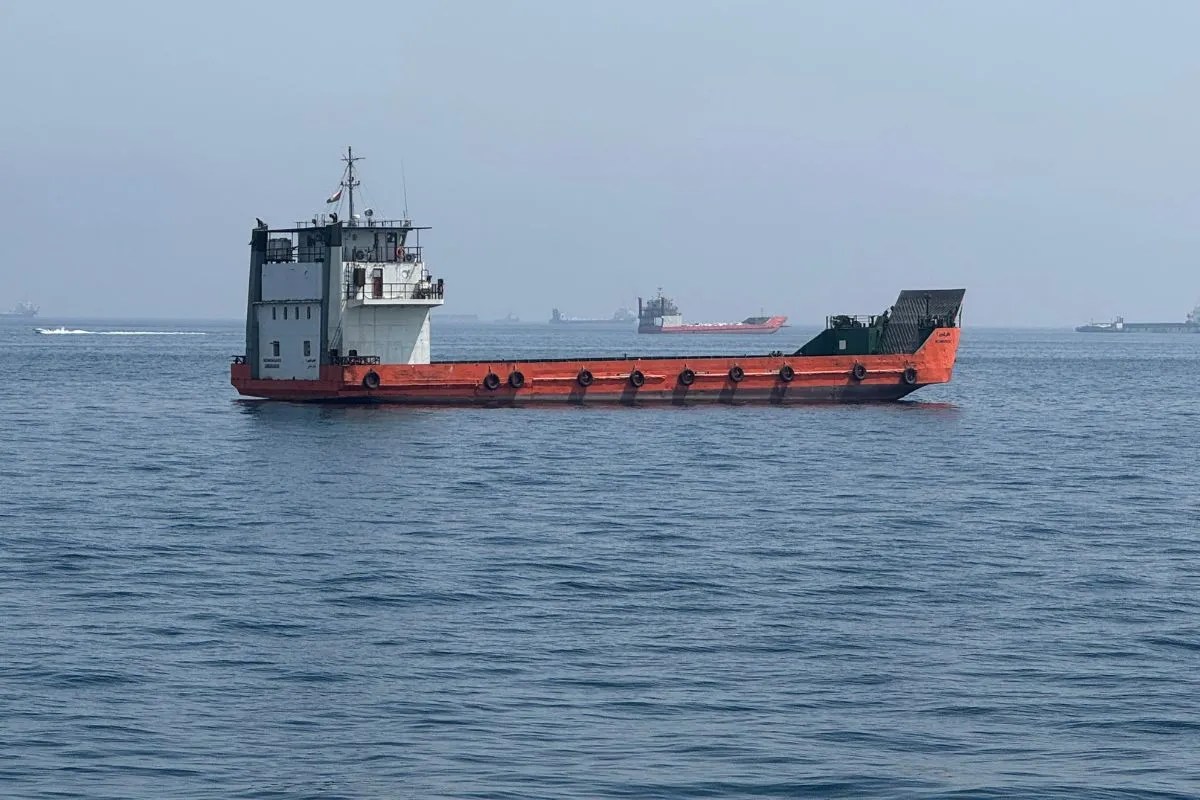
For nearly half a year, the military campaign waged by the United States and Israel has battered Iranian infrastructure, depleted air defense networks, and left thousands dead. Yet, the clerical government in Tehran remains unbowed, maintaining a chokehold on the Strait of Hormuz that has brought unauthorized tanker traffic to a standstill.
By turning the strategic waterway into a de facto zone of conflict, Iran has weaponized geographic necessity.
Treasury officials in Washington argue that maximizing economic isolation will prevent the need for a wider kinetic war. That logic contains a dangerous structural flaw. Decades of cumulative embargoes have already stripped Tehran of conventional economic vulnerabilities. When a state has little legitimate global trade left to lose, introducing harsher restrictions removes any incentive for restraint.
Iranian Foreign Minister Abbas Araqchi dismissed the anticipated sanctions as a symptom of strategic exhaustion. When military campaigns fail to achieve total capitulation, governments often default to financial warfare simply because it is the last lever left in the drawer.
Secondary Targets and Global Friction
The true friction point of the White House strategy lies beyond American and Iranian borders. Washington is actively pressuring international trading partners, most notably Beijing, to sever remaining commercial ties with Tehran. China continues to absorb the vast majority of Iranian seaborne oil exports, treating American enforcement with open skepticism.
Beijing has argued publicly that punitive financial measures will do nothing to stabilize the Middle East. Forcing global powers to choose between access to the American financial grid and discounted energy supplies risks accelerating a permanent fracturing of global trade networks.
At the same time, regional dynamics are shifting with alarming speed. The United Arab Emirates recently suspended commercial and financial transactions with Tehran, illustrating how neighboring states are scrambling to insulate themselves from the fallout.
Mohsen Rezai, head of Iran's supreme national security council, made it clear that Tehran's response will not remain localized if third-party nations bow to U.S. pressure. While Iranian retaliation has primarily targeted regional military nodes thus far, Rezai explicitly threatened American corporate and energy infrastructure abroad should the financial squeeze intensify.
The Energy Market Blind Spot
Markets are notoriously bad at pricing slow-burn geopolitical realities until a sudden shock forces a correction. The ongoing blockade of the Strait of Hormuz has already altered shipping insurance rates and forced long-haul detours, yet energy traders continue to bet that diplomatic channels will eventually reopen.
That optimism ignores the physical reality on the ground.
If Washington enforces sweeping secondary penalties on any entity providing an economic lifeline to Iran, supply chains dependent on Middle Eastern crude will face immediate constraints. Tehran has spent decades preparing for total economic exclusion, building clandestine shipping networks and localized trade arrangements designed to bypass Western oversight.
The strategy of maximum pressure assumes that financial starvation yields political compliance. Historical precedent suggests the opposite outcome is far more likely. Besieged states frequently double down on asymmetric retaliation, utilizing proxy networks and maritime disruptions to ensure that the cost of economic warfare is shared globally.
As financial regulators finalize the new penalty packages, the primary question is no longer whether Tehran's economy can withstand further damage. The question is how much external disruption the global economy can absorb while Washington and Iran test the absolute limits of state survival.