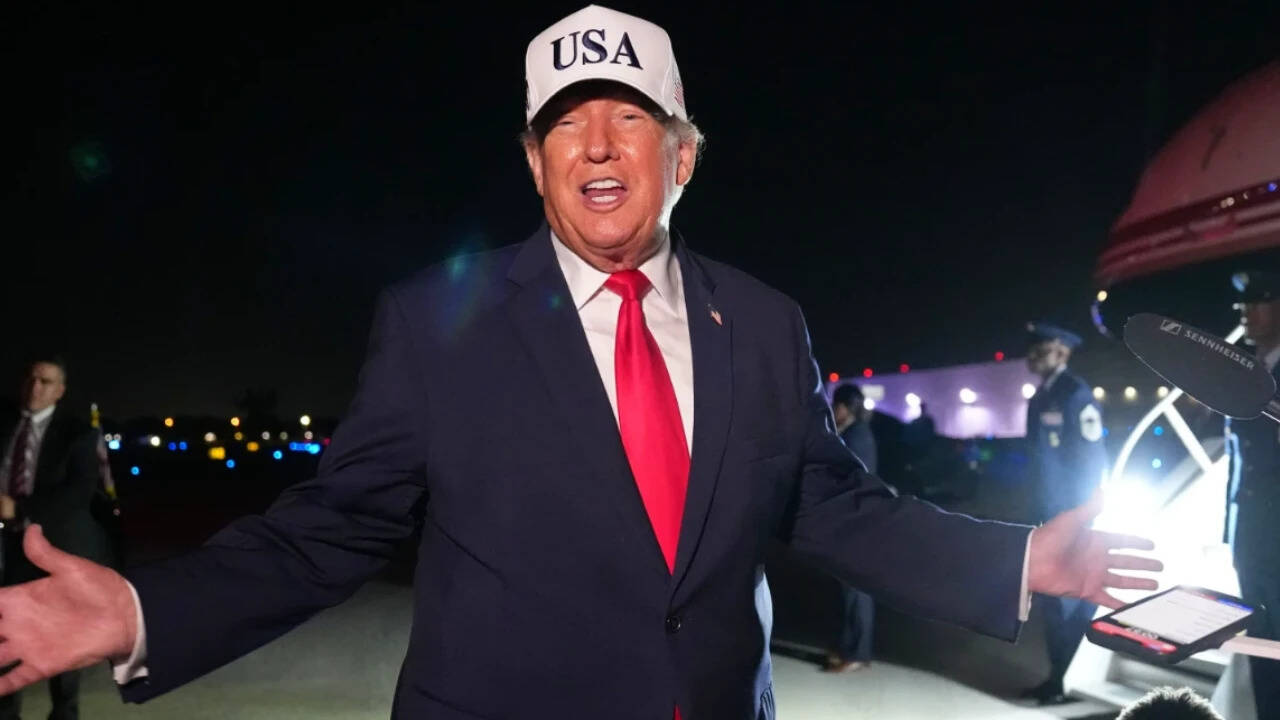
Midterm election cycles have become predictable stress tests for American democratic trust, and renewed midterm fraud claims immediately shift public debate away from policy and back toward ballot administration. When Donald Trump questions the honesty of midterm results, the reaction rarely splits cleanly along partisan lines alone. Some voters hear a necessary alarm about administrative flaws and late-counted mail ballots. Others hear a familiar rhetorical strategy designed to cast doubt on unfavorable outcomes before every precinct finishes reporting.
To understand why these claims gain traction after midterms—and why they rarely survive rigorous scrutiny—we have to look past cable-news soundbites. Real election administration is slow, decentralized, and paper-heavy. Speed and certainty are often in tension. When results trickle in over days rather than hours, perception collides with procedure. Expanding on this idea, you can also read: Biden Wants Trump to Carry January 6 to His Grave Because He Failed to Bury It in Office.
Why Midterm Results Trigger Suspicion Before Votes Are Tallied
Midterm elections operate differently from presidential cycles in ways that confuse casual observers. Turnout is lower, ballot measures vary wildly from county to county, and down-ballot races often hinge on thin margins in a handful of suburban or rural districts.
Counting rules also differ sharply across states. Some jurisdictions process mail ballots weeks before Election Day. Others wait until polls close to open a single envelope. That single statutory difference explains why early returns on election night can lean heavily one way and shift later as mail or provisional ballots are tabulated. Experts at The New York Times have also weighed in on this matter.
Observers unfamiliar with state-level election codes often mistake procedural delay for impropriety. A batch of late-arriving military or overseas ballots, or a slow manual count in a populous county, looks suspicious on a live ticker even when it follows statutes passed years earlier.
There is another factor that rarely gets enough attention. Election workers are mostly temporary staff and local volunteers working exhausting shifts under intense public scrutiny. Mistakes happen in human operations—a misread tally sheet, a misconfigured tabulator memory card, a batch scanned twice. In a healthy system, post-election audits catch and correct those errors. In a polarized media environment, a corrected error is frequently treated as proof of a cover-up.
Consider a hypothetical example to see how routine mechanics get misread. Suppose a mid-sized county processes 80,000 mail ballots over three days after Election Day because state law bars pre-canvassing. On night one, in-person votes show a candidate ahead by 12,000 votes. By day three, mail ballots narrow or flip the lead. Nothing secret happened in that hypothetical scenario; state law simply dictated the sequence of counting. Yet to someone watching only night-one totals, the reversal feels abrupt.
The Mechanics Behind Post-Election Fraud Narratives
Claims of widespread fraud rarely rely on a single smoking gun. Instead, they tend to knit together real friction points—long lines, voter roll maintenance debates, signature verification disputes, and counting delays—into a broader story of systemic rigging.
Decentralization is a double-edged sword. Because roughly ten thousand local jurisdictions run elections across the United States, there is no single central switch that could quietly alter national totals without leaving forensic traces across partisan election boards, county clerks, and state auditors. At the same time, decentralization means standards vary, which gives critics plenty of local anomalies to highlight as if they were national patterns.
Chain of Custody and Paper Trails
Most Americans today vote on systems that produce a voter-verifiable paper audit trail, either through hand-marked paper ballots or ballot-marking devices that print a paper summary. That paper record matters immensely. Digital vote tallies can be queried, reconciled against pollbooks, and audited by hand.
Election integrity depends heavily on chain of custody—the documented log tracking ballots and memory equipment from storage to polling place to central tabulation. When county officials follow strict dual-party sign-offs and video monitoring, tampering is difficult to hide. When a clerk skips a logging step or leaves a transfer bag unsealed longer than policy allows, critics seize on the procedural lapse, even when no evidence shows missing or extra ballots.
Counting Delays and the Mirage of Sudden Shifts
Vote counting is not a single event; it is a series of batches. Large urban and suburban counties often release thousands of votes in a single update after finishing a processing run.
To a viewer refreshing a screen, a jump of 25,000 votes in one direction can look like a sudden surge. In reality, it reflects the order in which trays of ballots were opened and scanned. Once you map batch sizes against registered voter rolls and mail-ballot request logs, those jumps usually line up with basic arithmetic.
What Audits Actually Find Versus What Voters Hear
Serious election analysts draw a sharp line between administrative errors, isolated misconduct, and outcome-altering fraud. All three exist in American history, yet they occur at vastly different scales.
Administrative errors are routine. Poll workers sometimes give voters the wrong ballot style in split precincts, or software settings omit a race on a test deck. Those problems are real headaches for local officials and can require recounts or court remedies in razor-thin contests.
Isolated fraud also happens periodically. A candidate's operative might unlawfully collect ballots, or an individual might attempt to vote twice. When caught, perpetrators face criminal prosecution, and investigators routinely find those cases are too small to flip major statewide or federal outcomes.
Why, then, do midterm fraud claims persist even after recounts and audits report no widespread manipulation? Part of the answer lies in asymmetric attention. A sensational allegation reaches millions of people in an afternoon. A dry, 40-page post-election audit report released three weeks later rarely commands the same audience.
Trust is also shaped by partisan media ecosystems and preexisting skepticism toward institutions. If a voter already believes courts, state secretaries of state, and major news outlets are biased against their side, an audit conducted by those same institutions will not settle the argument. Even bipartisan or Republican-led reviews in contested jurisdictions have repeatedly struggled to persuade die-hard skeptics once a narrative hardens.
The Overlooked Costs of Perpetual Doubt
Treating every close or delayed election as suspect carries real consequences for governance and civic life. Election administration is a public service, and running it requires people willing to take low-paid, high-stress jobs during contentious seasons.
Across the country, experienced clerks and poll workers have retired or resigned after facing harassment, threats, and relentless accusations of dishonesty. Losing institutional memory does not make elections more secure; it makes them harder to run smoothly. When veteran administrators leave, new staff face steeper learning curves under tighter deadlines.
There is also a strategic cost for the political movements making the claims. Telling supporters that the system is rigged before or right after a midterm can depress turnout in future runoffs or general elections. Why wait in line or canvass neighbors if you believe the tally is predetermined? Political strategists across the spectrum have wrestled with that paradox for years.
| Dimension | Routine Administrative Friction | Isolated Misconduct | Systemic Outcome-Altering Fraud |
|---|---|---|---|
| Frequency | Common across thousands of precincts | Occasional, localized incidents | No verified modern U.S. precedent at scale |
| Primary Cause | Staffing limits, complex laws, equipment glitches | Individual rule-breaking or local abuse | Coordinated multi-jurisdiction manipulation |
| Detection Method | Logic and accuracy tests, reconciliations, audits | Poll watchers, canvassers, law enforcement | Paper-trail audits, bipartisan logs, litigation |
| Typical Impact | Delays, recounts, minor procedural fixes | Criminal charges, localized remedies | Would invalidate certified results if proven |
Practical Reforms That Actually Strengthen Confidence
Critics and defenders of the current system often talk past each other because they argue about motives rather than mechanics. A more grounded approach focuses on concrete steps that reduce ambiguity and speed up transparent reporting.
- Allow pre-processing of mail ballots. States that let officials open, flatten, and scan mail ballots before Election Day—while keeping tallies locked until polls close—report results much faster and avoid multi-day counting lulls.
- Standardize post-election audits. Routine risk-limiting audits or hand-count samples across both competitive and non-competitive counties give the public verifiable proof of accuracy rather than ad-hoc reviews sparked only by anger.
- Publish clear counting timelines. Voters are far less suspicious when local officials state upfront how many mail ballots remain, when batches will drop, and why certain precincts take longer.
- Protect bipartisan oversight. Keeping observers from competing parties within clear, lawful viewing lines—while enforcing rules against intimidation—builds credibility without obstructing ballot handling.
None of these measures will eliminate political spin around midterm fraud claims. Politics rewards conflict, and close elections will always invite scrutiny from the losing side. Yet clearer rules, faster reporting, and visible paper trails shrink the space where rumor thrives.
If you want to judge post-election claims for yourself, start with the county clerk's public schedule and the state's exact ballot-counting rules before reacting to a viral clip.