When a massive magnitude 7.8 earthquake ripped through Southern Mindanao on June 8, killing dozens and displacing over a million people, the immediate response followed a familiar humanitarian script. Sirens wailed, rescue teams deployed, and civic organizations pooled millions for emergency relief. Among the quickest to act was the Federation of Filipino-Chinese Chambers of Commerce and Industry Inc. (FFCCCII), which alongside the Filipino at Tsino Magkaibigan Foundation quickly mobilized an 11 million peso aid package for flattened communities in General Santos City and surrounding areas.
Yet, beneath the efficient distribution of rice, sardines, and galvanized iron roofing sheets lies a delicate, unspoken social friction. The deployment of aid occurred against a backdrop of deep geopolitical tension between Manila and Beijing over maritime borders in the West Philippine Sea. While local business leaders publicly frame their philanthropy as a centuries-old moral responsibility completely detached from modern geopolitics, the reality on the ground is far more complex. For the Chinese-Filipino community, humanitarian aid is not just charity. It is a vital buffer against a rising tide of domestic Sinophobia that threatens to conflate local citizens with foreign state actors. You might also find this related story insightful: The Ugly Truth About Overnight Wealth and Fame for the Bondi Beach Hero.
The Geopolitical Shadow Over Disaster Relief
Disaster zones are rarely neutral ground. The Mindanao earthquake struck at a time when public sentiment toward China in the Philippines had soured significantly due to ongoing territorial standoffs. In this charged environment, prominent Chinese-Filipino organizations have made a conscious, strategic effort to separate their identity from Beijing.
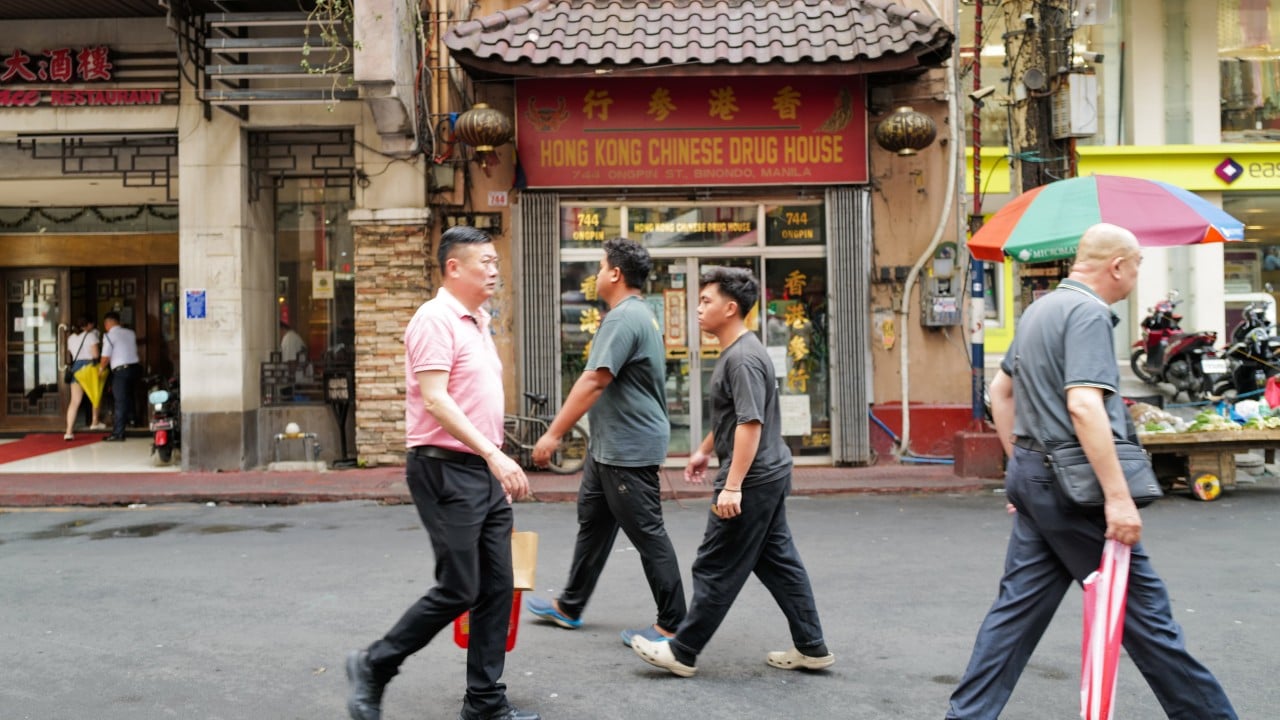
During a recent press briefing at the Federation Center in Binondo, Manila, FFCCCII President Victor Lim emphasized the deep historical roots of the community. He noted that the group has stood side by side with fellow Filipinos for centuries during times of calamity. By leaning heavily into the concepts of local solidarity and bayanihan—the traditional Filipino spirit of communal unity—community leaders are attempting to neutralize any latent resentment before it crystallizes into open hostility. As extensively documented in detailed coverage by NBC News, the effects are worth noting.
This public relations strategy is necessary because the line between domestic ethnic minorities and foreign governments frequently blurs in the public imagination during times of international tension. When a state actor causes friction at sea, local ethnic communities often bear the cultural and social brunt on land. Downplaying these tensions while doubling down on highly visible, unconditional domestic aid serves as a pragmatic mechanism to preserve social harmony.
The Mechanics of Defensive Philanthropy
The 11 million peso commitment is divided intentionally to address both immediate survival and long-term stabilization. It is a blueprint for effective crisis response, but it also reflects how minority business coalitions maintain their social license to operate in volatile times.
- Immediate Survival Bundles: An initial 6 million pesos was allocated for emergency operations. This included distributing 2,000 relief packages containing five kilograms of rice, canned goods, and ten liters of drinking water, alongside 4,000 galvanized iron sheets to rebuild roofs.
- Structural Infrastructure Rebuilding: An additional 5 million pesos was drawn directly from the FFCCCII Welfare Fund specifically for the rehabilitation of public school buildings under the long-running Operation: Barrio Schools program.
By targeting public schools and basic housing, the aid directly impacts the most vulnerable segments of the rural population. This structural focus makes it incredibly difficult for critics to weaponize nationalistic rhetoric against the donors. It is a highly effective, deeply localized form of diplomacy that speaks louder than maritime skirmishes.
The Fragile Reality of the Chinese Filipino Identity
The insistence that aid is strictly humanitarian overlooks the structural vulnerability that these organizations navigate daily. For a prominent Chinese-Filipino business owner, a spike in Sinophobia is not an abstract political concept. It affects supply chains, local retail footprints, and physical safety.
Historically, the Chinese-Filipino community has served as an economic engine for the archipelago, yet they have occasionally found themselves scapegoated during historical moments of political transition or economic downturns. The current maritime disputes have reintroduced that anxiety into the cultural mainstream. By framing their relief efforts around shared citizenship and regional grief—explicitly using local phrases like nakikiramay po kami (we offer our condolences)—these groups are reinforcing their status as indigenous stakeholders rather than foreign proxies.
Whether this defense holds depends entirely on the trajectory of international relations. For now, the distribution of iron sheets and school repairs provides a quiet, effective shield against prejudice, proving that in times of crisis, the local delivery of survival goods is the most powerful counter-narrative available.