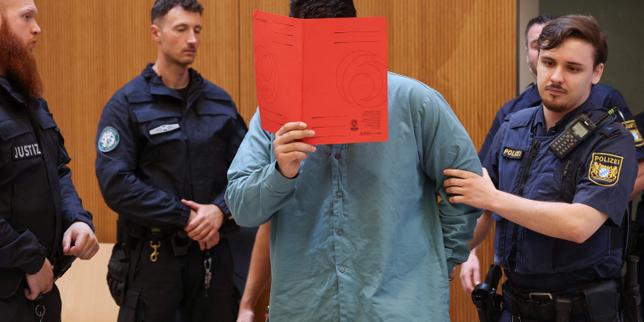
The Munich Higher Regional Court delivered a life sentence with a finding of particular gravity of guilt against Farhad N., the 25-year-old Afghan national who steered a Mini Cooper into a crowded trade union march in February 2025. This definitive judgment closes a harrowing judicial chapter over an attack that killed a 37-year-old woman and her two-year-old daughter while injuring more than forty others. Yet, the legal closure achieved inside the courtroom contrasts sharply with the broader, unresolved vulnerabilities exposed across the European security architecture.
Courts dispense punishment. They rarely repair fractured public trust.
The Anatomy of a Calculated Carnage
The sequence of events leading to the Munich tragedy unfolded with terrifying predictability. On that cold February morning, roughly 1,400 trade unionists had gathered to demand higher wages, filling the streets in a dense, unprotected formation. The defendant bypassed a police vehicle, accelerated into the crowd, and launched the mother and child ten meters through the air. Both succumbed to severe head injuries days later.
Investigators quickly dismantled the veneer of a spontaneous outburst. The attack was ideologically driven. Prosecutors established that the perpetrator acted from a radicalized interpretation of foreign conflicts, viewing civilian demonstrators as proxy targets.
Low-complexity assaults utilizing ordinary motor vehicles remain an intractable challenge for modern law enforcement. Concrete bollards protect static Christmas markets and government buildings, but open-air civic demonstrations, labor strikes, and public thoroughfares remain exposed. Total fortification turns cities into militarized zones, destroying the open public life democratic societies strive to protect.
The Political Shockwave and Immigration Fallout
The timing of the Munich ramming amplified its societal impact. Occurring on the eve of the Munich Security Conference and amid high-stakes national election cycles, the attack instantly fused into the volatile debate surrounding border controls, asylum policies, and internal security.
Anti-immigration factions seized upon the perpetrator's background to demand sweeping policy reversals. Centrist policymakers found themselves squeezed between the humanitarian obligation to shelter refugees and the absolute state duty to guarantee physical safety.
Judicial transparency became the state's primary defense against populist exploitation. By conducting an open, meticulous trial that resulted in the maximum legal penalty—complete with a special designation under German law that largely forecloses early parole—the judiciary sought to demonstrate that the system functions without political interference.
However, prison sentences address symptoms rather than systemic radicalization pathways.
The Blind Spots in Counter-Radicalization
Detecting individuals on the fringe of ideological violence before they commit atrocities remains an imperfect science. Intelligence agencies face an overwhelming volume of digital chatter, personal grievances, and ambiguous indicators.
Many modern attackers do not belong to structured terrorist cells. They are self-radicalized online, consuming propaganda that translates global geopolitical grievances into localized acts of mass murder. When an individual decides to weaponize a two-ton vehicle, the transition from ideological grievance to physical action can happen in days, bypassing traditional signals intelligence intercept protocols entirely.
The Munich verdict marks the legal end of a dark episode, but the security dilemma persists. Public spaces remain vulnerable to the simplest tools of destruction, and the societal friction sparked by such events continues to test the resilience of democratic institutions.