The wind across the Sandhills of Nebraska does not care about political alignments. It cuts through barbed wire, rattles galvanized stock tanks, and sweeps across vast pastures where multi-generational cattle operations are quietly facing an existential math problem. When political figures touch the cattle trade, the shockwaves do not register as abstract statistics in Washington boardrooms. They hit the chute, the auction barn, and the ledger of a rancher trying to figure out how to rebuild a depleted herd while competing against an influx of foreign product.
The tension spilled into public view when the administration moved to ease restrictions and allow significant volumes of foreign beef into the domestic market tariff-free, framed as an urgent intervention to lower grocery store prices for everyday consumers. To the consumer staring at high prices in the meat aisle, imported supply sounds like relief. To the producer in Cherry County or Custer County, it looks like a direct hit to the bottom line at the worst possible moment in the cattle cycle.
This friction exposes a deep structural paradox within modern American agricultural politics. For years, cattle inventory across the United States has hovered near multi-decade lows due to lingering drought, high feed costs, and pasture liquidation. Basic supply and demand dictate that fewer animals mean higher prices. When Washington steps in to suppress those prices by opening the floodgates to foreign trimmings and imports, it undercuts the very producers who are expected to invest years and substantial capital into rebuilding the national herd.
Look at the mechanics of a cow-calf operation. You cannot manufacture a beef calf overnight. The biological timeline requires roughly two years from breeding to a finished animal ready for processing. When a rancher hears that government policy is designed to bring in external supply to provide short-term relief at the retail counter, the long-term incentive to expand operations evaporates. Why retain heifers for breeding when the market signal suggests prices will be artificially suppressed by foreign competition just as those animals reach market weight?
The political fallout in Nebraska has been swift and deeply uncomfortable for local representatives caught between loyalty to a popular national leader and duty to their agricultural base. Congressional delegation members and state farm organizations have voiced sharp opposition, pointing out that short-term fixes create long-term structural damage. Yet, the political reality is just as stubborn. Rural voters overwhelmingly supported the administration's return, driven by broader frustrations over inflation, energy costs, and the general cost of living.
This creates a split-screen reality across the Great Plains. Step into a livestock auction in Grand Island or North Platte, and you will hear deep loyalty to the concept of America First economic policy paired with profound anxiety over specific agricultural directives. Ranchers are pragmatic by necessity. They understand that urban consumers are stretched thin by inflation. They also know that the American beef supply chain is extraordinarily complex, heavily consolidated among a handful of major meatpacking conglomerates, and resistant to simple political tuning.
When policymakers treat beef like a commodity that can be dialed up or down with the stroke of a pen, they ignore the biological reality of livestock production. Margins are razor-thin. Disease risks, drought recovery, and land management require immense capital reserves. Injecting foreign volume into the market during a rebuilding phase does not fix the consolidation issues plaguing the packing sector; it simply transfers the financial
The Nebraska Fracture Why Trump Trade Strategy Is Setting Off Alarms Across Cattle Country
news, business
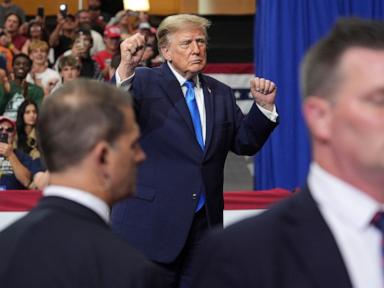
Donald Trump touched down in Nebraska with a standard political playbook. The rallies promised protection for American workers, a wall around domestic markets, and an aggressive stance against foreign competitors. But behind the closed doors of livestock auction yards, feedlot boardrooms, and family-owned ranches stretching across the sandhills, the mood was not one of celebration. It was quiet, tense, and deeply anxious.
The core of the friction comes down to trade mechanics and global supply chains. While protectionist rhetoric plays well in industrial rust-belt towns, cattle country operates under a different economic law. Producers here rely heavily on export markets for specific cuts of beef that domestic consumers routinely pass over, while simultaneously depending on imported feeder cattle and regional trade agreements to keep processing plants running at maximum efficiency. When tariff threats and retaliatory trade barriers enter the equation, the math changes overnight. Margins vanish. Debt-servicing becomes a high-stakes gamble.
Understanding this tension requires looking past the broad strokes of campaign speeches and examining the actual plumbing of the American beef industry.
The Export Paradox
Beef production is not a uniform equation where every animal yields equal value. A steer yields prime steaks, but it also yields massive quantities of tongue, offal, liver, and chuck cuts that lack high demand on domestic supermarket shelves. For decades, the economic viability of American ranching has depended on finding lucrative foreign buyers for these exact parts.
Asian markets, particularly South Korea and Japan, have historically absorbed billions of dollars in secondary beef exports. This export stream props up the live cattle price paid to the rancher in Nebraska. When trade relationships turn hostile and foreign governments implement retaliatory tariffs against American agricultural products, those secondary cuts pile up domestically or get heavily discounted.
The retaliatory dynamic is swift and punishing. If foreign buyers face punitive tariffs on goods they send to the United States, their governments look for immediate ways to strike back. Agriculture is always the primary target because it is politically sensitive and geographically concentrated in regions that support protectionist candidates. The irony of the protectionist cycle is glaring. Measures designed to shield domestic industries often invite foreign retaliation that cripples the exact export-dependent sectors meant to be defended.
Nebraska cattlemen know this history. They lived through previous tariff skirmishes that saw American beef lose vital market share to competitors in Australia and South America within weeks. Once a foreign market secures an alternative supplier, winning them back requires years of expensive lobbying and price discounting.
The Feedlot Bottleneck
Beyond exports, the domestic processing sector operates on razor-thin labor margins and high-volume throughput. Large processing conglomerates dominate the market, buying cattle from independent ranchers and distributing boxed beef nationwide. These plants require a steady, uninterrupted stream of live animals to cover their massive fixed capital costs.
Trade policy shifts disrupt this flow in two major ways. First, fluctuations in currency values and trade barriers affect the cost of grain and feed supplements, driving up the baseline expense of finishing a steer in a feedlot. Second, any disruption in the cross-border movement of feeder cattle—particularly from traditional partners like Canada and Mexico—starves plants of the volume they need to remain profitable.
When feedlots face soaring input costs and uncertain supply lines, they pass the pain down the line. They lower the bids they make to independent ranchers for cow-calf pairs and yearlings. A rancher who spent eighteen months raising an animal suddenly finds that the market price offered at the auction barn does not cover the cost of winter feed and veterinary care.
This is where the political disconnect becomes dangerous. The political narrative assumes that all agricultural producers speak with one voice and want the same insulation from global markets. In reality, a corn farmer in eastern Nebraska and a cow-calf operator in the western panhandle experience global trade through entirely different lenses. The farmer might welcome input price protections, while the rancher watches export markets evaporate under retaliatory fire.
The Financial Realities on the Range
Operating a modern ranch requires substantial capital leverage. Land prices remain stubbornly high, machinery replacement costs have escalated, and interest rates make borrowing an expensive proposition. Most independent operators carry operating lines of credit that they draw down through the winter and pay off when calves are sold in the autumn.
When trade policy injects volatility into autumn auction prices, the financial planning of an entire multi-generational operation unravels. A drop of twenty cents per pound on a six-hundred-pound calf represents the difference between breaking even and defaulting on a bank loan.
Financial institutions are well aware of this vulnerability. Agricultural lenders in the Midwest have grown increasingly cautious, tightening credit standards for producers who rely heavily on baseline commodity prices remaining stable. When a political figure rolls into town promising sweeping trade overhauls that could disrupt those prices, bankers start making uncomfortable phone calls.
The structural consolidation of the meatpacking industry exacerbates the problem. With just four major corporations controlling the vast majority of beef processing in the United States, independent producers have virtually no leverage to negotiate prices. If trade policy creates uncertainty, these mega-processors hedge their risks by lowering purchase prices for live cattle while maintaining high retail prices for consumers. The squeeze lands squarely on the producer at the bottom of the chain.
Navigating the Gray Areas
The political appeal of trade protectionism is easy to understand. It offers a clear enemy and a simple promise of national self-reliance. But modern agriculture is a deeply integrated global enterprise. You cannot simply flip a switch and isolate the American beef sector from international supply and demand without triggering massive structural shockwaves.
Supporters of aggressive trade policies argue that short-term pain is a necessary price to pay for long-term structural realignment. They contend that forcing trading partners to the negotiating table will ultimately yield fairer rules and better access for American goods. There is a theoretical logic to this argument, rooted in the idea of using the massive weight of the American consumer market as leverage.
However, theory offers little comfort to a rancher staring down a bank foreclosure while waiting for a trade war to resolve itself. The timeline of high-stakes geopolitical brinkmanship moves at a glacial pace, whereas a cattle operation must make daily operational decisions regarding feed, pasture rotation, and herd retention.
As the political caravans move on to the next stop, the reality on the ground in Nebraska remains unchanged. The banners come down, the rally crowds disperse, and the people who actually raise the nation's food are left calculating whether next year's calf crop will bring enough to keep the land in the family. The disconnect between campaign rhetoric and economic survival on the range has never been wider.