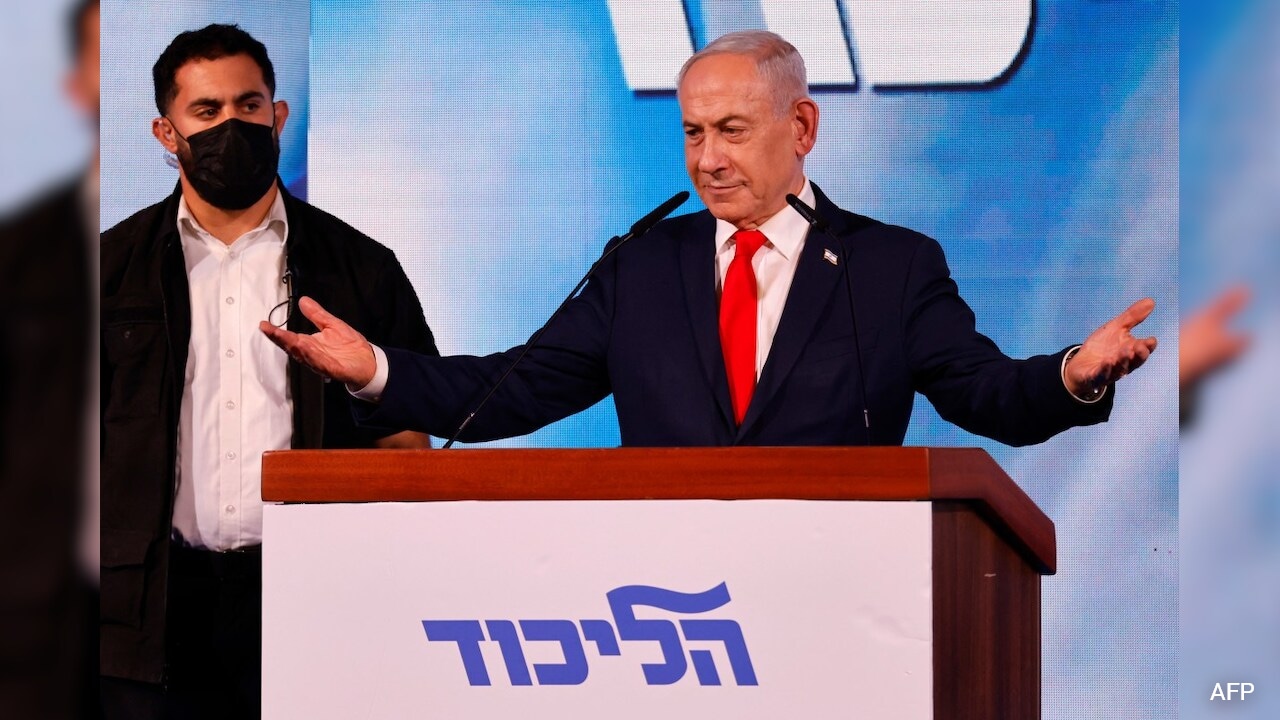
Benjamin Netanyahu's recurring call for a broad national government under his leadership is less a gesture of patriotic unity and more a calculated survival maneuver designed to neutralize far-right coalition partners while keeping opposition rivals fractured. Whenever domestic pressure spikes—whether from judicial overhaul protests, hostage negotiations, or looming election cycles—Israel's longest-serving prime minister reaches for the same rhetorical lever. He frames a wide unity coalition as the only responsible path forward during existential crises, yet every major centrist and opposition leader has repeatedly rejected serving beneath him, exposing a deep structural deadlock in Israeli parliamentary politics.
The pitch sounds reasonable on the surface. A nation facing multi-front security threats, severe economic strain, and profound social polarization ought to govern from the center. In practice, however, "national unity" in the Knesset has become a heavily loaded bargaining chip rather than a genuine power-sharing model.
The Arithmetic of Survival in the Knesset
To understand why Netanyahu keeps floating the idea of a broad national government, you have to look at the brutal math of Israel's 120-seat parliament. Building a governing majority of at least 61 seats requires stitching together factions with radically incompatible worldviews. For years, Netanyahu relied on a bloc of ultra-Orthodox parties and hardline religious nationalists to secure his hold on power. That alliance came with a steep price tag.
Small fringe factions quickly realized that pulling out of the coalition meant collapsing the government and triggering snap elections. That realization handed outsized influence to ministers like Itamar Ben-Gvir and Bezalel Smotrich, allowing them to dictate policy on West Bank settlements, judicial appointments, and police operations. Netanyahu found himself trapped in a coalition where his most extreme partners held a permanent veto over his political survival.
Inviting centrist opposition figures into the tent serves a dual purpose for the Prime Minister. First, bringing in a party like Benny Gantz's National Unity or Yair Lapid's Yesh Atid immediately dilutes the blackmail power of the far right. If the government holds 75 or 80 seats instead of 64, a single radical faction walking out no longer brings down the house. Second, it shields Netanyahu internationally. Western allies, particularly Washington, routinely express alarm over the rhetoric and policies of Israel's far-right ministers. Wrapping his administration in the respectable cloak of a centrist unity government buys diplomatic breathing room without requiring Netanyahu to surrender the premier's chair.
It is a classic political hedge. He gets to keep the top job while outsourcing the blame for unpopular compromises to his new centrist partners.
Why Centrist Rivals Refuse the Bait
Opposition leaders have heard this song before, and the scars are still visible. In 2020, amid the chaos of the COVID-19 pandemic and three consecutive inconclusive elections, Benny Gantz broke his primary campaign promise and entered a rotation government with Netanyahu. The agreement was explicit. Netanyahu would serve as prime minister for 18 months, and Gantz would take over for the following 18 months.
That handover never happened. Netanyahu exploited a technical loophole in the budget approval process to dissolve the Knesset before Gantz's turn arrived, sending the country back to the polls and nearly destroying Gantz's political career in the process.
When war erupted following the October 7 attacks, Gantz and former IDF chief Gadi Eisenkot joined an emergency war cabinet anyway, putting national crisis management above personal distrust. Yet within months, both men walked out, accusing Netanyahu of subordinating strategic war aims and hostage deals to his own political preservation. The lesson was burned into the memory of every opposition strategist in Tel Aviv and Jerusalem. Entering a broad national government under Netanyahu does not mean co-governing; it means becoming a human shield for policies you cannot control.
Today, the refusal from the opposition bloc rests on three concrete realities:
- Zero trust in written agreements. Coalition deals in Israel are not legally binding contracts in the way commercial agreements are, and Netanyahu has demonstrated a willingness to dismantle governments the moment the political calendar favors him.
- The ongoing corruption trial. Critics argue that any prime minister fighting charges of bribery, fraud, and breach of trust faces an inherent conflict of interest when negotiating judicial reforms, appointments to the attorney general's office, or state commissions of inquiry.
- Voter punishment. Centrist voters view joining a Netanyahu-led coalition not as statesmanship, but as betrayal. Any opposition leader who crosses the aisle risks watching their polling numbers evaporate overnight.
The Structural Trap of Israeli Coalition Politics
Blaming the entire standoff on one man's ambition misses half the story. Israel's proportional representation system practically manufactures this kind of paralysis. With a low electoral threshold of 3.25 percent, dozens of small parties compete for narrow ideological niches, guaranteeing that no single party ever wins an outright majority.
Kingmakers hold all the cards. Over the past decade, ideological divisions over the Israeli-Palestinian conflict and the role of religion in public life have hardened into an identity war. The electorate is roughly split down the middle into two rigid camps—the pro-Netanyahu bloc and the anti-Netanyahu bloc. Because neither side can consistently assemble a stable 61-seat majority without relying on extreme or deeply unpopular partners, the system grinds into permanent gridlock.
Even if opposition leaders wanted to form an alternative government without Netanyahu, they face their own mathematical nightmare. Doing so requires uniting secular liberals, right-wing hawks who despise Netanyahu personally, and Arab-Israeli parties under one roof. The brief "government of change" led by Naftali Bennett and Yair Lapid in 2021 proved just how fragile such a Frankenstein coalition can be. It collapsed within a year after losing a handful of defectors over routine parliamentary votes.
What a Broad Coalition Actually Changes on the Ground
Suppose the political stars aligned and a broad national government actually materialized. Would it solve the core crises facing the country? Probably not, and the history of Israeli unity governments explains why.
During the 1980s, Likud and the Labor Alignment formed famous national unity governments under Shimon Peres and Yitzhak Shamir. Those coalitions succeeded in taming hyperinflation and withdrawing troops from parts of Lebanon because both sides shared a baseline consensus on economic stabilization. When it came to existential questions about borders, settlements, and peace negotiations, however, the government paralyzed itself. The prime minister and foreign minister actively undermined each other's diplomatic initiatives in Washington and Cairo.
A modern unity coalition faces an even wider ideological chasm. Centrist factions demand an end to blanket military draft exemptions for ultra-Orthodox yeshiva students, a state commission of inquiry into security failures, and clear diplomatic frameworks for post-war Gaza. Netanyahu's base and his traditional Haredi allies vehemently oppose all three.
Putting rivals around the same cabinet table does not erase those contradictions. It merely moves the screaming matches from the Knesset floor behind closed doors, resulting in watered-down policies that satisfy nobody.
The Strategic Value of the Offer Itself
If Netanyahu knows that Yair Lapid, Benny Gantz, and Avigdor Lieberman will almost certainly say no, why does he keep extending the invitation? Because in politics, the offer itself is the weapon.
By publicly calling for unity while his opponents refuse, Netanyahu flips the narrative. He casts himself as the mature statesman extending an olive branch during a national emergency, while painting the opposition as petty, vindictive politicians who hate him more than they love the country. That message resonates powerfully with undecided voters who are exhausted by years of toxic infighting and just want stability.
It also serves as a subtle warning shot to his current coalition partners. Whenever hardline ministers push too aggressively for controversial legislation or threaten to bolt over military operations, raising the specter of a unity government reminds them that they are replaceable—at least in theory. Even an unlikely threat forces radical factions to calculate how far they can push before losing their ministerial cars, budgets, and influence.
The International Audience
There is another audience watching closely from abroad. Foreign diplomats, credit rating agencies, and international investors look at Israel's internal political turmoil as a primary risk factor. Moody's and S&P have both cited domestic political instability and governance risks when downgrading Israel's sovereign credit rating.
Signaling openness to a broader, more moderate governing coalition reassures international markets and foreign capitals that the leadership is seeking a centrist course correction. Whether a deal ever gets signed matters less in the short term than projecting the image of flexibility.
The Limits of Political Acrobatics
Political survival skills can carry a leader through decades of storms, yet every tactic eventually hits diminishing returns. The repeated invocation of a broad national government relies on a fading illusion—that the deep structural fractures in Israeli society can be papered over with a cabinet reshuffle.
Voters on both sides of the political divide have grown cynical about unity slogans. Families demanding the return of hostages, reservists exhausted after months of back-to-back deployments, and taxpayers bearing the brunt of wartime economic costs are looking for accountability and clear strategic direction, not another round of coalition musical chairs.
Until Israel's electoral math shifts decisively—either through a major realignment of the electorate or the emergence of new leadership capable of breaking the binary stalemate—calls for a unity government under Netanyahu will remain what they have been for years. They are an opening gambit in a high-stakes game of political survival, designed to buy time rather than build consensus.


