Woodside Energy’s push to drill for gas near Scott Reef in Western Australia has triggered fierce warnings from marine watchdogs, who argue the industrial project threatens endangered sea turtles and rare deep-water corals with irreversible acoustic and physical damage. Located roughly 400 kilometers northwest of Broome, this remote coral atoll sits directly atop the Browse Basin—a massive hydrocarbon reserve that Australia’s largest independent oil and gas producer views as essential to feeding its aging Karratha Gas Plant. While corporate executives frame the Browse project as a bridge to lower-emission energy for Asian markets, independent scientists and regulatory submissions paint a stark picture of industrial infrastructure encroaching on an isolated, biologically unique marine sanctuary.
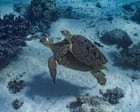
The stakes extend far beyond a single drilling rig. Scott Reef represents one of the few oceanic reefs in the eastern Indian Ocean, functioning as a critical genetic stepping stone between the Coral Triangle and Western Australia’s coastal ecosystems. Because it rises sheer from the abyssal plain, the atoll supports complex coral communities that have adapted to extreme tidal shifts and warm waters, alongside nesting grounds for genetically distinct populations of green sea turtles (Chelonia mydas). Watchdogs and environmental groups contend that Woodside’s environmental impact assessments underestimate how prolonged seismic testing, subsea pipeline installation, and potential hydrocarbon spills would disrupt these fragile biological networks. Meanwhile, you can find other stories here: The Architecture of Crisis Diplomacy in Tehran and the Deterrence Calculus.
The Geography of an Ecological Collision
To understand why Scott Reef is the flashpoint of Australian energy policy, you have to look at the seafloor. Unlike the Great Barrier Reef, which hugs the continental shelf, Scott Reef is an isolated tower of limestone rising from depths exceeding 2,000 meters. This isolation has allowed marine life to evolve in relative seclusion, creating coral assemblages that scientists frequently describe as exceptional due to their resilience and biodiversity. When warm water events bleached vast stretches of the reef in 1998 and 2016, its remote location meant recovery depended entirely on surviving local coral larvae rather than replenishment from neighboring reefs.
Directly beneath this living structure lies the Browse Basin, containing an estimated 13.9 trillion cubic feet of dry gas and 390 million barrels of condensate. For decades, energy majors debated how to extract these resources without building an onshore processing hub on the sensitive Kimberley coast. Woodside’s current proposal—known as the Browse to North West Shelf Project—solves the onshore problem by moving the industrial footprint entirely underwater. The plan involves installing dozens of subsea wells, massive floating production storage and offloading (FPSO) facilities, and a 900-kilometer trunkline to pipe the gas south to the Burrup Peninsula. To explore the complete picture, we recommend the excellent analysis by The Guardian.
The engineering is formidable. The environmental trade-offs are equally stark.
By placing subsea manifolds and drilling templates near the perimeter of the reef system, the project introduces chronic industrial stress to a habitat that has never experienced sustained human activity. Environmental regulators, including Western Australia’s Environmental Protection Authority (EPA), have repeatedly scrutinized Woodside’s submissions, questioning whether the company’s modeling adequately accounts for the worst-case scenarios of well blowouts, chronic chemical discharges, and the physical smothering of benthic habitats during drilling.
Acoustic Warfare in a Silent Sanctuary
When the public thinks of offshore oil and gas risks, catastrophic oil spills dominate the imagination. Marine biologists working in the Browse Basin worry just as much about what happens during routine operations. Underwater noise pollution is an invisible, pervasive threat to marine megafauna, and the Browse development requires years of intense acoustic activity.
Before a single cubic meter of gas is extracted, vessels must map the reservoir using marine seismic surveys. These ships tow arrays of airguns that fire high-pressure blasts of compressed air toward the seabed every ten to fifteen seconds, twenty-four hours a day, for months at a time. The sound waves penetrate the rock layers and bounce back to hydrophones, creating a three-dimensional map of the gas deposits. In the water column, however, those blasts generate sound levels exceeding 230 decibels—loud enough to cause temporary or permanent hearing loss in marine mammals and disrupt the sensory systems of sea turtles.
For the green turtles that nest on Sandy Islet—a tiny, shifting sand cay within the Scott Reef system—sound and light are existential matters. Turtles rely on low-frequency acoustic cues and natural light horizons to navigate across open ocean and locate nesting beaches. Heavy vessel traffic, continuous dynamic positioning thrusters on drill ships, and the constant hum of subsea processing equipment create a wall of industrial noise around the atoll.
Artificial light presents a secondary, equally lethal trap. Gas flares and brightly lit production platforms stationed near the reef act as massive beacons in an otherwise pitch-black ocean. Hatchling turtles emerging from nests on Sandy Islet instinctively orient toward the brightest horizon, which under natural conditions is the reflection of the moon and stars off the open sea. Industrial lighting near the reef disorients these hatchlings, drawing them away from deep water and into areas crowded with predatory fish and reef sharks, sharply reducing survival rates for an already threatened population.
Why the Watchdogs Are Sounding the Alarm Now
The current friction is not a sudden dispute; it is the culmination of a regulatory process that has stretched across more than a decade, marked by shifting corporate strategies and tightening environmental standards. In recent assessments, environmental watchdogs—including the Australian Conservation Foundation, Greenpeace Australia Pacific, and local Kimberley conservation councils—have focused their fire on specific technical gaps in Woodside’s environmental approvals.
Central to their critique is the behavior of drill cuttings and drilling fluids. When a drill bit bores thousands of meters into the seabed, it generates tons of crushed rock mixed with synthetic or water-based lubricants. While operators treat these cuttings before discharge, releasing them into the water column creates sediment plumes that drift with ocean currents. Corals are sessile filter-feeders; they cannot swim away from falling sediment. Even a thin layer of fine silt blocks sunlight, disrupts photosynthesis in the symbiotic algae living within coral tissues, and forces the coral to expend massive amounts of energy to clean itself. If that energy drain occurs during a marine heatwave, the combined stress often proves fatal.
Furthermore, watchdogs point to the geological instability of the region. The Browse Basin sits near active fault lines, and the seabed around Scott Reef features steep slopes prone to underwater landslides. Critics argue that Woodside’s risk assessments downplay the probability of seabed subsidence or tectonic shifts damaging subsea pipelines and wellheads. In a hypothetical scenario where a subsea pipeline ruptures along a steep reef slope, the resulting gas and condensate plume would rise rapidly through the water column, coating surface waters where turtles breathe and exposing shallow coral lagoons to toxic hydrocarbons before containment vessels could even reach the remote site.
The Economics Behind Woodside’s Relentless Push
To understand why Woodside continues to push a project fraught with regulatory delays and public opposition, you have to look at the balance sheet of the North West Shelf Project in Karratha. Commissioned in the 1980s, this massive liquefied natural gas (LNG) processing facility is the cornerstone of Western Australia’s gas industry. It is also running out of gas.
The original offshore fields that fed Karratha for forty years are in terminal decline. Without new gas supplies to fill its processing trains, the facility faces expensive decommissioning or underutilization. Woodside’s strategic imperative is clear: connect the massive reserves of the Browse Basin to the existing Karratha infrastructure, thereby extending the life of a multi-billion-dollar asset well into the 2040s and beyond.
From a purely corporate perspective, the logic is straightforward. Building a new greenfield LNG plant from scratch in the current economic climate is prohibitively expensive and politically toxic. Tying Browse into Karratha via a 900-kilometer pipeline maximizes existing capital investments and satisfies long-term supply contracts with major buyers in Japan, South Korea, and China.
Yet this economic rationale collides directly with global climate physics and domestic energy realities. The Browse gas field has a notably high reservoir carbon dioxide content—roughly 8 to 12 percent, significantly higher than many conventional gas fields. Extracting and processing this gas requires venting or capturing millions of tons of carbon dioxide annually. Woodside has proposed carbon capture and storage (CCS) schemes to mitigate these emissions, injecting the stripped carbon back into depleted reservoirs. However, independent energy analysts note that large-scale offshore CCS in Australia has historically struggled with technical delays, cost overruns, and lower-than-promised capture rates, as seen at Chevron’s Gorgon project further south.
The Regulatory Tightrope in Canberra and Perth
The approval process for the Browse project exposes a deep structural tension within Australian governance. Both the Western Australian state government and the federal government in Canberra rely heavily on resource royalties and corporate tax revenues generated by the LNG sector. At the same time, both administrations have committed to strict biodiversity protection targets and net-zero emissions trajectories.
Under Australia’s Environment Protection and Biodiversity Conservation (EPBC) Act, the federal environment minister holds the ultimate authority to approve, reject, or place strict conditions on projects that threaten matters of national environmental significance—a category that explicitly includes listed threatened species like green turtles and distinct marine ecosystems.
Woodside has attempted to navigate this regulatory minefield by modifying its project design. The company eliminated plans to place wells directly inside the reef lagoon, shifting the subsea infrastructure outside the immediate boundary of the atoll. It has also pledged to restrict certain high-impact activities during peak turtle nesting seasons and implement advanced monitoring systems for subsea leaks.
Watchdogs argue these modifications are cosmetic compromises that fail to address the fundamental incompatibility between heavy offshore fossil fuel extraction and a fragile oceanic reef. Oceans do not respect arbitrary lines drawn on a concession map. Currents sweep sediment, chemical dispersants, and oil slicks across boundary lines in hours. Noise travels through water for hundreds of kilometers without attenuation. Placing industrial infrastructure on the doorstep of Scott Reef, critics maintain, is functionally indistinguishable from placing it inside the ecosystem.
What History Tells Us About Offshore Promises
Industry veterans have seen this exact confrontation play out across the globe, from the North Sea to the Gulf of Mexico and the Timor Sea. The corporate playbook rarely changes: assure regulators that advanced engineering eliminates catastrophic risk, emphasize the economic necessity of the resource, and frame natural gas as an indispensable transition fuel.
Sometimes the engineering holds up for decades. Sometimes it fails in ways the risk models explicitly deemed impossible.
In August 2009, the Montara wellhead platform, operated by PTTEP Australasia in the Timor Sea—just a few hundred kilometers northeast of Scott Reef—suffered a catastrophic blowout. For 74 days, oil and gas poured uncontrolled into the ocean, creating a slick that covered tens of thousands of square kilometers, impacted Indonesian seaweed farmers, and drifted toward sensitive marine habitats. The subsequent inquiry revealed systemic failures in well control procedures and regulatory oversight, proving that even in modern, regulated Australian waters, human error and mechanical failure can breach multiple layers of safety barriers.
The Montara disaster remains a permanent scar on the memory of marine scientists working in Australia’s northwest. It demonstrated that when a blowout occurs in a remote tropical ocean, response times are measured in days and weeks, not hours. Deploying capping stacks, mobilizing relief wells, and coordinating containment vessels across vast distances in unpredictable weather conditions turns theoretical emergency response plans into grueling logistical battles.
The Unresolved Dilemma of Deep-Water Corals
While sea turtles capture public sympathy, marine biologists emphasize that the lesser-known deep-water corals surrounding Scott Reef face perhaps the most insidious threat. Below the sunlit shallows where colorful reef-building corals thrive lies the mesophotic zone—depths between 30 and 150 meters where light barely penetrates.
Surveys conducted around Scott Reef have revealed extensive, slow-growing gardens of sponges, sea fans, and specialized hard corals thriving in these twilight depths. Because they receive minimal sunlight, mesophotic corals grow at a fraction of the speed of their shallow-water counterparts; a single colony might be several hundred years old. These deep ecosystems serve as vital nurseries for commercial fish species and act as a thermal refuge when surface waters overheat.
Subsea infrastructure for the Browse project—including anchors, mooring chains, flowlines, and pipelines—must cross these deep-water slopes to connect the wells to the main trunkline. Dropping heavy steel chains onto a mesophotic coral garden obliterates centuries of biological growth in seconds. Unlike shallow reefs that might show signs of recovery within a decade if left undisturbed, deep-water benthic communities scarred by mechanical dragging or smothered by drilling mud can take generations to regenerate, if they recover at all.
Woodside’s environmental management plans rely heavily on seabed mapping to route pipelines around the densest coral clusters. Yet critics point out that the sheer scale of the subsea footprint makes widespread habitat disturbance unavoidable. Once installed, the pipelines remain on the seabed for decades, altering local water currents and creating permanent artificial corridors that disrupt the natural movement of benthic organisms.
The Shifting Calculation of Corporate Risk
Beyond the immediate ecological battle, Woodside faces a rapidly shifting financial and legal environment. Institutional investors, pension funds, and international banks are increasingly scrutinizing the environmental liabilities of new fossil fuel projects. A major environmental incident at Scott Reef would not only trigger massive clean-up costs and regulatory fines; it would inflict permanent reputational damage and potentially strand billions of dollars in capital.
Environmental litigation has also emerged as a potent weapon in Australia. Activist groups and traditional owners have successfully used the courts to challenge offshore gas approvals, arguing that operators failed to properly consult Indigenous communities or adequately assess climate and biodiversity impacts. In 2022 and 2023, legal challenges halted work on Santos’s Barossa gas project in the Timor Sea, costing the company hundreds of millions of dollars in delays before work was allowed to resume under stricter conditions.
Traditional owners from the Kimberley region hold deep cultural and spiritual connections to the sea country encompassing Scott Reef, known to the Bardi and Jawi peoples and other coastal groups through ancient songlines and seasonal resource management. Many Indigenous representatives have voiced strong opposition to the Browse project, arguing that consultation processes have often felt like procedural box-ticking rather than genuine consent. They view the protection of turtles, dugongs, and coral reefs not as an abstract environmental goal, but as a non-negotiable cultural obligation passed down through millennia.
The Verdict Waiting on the Horizon
As federal and state regulators weigh the final approvals for the Browse to North West Shelf Project, the decision transcends standard resource management. It serves as a definitive test of whether Australia’s environmental laws possess the teeth to halt a major industrial project when the ecological risks are deemed too high, or whether economic inertia and legacy infrastructure demands will always carry the day.
Woodside continues to insist that Browse can be developed safely, pointing to decades of operational experience on the North West Shelf and billions of dollars in projected economic benefits. Watchdogs counter that the science is settled: introducing massive, long-term fossil fuel extraction to the doorstep of an isolated, climate-stressed coral atoll is a gamble with irreversible consequences. Every seismic blast, every ton of discharged drill cuttings, and every kilometer of pipeline laid across the deep seabed chips away at the resilience of an ecosystem that has survived in isolation for thousands of years, leaving no margin for error when the drilling begins.