France’s far-left leadership is openly celebrating a wave of Gen Z school protests across the country, using student-led blockades and street demonstrations to build momentum ahead of the upcoming presidential election. While mainstream coverage frames these walkouts as spontaneous outbursts of youthful idealism, the reality on the ground is far more calculated. Established political networks, student unions, and party operatives are actively amplifying, organizing, and absorbing these high school and university mobilizations to fracture the political center and force an early referendum on the government’s legitimacy.
Walk past any major lycée in Paris, Lyon, or Marseille during a national day of action, and you will see the same visual grammar. Trash bins dragged across iron gates. Hand-painted banners hanging from second-story windows. Teenagers with megaphones chanting slogans that sound remarkably similar to the talking points delivered on national television the night before by La France Insoumise (LFI) lawmakers.
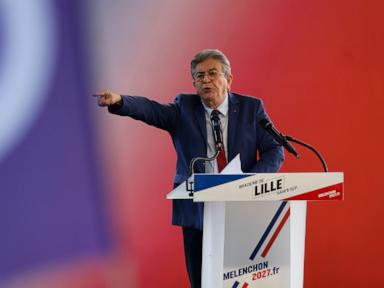
This is not an accident. France has a long, romanticized history of student rebellion stretching back to May 1968, and veteran political strategists know exactly how to pull those emotional levers. When a far-left presidential contender steps up to a microphone and praises high schoolers for taking to the streets, they are not merely offering moral support. They are executing a deliberate electoral strategy designed to bypass traditional media filters, energize an otherwise disengaged demographic, and create an atmosphere of permanent social crisis.
The Anatomy of a Modern French Student Blockade
To understand why France’s far-left presidential candidate cheers Gen Z school protests, you first have to understand how modern French youth activism actually operates. Gone are the days when student movements required months of underground mimeographing and secret café meetings. Today, a blockade can be organized in forty-eight hours through encrypted messaging apps, TikTok feeds, and Instagram infographics.
Yet digital speed does not mean an absence of institutional backing. Behind almost every high-profile blocus (school blockade) sits a tight network of youth organizations—such as the Union Syndicale Lycéenne or the Union Étudiante—that maintain deep ideological and logistical ties to the broader left-wing ecosystem. When national unions call for strikes over pension reforms, education budget cuts, or controversial university admissions platforms like Parcoursup, these youth wings act as the rapid-response vanguard.
The mechanics are straightforward:
- Digital Seeding: Party-aligned influencers and youth organizers circulate visually punchy call-to-action graphics on TikTok and Snapchat, framing complex legislative bills as direct attacks on young people's futures.
- Physical Chokepoints: Small groups of committed activists arrive at school gates at 6:00 AM, blocking entrances with barriers and dumpsters before the majority of students arrive, effectively turning a minority action into a school-wide shutdown.
- Media Amplification: Within hours, national parliamentary deputies from the far-left arrive at the barricades wearing their tricolor sashes, ensuring television cameras capture both the teenage protesters and the politicians standing shoulder-to-shoulder with them.
That last step is crucial. By physically placing themselves at the school gates, elected officials provide legal and political cover for the demonstrators while simultaneously claiming ownership of the movement's energy.
Why the Far-Left Needs the Streets
French presidential elections are notoriously unforgiving to candidates who rely solely on parliamentary procedure. Since the 2022 legislative elections shattered the traditional left-right duopoly into three competing blocs—the center-right coalition, the far-left alliance, and the nationalist right—the battle for dominance on the left has become existential.
For a far-left presidential candidate, the math is brutal. To reach the second round of the presidential vote, they cannot afford to lose working-class voters to the populist right while simultaneously watching moderate leftists drift back toward traditional social democracy. They need a unifying, high-octane force that makes their movement feel inevitable.
Gen Z represents that missing piece. Historically, voters aged 18 to 24 in France exhibit the highest rates of abstention in national elections. Often, more than half of eligible young voters stay home on election day. However, when they do vote, they skew heavily toward the radical left, driven by anxieties over climate change, precarious entry-level employment, rising housing costs, and perceived police heavy-handedness.
Street protests serve as a political onboarding ramp. A sixteen-year-old who helps barricade their high school today is far more likely to register to vote—and cast a ballot for the candidate who validated their anger—when they turn eighteen. By cheering these protests, far-left leaders are effectively running a long-term voter acquisition campaign disguised as solidarity.
The Rhetoric of "Civic Awakening"
Listen closely to the language used by far-left leaders when discussing these walkouts. They rarely describe the disruptions as mere protests; instead, they frame them as a "civic awakening" or a "defense of the Republic’s future." This framing accomplishes two strategic goals at once.
First, it insulates the movement from criticism regarding lost instructional time or property damage. Any parent, teacher, or minister who complains about blocked classrooms is immediately painted as an authoritarian trying to stifle democratic expression. Second, it elevates teenage grievances into existential national questions, validating young people who feel ignored by an aging political class.
The Counter-Argument What Critics and Moderates See
Not everyone in France views this dynamic as a noble exercise in democracy. Across the political spectrum—and even within mainstream teachers' unions—there is growing discomfort with the overt politicization of secondary schools.
Critics argue that cheering high school blockades crosses an ethical line by treating minors as foot soldiers in adult electoral battles. Education ministers and school principals repeatedly warn that blockades disproportionately harm students from working-class backgrounds, who rely on public schools for structured learning and exam preparation, whereas wealthier families can easily turn to private tutoring to make up for lost weeks.
There is also the thorny issue of laïcité and political neutrality within French public institutions. For decades, the French school system was treated as a sanctuary—a space deliberately shielded from partisan politics and ideological battles so students could develop independent critical thinking. When national politicians actively encourage students to shut down those very institutions, critics contend, they erode the foundational norms that keep public education functioning.
Even among older left-wing veterans, skepticism lingers. Some seasoned union organizers point out that high-profile street theater rarely translates into concrete legislative victories. Without sustained, disciplined organizing across workplaces and rural towns, youth-led protests can easily burn bright for a few weeks and then evaporate, leaving behind exhausted activists and hardened public resentment.
The Double-Edged Sword of Street Politics
Relying on Gen Z school protests carries significant political risks for the far-left, even as it generates favorable headlines in the short term. French public opinion toward street movements is notoriously volatile. While voters often express initial sympathy for student grievances, that goodwill tends to collapse rapidly if demonstrations devolve into violent clashes with riot police, vandalized storefronts, or prolonged disruptions to daily commutes.
Consider the tactical dilemma. To keep media attention, protests must remain visible and disruptive. Yet the more disruptive they become, the easier it is for conservative and centrist opponents to weaponize images of burning trash bins and shattered bus shelters to scare moderate voters.
Furthermore, Gen Z activists are fiercely independent and notoriously allergic to top-down control. While they may welcome a politician’s support during a standoff with police, many young protesters view established political parties—including the far-left—with deep suspicion. If students sense that a presidential candidate is merely harvesting their activism for campaign footage without delivering real systemic change, the backlash can be swift and merciless.
Consider a hypothetical scenario illustrating this friction. Imagine a coalition of high school unions organizes a nationwide strike against university admissions algorithms, drawing tens of thousands of students into the streets. A far-left candidate immediately adopts their slogans, promising to abolish the system on day one of their presidency. If that candidate later enters coalition negotiations with moderate left-wing parties and quietly drops the demand to secure ministerial posts, those same student networks will use the exact same digital tools to denounce the candidate as a traitor.
In French politics, riding the tiger of youth rebellion means accepting that you can never fully steer where it goes.
Beyond the Barricades What Actually Drives Gen Z Anger
Strip away the partisan maneuvering, and a sobering truth remains: the far-left did not invent the frustration driving French teenagers into the streets. Politicians can amplify anger, organize buses, and print banners, but they cannot manufacture genuine resentment out of thin air.
France’s younger generation is navigating a stark economic and social reality that older lawmakers frequently underestimate. Despite France’s generous welfare state, youth unemployment consistently hovers significantly higher than the national average. Even young people who secure university degrees often face years of precarious short-term contracts (CDD), unpaid internships, and stagnant entry-level wages that barely cover rent in major cities.
The Parcoursup Pressure Cooker
Nowhere is this anxiety more acute than in the transition from high school to higher education. Introduced to streamline university admissions, the Parcoursup platform has become a lightning rod for generational resentment. For millions of French teenagers, the algorithm represents an opaque, high-stakes judgment on their entire future, sorting applicants into winners and losers before they have even taken their final baccalauréat exams.
When a student spends months stressing over whether an algorithm will grant them a spot in their chosen field, walking out of class to join a protest doesn't feel like skipping school. It feels like the only way to assert agency in a system that treats them like data points.
Add to this the looming anxieties over climate inaction, inflation eroding student stipends, and a polarizing national debate over immigration and identity, and you have a generation primed for confrontation. Far-left strategists didn't create this tinderbox; they simply showed up with matches and a camera crew.
How This Reshapes the Road to the Élysée
The alliance between France’s far-left presidential contenders and Gen Z school protests signals a fundamental shift in how modern European campaigns are fought. Traditional party infrastructure—local precinct captains, printed manifestos, town hall debates—is steadily losing ground to decentralized, emotionally charged protest politics.
By embracing student blockades, the far-left is betting that polarization works in its favor. In a crowded presidential field where candidates struggle to break through algorithmic noise, standing at the center of a noisy, photogenic youth uprising guarantees wall-to-wall coverage. It forces every rival candidate to take a stand: either side with the youth and risk alienating law-and-order voters, or condemn the protests and look out of touch with the next generation.
Yet history offers a cautionary lesson for anyone mistaking street volume for electoral victory. In 1968, massive student and worker uprisings brought France to a standstill, paralyzed the government, and forced snap legislative elections. When the ballots were finally counted weeks later, Charles de Gaulle’s conservative party won a landslide majority, fueled by a silent majority exhausted by chaos and uncertainty.
Modern French strategists know that history well, even if they rarely mention it at rallies. Cheering at the school gates can ignite a campaign, dominate the news cycle, and rattle a sitting government—but winning the presidency still requires convincing the millions of quiet voters watching the smoke from behind their living room windows.