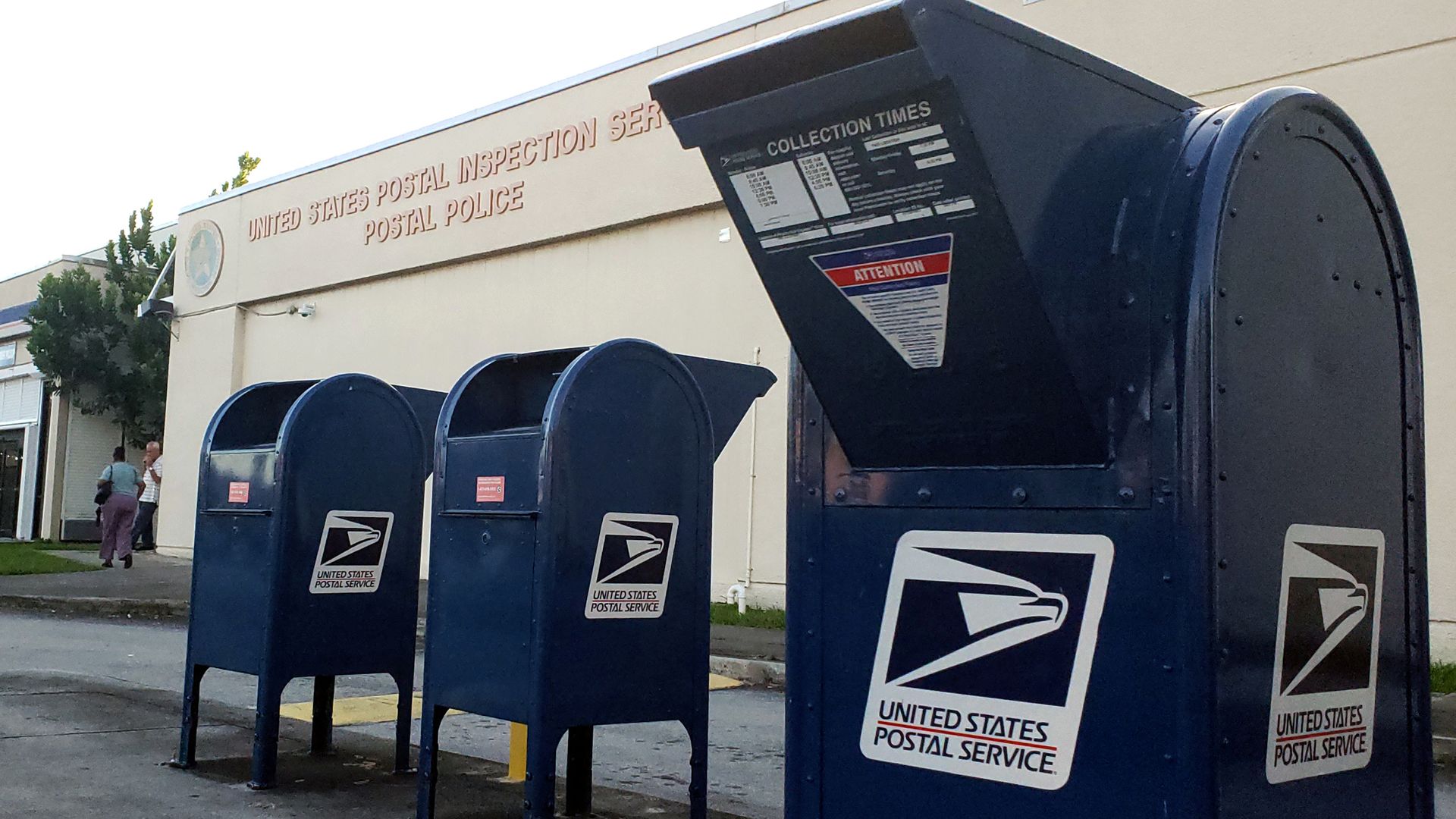
Federal investigators and postal inspectors have opened sweeping inquiries into waves of suspicious mail containing unknown powdery substances sent to state election offices, local boards, and congressional staff across the United States. Most tested samples have turned out to be harmless kitchen staples or nonhazardous powders rather than biological agents or lethal opioids, yet the disruption is real. Evacuations, hazmat deployments, and halted mailrooms slow down election administration at the exact weeks when voter registration, ballot requests, and public confidence face maximum strain.
Standard wire reports treat these episodes as isolated crime blotters. That misses the operational design. A cheap envelope stuffed with flour or cornstarch exploits a simple asymmetry: a sender spends pennies and minutes, while a county clerk or secretary of state must burn hours of staff time, clear buildings, and coordinate with federal agents.
Why Harmless Powder Works as a Weapon
No lethal toxin is needed to paralyze a municipal office. A white powder inside an unannounced envelope forces workers to assume the worst until lab tests prove otherwise.
Federal guidance instructs staff to treat any suspicious substance as potentially hazardous, isolate the room, shut down ventilation or heating and cooling units where possible, and wait for emergency responders. In election offices running on lean budgets and seasonal temp hires, even a two-hour evacuation during peak processing creates a bottleneck. Mail carts sit untouched. Verification queues back up.
Previous election cycles have shown how volatile the stakes can be. In 2023, election offices in six states received white powder mailings, and some samples contained trace amounts of fentanyl. During the 2026 midterm cycle, waves of powder letters hit election offices and lawmakers across multiple states, including evacuations in Louisiana and Oklahoma and interceptions involving congressional offices.
| Operational Factor | Low-Cost Hoax Powder | Confirmed Hazardous Material |
|---|---|---|
| Immediate Staff Response | Full room isolation, evacuation, and hazmat protocol | Full room isolation, evacuation, and hazmat protocol |
| Physical Harm Risk | Low direct toxicity, high panic and stress | Severe acute injury, poisoning, or contamination |
| Administrative Cost | Lost hours, closed facilities, diverted police and FBI time | Prolonged facility shutdown, medical monitoring, crime scene work |
| Legal Exposure | Severe federal felony charges for hoax or threat mailings | Severe federal terrorism, weapons, and threat charges |
That gap between actual lethality and immediate disruption explains why intimidation campaigns keep returning to the mail slot. Even when lab results come back clean, the psychological toll accumulates on civil servants already dealing with abusive phone calls, online harassment, and intense public scrutiny.
How Federal Agencies Track the Envelopes
When a suspicious letter appears, jurisdiction splits across overlapping federal and local teams. The FBI looks at potential threats of violence, domestic extremism, and crimes targeting election workers or officials, while the U.S. Postal Inspection Service focuses on offenses moving through the mail stream. Capitol Police and local hazmat units step in when legislative offices or municipal buildings are involved.
Catching the sender is rarely quick. Senders often drop envelopes into blue collection boxes, use fake or rotating return addresses, or mail batches across jurisdictions. Investigators work backward through postmarks, sorting timestamps, paper stock, handwriting or printer quirks, and surveillance footage near drop boxes.
Sometimes offenders slip up in predictable ways. In late October 2026, federal authorities arrested an Illinois man accused of sending suspicious powder to members of Congress using his own return address. Days later, federal prosecutors brought charges against an Oklahoma man accused of mailing hundreds of letters containing nonhazardous white powder to public officials ahead of the 2024 and 2026 elections, with investigators linking more than 700 mailings to a single sender pattern.
The Counter-Argument Nobody Likes Hearing
Public officials routinely insist that mail threats will not intimidate election workers. That resolve is admirable. It is also incomplete.
Heavy security can backfire in local government. Turn an open, transparent county clerk's office into a fortified bunker with locked doors, off-site mail screening, and armed guards, and critics will claim the office is hiding behind walls. Voters already suspicious of opaque processes may read extra security barriers as a lack of openness, even when those barriers exist solely to keep clerks safe from envelopes laced with unknown substances.
Security that protects staff at the cost of public trust solves half the problem while feeding another.
There is another uncomfortable reality. Law enforcement cannot intercept every single piece of mail before it reaches a local office. The postal network handles millions of items every day. High-speed sorting machines move envelopes fast, and trying to screen every letter for microscopic powder residues across thousands of small town halls and county annexes is neither cheap nor practical.
Practical Fixes That Actually Hold Up
Overhauling mail security does not require turning every local courthouse into a military base. Practical measures focus on separating risky intake from core ballot work and training staff before a crisis hits.
- Off-site or dedicated mail intake: Route general correspondence and unverified parcels through a separate receiving area or designated mail handler rather than opening everything right next to ballot-processing stations.
- Drills before peak deadlines: Run short, realistic drills on room isolation, HVAC shutoffs, and washing skin with cool water and soap rather than alcohol-based sanitizers or bleach, which can increase skin absorption.
- Clear chain of reporting: Keep direct contact numbers for the local FBI field office, election crimes or weapons-of-mass-destruction coordinators, and postal inspectors posted where staff can reach them without hunting through binders.
- Retention support for workers: Burnout drives experienced election staff out the door just as much as acute scares. Rotating duties after an incident and backing staff publicly helps keep institutional memory intact.
None of these steps eliminates copycats or lone actors. A determined sender can still drop a suspicious envelope in a box tonight. Still, separating physical intake from ballot custody and drilling basic containment turns a potential shutdown into a contained inconvenience. When election offices treat mail safety like routine fire drills rather than rare disasters, hoaxes lose their power to stall the vote.