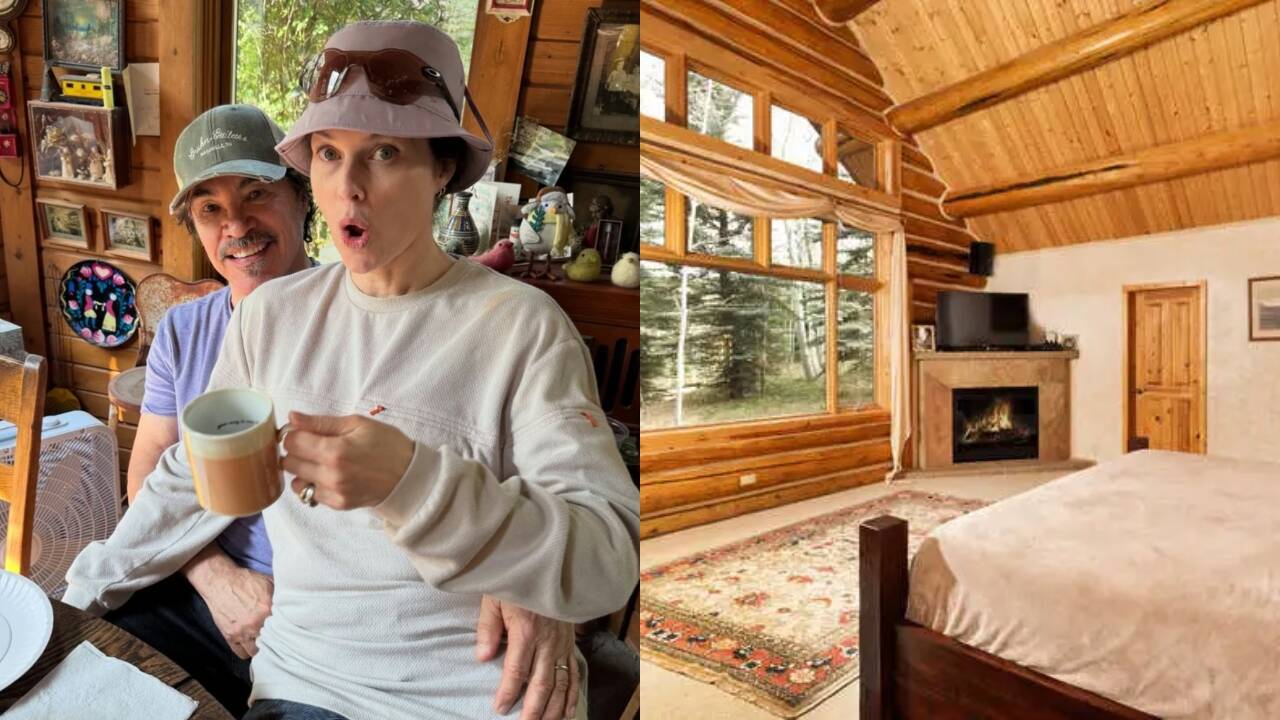
Rock and roll history rarely cleans up after itself with neat accounting. When Hall & Oates co-founder John Oates finally parted ways with his Little Woody Creek Ranch just outside Aspen, the final ledger read $6.9 million. For the casual observer scanning real estate tickers, it was just another high-net-worth shuffle in the Colorado Rockies.
Look closer at the timeline, the neighborhood lore, and the shifting economics of the Roaring Fork Valley, and a different narrative emerges. This was not a quick flip or a speculative play. It was the closing chapter of a 35-year anchor built during an era when mountain towns still tolerated eccentric artists before tech billionaires and hedge fund managers priced the culture out of existence.
The origin of the property reads like an anecdote from a different century. In the early 1990s, Oates had an active contract on a conventional townhouse in downtown Aspen. That trajectory shifted entirely when his partner, Aimee, expressed a desire to keep chickens. A downtown lot would not accommodate livestock. A friend in London happened to own raw, undeveloped acreage in Woody Creek featuring little more than a pair of dilapidated cabins and a barn. A single phone call replaced urban proximity with rural isolation. By 1997, the couple had finished constructing a five-bedroom log home from scratch, surrounding it with horse stables, irrigation systems, and an 18,000-gallon underground fire suppression tank.
The immediate neighborhood was a snapshot of counterculture royalty. Hunter S. Thompson lived directly across the road, establishing boundaries in his own unique fashion by periodically parking his famous Cadillac in Oates' garage without asking. Don Henley and Don Johnson maintained properties nearby, forming an enclave of famous names who still valued a certain rugged anonymity. It was a haven that functioned as a working gentleman's ranch rather than a museum piece.
Yet sentimentality has a shelf life, particularly when market forces intervene. Oates first tested the market in 2017, asking $6 million. The listing stalled. Despite price adjustments, the property lingered before being pulled entirely at the end of 2018. At the time, the math of maintaining a sprawling mountain retreat alongside a primary residence in Nashville did not justify the friction, but buyers were not biting at the valuation.
When the ranch returned to the market in mid-2024 with a $7.5 million tag, the regional economy looked unrecognizable compared to the 1990s. Aspen single-family home prices had climbed aggressively, with median figures clearing records year after year. Oates' property ultimately cleared at $6.9 million after a swift two-month escrow. While a multi-million-dollar payout sounds substantial, in the context of modern Aspen real estate—where standard single-family medians routinely dwarf that figure—the Woody Creek compound traded at a relative discount for the area, reflecting its niche appeal as a rustic homestead rather than a modernist trophy asset.
Timing is rarely accidental in high-value asset divestments. The sale arrives on the heels of a turbulent few years for the legacy of Hall & Oates, punctuated by private legal battles and the definitive dissolution of their professional partnership. While Oates has permanently relocated his domestic center of gravity to Tennessee and a new residence closer to downtown Aspen, shedding the Woody Creek acreage marks a total severance from a physical manifestation of his peak touring decades.
Properties with deep biographical roots eventually face the cold calculus of utility. When the horses are gone, the livestock scales down, and the original bohemian peer group disperses, maintaining 4.3 acres of high-altitude infrastructure becomes an exercise in nostalgia. Oates got his chickens, lived alongside the ghosts of Gonzo journalism, and held the land for over three decades. In the end, the market took the ranch, and Woody Creek lost another piece of its fading mythology.