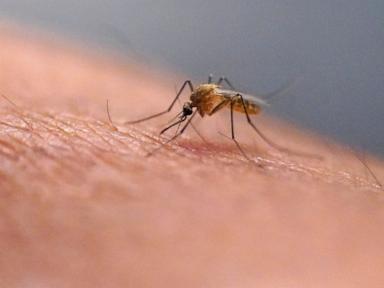
Releasing millions of lab-raised mosquitoes into tropical cities sounds like the opening act of a disaster movie, yet field trials across the globe prove that specially bred Aedes aegypti mosquitoes carrying a harmless bacterium can slash local dengue fever transmission by up to 77 percent. Instead of relying on chemical fogging trucks or elusive vaccines, public health agencies are hijacking the insect's own biology. By infecting mosquitoes with Wolbachia, a naturally occurring microbe found in roughly half of all insect species, scientists effectively block the dengue virus from replicating inside the host, turning a lethal vector into a biological dead end.
For decades, the standard playbook for mosquito control relied on brute force. Cities sprayed organophosphates and pyrethroids into the night air, drained stagnant water in backyards, and distributed bed nets. None of it stopped the climb. Dengue cases have surged dramatically over the past twenty years, driven by unchecked urbanization, global travel, and warming temperatures that allow Aedes aegypti to thrive in regions that were once too cool for their survival.
Mosquitoes evolved quickly, too. Generations of chemical exposure bred populations with thick cuticles and altered nervous systems that shrug off standard insecticides. Municipal budgets bled millions of dollars every rainy season for diminishing returns.
How a Common Insect Bacterium Breaks the Viral Chain
The breakthrough did not come from inventing a synthetic poison. It came from looking closely at what already lives inside bugs. Wolbachia pipientis is an intracellular bacterium present in fruit flies, dragonflies, moths, and butterflies, yet it is conspicuously absent from wild Aedes aegypti mosquitoes—the primary carriers of dengue, Zika, chikungunya, and yellow fever.
In the early 2000s, researchers working with the World Mosquito Program managed to transfer Wolbachia from fruit flies into Aedes aegypti embryos using microscopic glass needles. The labor was painstaking, requiring thousands of delicate injections before a stable line survived and passed the bacteria to its offspring. Once established, the results defied expectations.
When a mosquito carries Wolbachia, the dengue virus struggles to survive inside the insect's tissues. The exact biochemical tug-of-war involves two primary mechanisms:
- Resource competition: Wolbachia and the dengue virus both require host lipids, particularly cholesterol, to replicate. The bacterium hogs these cellular resources, starving the virus before it can reach the mosquito's salivary glands.
- Immune priming: The presence of Wolbachia keeps the mosquito's innate immune system in a state of heightened alert, triggering antimicrobial peptides that attack invading viral particles on sight.
If the virus cannot reach the salivary glands, the mosquito cannot pass the infection to a human during a blood meal. The insect still bites. It still annoys people at dusk. Yet the bite no longer carries a potentially fatal hemorrhagic fever.
The Self-Sustaining Genetic Engine
What separates the Wolbachia method from earlier biological interventions is how it spreads through a wild population without continuous human intervention. Most insect-control strategies require endless, expensive releases because the modified insects eventually die off or get outcompeted by wild natives. Wolbachia flips that math through a reproductive quirk called cytoplasmic incompatibility.
Understanding how this works requires looking at the four possible mating combinations between wild mosquitoes and lab-bred carriers:
- Infected male + Uninfected female: The resulting eggs do not hatch. The bacterium alters the male's sperm in a way that causes embryonic failure unless the female carries the exact same strain of Wolbachia to rescue the fertilized egg.
- Infected male + Infected female: The eggs hatch normally, and every single offspring inherits Wolbachia from the mother.
- Uninfected male + Infected female: The eggs hatch normally, and once again, 100 percent of the offspring carry the protective bacterium.
- Uninfected male + Uninfected female: Normal wild reproduction occurs, producing standard disease-carrying mosquitoes.
Look closely at those outcomes. Infected females always produce infected offspring regardless of who they mate with, while wild females lose reproductive capacity whenever they mate with released males. Over several generations, the percentage of Wolbachia-carrying mosquitoes climbs steadily until it saturates the local ecosystem.
Once the prevalence crosses a critical threshold—usually around 60 to 80 percent—the trait becomes self-sustaining. Health workers can pack up their release containers, stop spending money on that neighborhood, and move to the next district, leaving behind a permanently altered mosquito population that resists viral transmission.
Hard Evidence from Yogyakarta to Medellin
Theory is clean; tropical cities are messy. Skeptics initially doubted whether lab-reared insects could survive the harsh realities of crowded slums, erratic weather, and fierce competition from wild mosquitoes. Large-scale randomized controlled trials have largely quieted those doubts.
The landmark validation took place in Yogyakarta, Indonesia, a densely populated city where dengue is endemic and seasonal outbreaks regularly overwhelm local hospitals. Researchers divided the city into 24 distinct clusters, releasing Wolbachia-infected mosquitoes in half of them while leaving the other half untouched as a control group.
The data, published in the New England Journal of Medicine, showed a 77 percent reduction in confirmed dengue cases across the intervention zones. Even more striking was the 86 percent drop in dengue-related hospitalizations. Those numbers held steady years after the initial releases stopped, proving that the bacteria remained locked inside the local mosquito gene pool.
Similar patterns emerged halfway across the world in Colombia's Aburra Valley, which includes Medellin and Bello. Following city-wide releases, dengue incidence fell to its lowest levels in two decades, dropping by roughly 95 percent compared to historical averages. In Brazil, the government has moved beyond pilot studies entirely, partnering with researchers to build massive insect factories capable of producing up to 100 million Wolbachia-infected eggs every week to protect tens of millions of citizens.
Why This Differs from Gene Drives and Sterile Males
Public confusion often lumps all modified mosquitoes into a single bucket, sparking knee-jerk backlash against "mutant bugs." That conflation obscures massive scientific and ecological differences between competing technologies.
Consider the alternatives currently on the market or in development:
Sterile Insect Technique and Oxitec
Companies like Oxitec engineer male Aedes aegypti carrying a self-limiting gene. When these males mate with wild females, their female offspring die before reaching adulthood. This approach suppresses the total mosquito population, much like an ultra-targeted insecticide. However, because the modified insects die out, municipalities must pay for continuous, indefinite releases to prevent wild mosquitoes from recolonizing the area from neighboring towns.
CRISPR Gene Drives
Gene drives rewrite an insect's DNA so that a specific genetic modification is inherited by nearly all offspring, rather than the usual 50 percent. Scientists are testing gene drives to either sterilize female mosquitoes or render them immune to malaria parasites. While powerful, gene drives remain largely confined to high-security laboratories because altering wild DNA carries irreversible ecological risks and faces steep regulatory hurdles.
The Wolbachia Approach
Wolbachia is not genetic modification. Scientists do not alter a single base pair of the mosquito's DNA. They simply introduce a natural bacterium that already exists in the backyard ecosystems of virtually every country on Earth. Because it aims for population replacement rather than population eradication, it avoids leaving an empty ecological niche that another invasive mosquito species—such as Aedes albopictus, the Asian tiger mosquito—might rush in to fill.
The Unspoken Vulnerabilities and Friction Points
No biological tool works in a vacuum, and treating Wolbachia as a silver bullet ignores serious operational headaches that veteran epidemiologists watch closely.
Temperature spikes present the biggest biological threat. Extreme heatwaves can literally cook the bacteria out of mosquito larvae developing in sun-baked water containers. Studies show that when water temperatures consistently exceed 35 degrees Celsius (95 degrees Fahrenheit), Wolbachia densities drop sharply, reducing the maternal transmission rate and weakening the viral blockade. As global temperatures rise, the very climate trends driving dengue expansion could undermine the thermal stability of the bacteria meant to stop it.
Viral evolution poses another long-term question mark. Pathogens adapt to selective pressure. While dengue must navigate complex metabolic hurdles to bypass Wolbachia, virologists acknowledge that given billions of replication cycles across millions of mosquitoes, the virus could eventually mutate to tolerate the bacterium's presence. Constant genomic surveillance is mandatory, yet funding for routine sequencing in developing nations remains chronically thin.
Then there is the human factor. You cannot secretly release millions of mosquitoes in a major metropolis without triggering panic and conspiracy theories. Early trials in some regions stumbled when residents saw government vans dropping tubes of insects near their homes without prior explanation. Rumors spread rapidly on messaging apps, accusing health officials of intentionally spreading disease.
Successful programs now spend as much effort on community organizing as they do on entomology. Field teams recruit local leaders, host town halls, and let schoolchildren name mosquito release buckets before a single insect hits the air. Without public buy-in, residents simply break out cans of aerosol bug spray and wipe out the expensive lab-bred mosquitoes before they have a chance to mate.
Manufacturing and Logistics at Continental Scale
Scaling a biological intervention from a few neighborhoods to nations of 200 million people requires industrial-grade engineering. Breeding mosquitoes at mass scale is notoriously finicky.
Insectaries must maintain strict temperature and humidity controls while feeding millions of larvae precise diets of fish food or liver powder. Technicians have to separate males from females or harvest eggs on specialized paper strips that can be dried, shipped via standard courier, and hatched by adding water and a pinch of nutrients at the destination.
Cost remains a sticking point for upfront budgets. Launching a Wolbachia rollout costs roughly $10 to $15 per person protected in dense urban environments. For a city of two million people, that means finding $20 million to $30 million upfront—a steep hurdle for health ministries accustomed to buying cheap chemical sprays out of annual operating funds.
Health economists argue the math works easily over a ten-year horizon because preventing hospital admissions, lost wages, and emergency spraying saves far more than the initial outlay. Yet politicians rarely get rewarded for spending money today to prevent an outbreak four years down the line, long after the next election cycle.
The shift from emergency chemical warfare to permanent biological inoculation marks the most significant change in vector control since the invention of DDT. The science holds up under rigorous scrutiny, the field data is undeniable, and the factories are already humming—leaving public health leaders with a rare scenario where the decisive variable is no longer laboratory innovation, but political will and sustained funding.