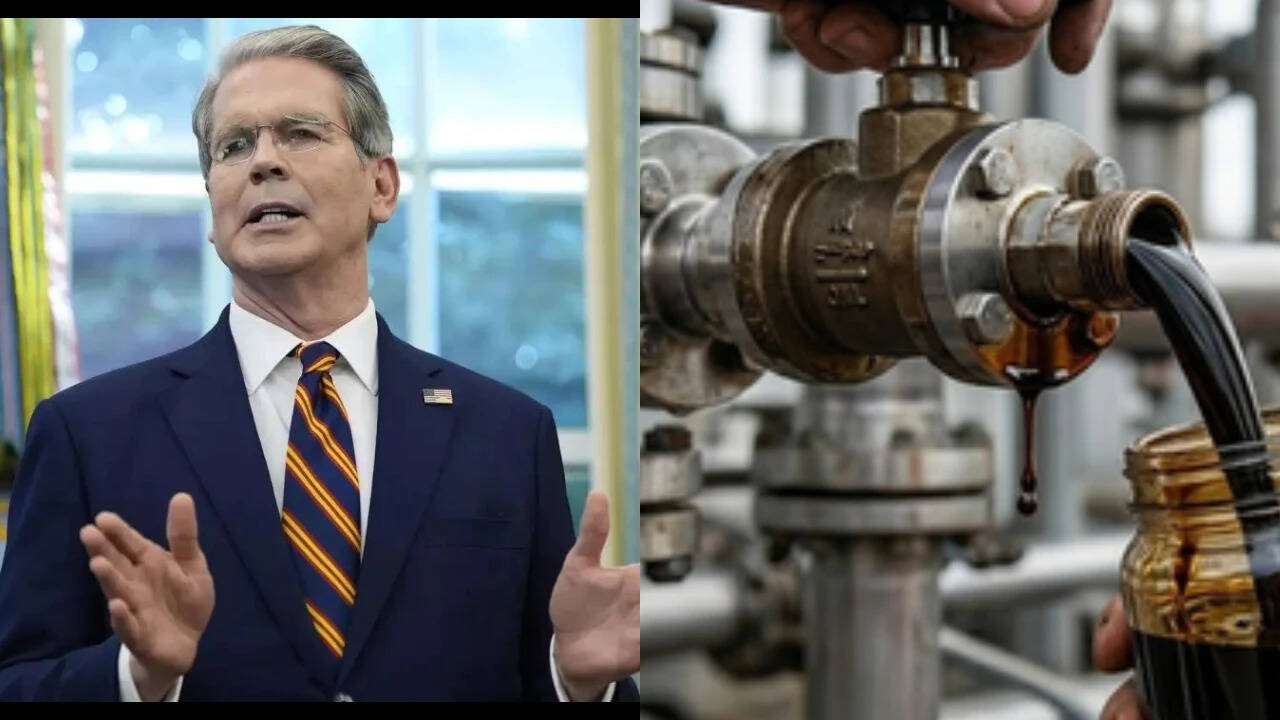
The mechanics of modern economic statecraft rarely look clean from the floor of a refinery or the trading desk of a major port. When Treasury Secretary Scott Bessent stepped in front of the cameras to defend the administration’s controversial arrangement to clear Russian diesel shipments, he was not just arguing a point of trade policy. He was staking the White House's executive power against an aggressive wall of bipartisan congressional opposition.
At its core, the arrangement centers on a calculated gamble. By deploying General License 135 through the Office of Foreign Assets Control, the Treasury carved out a narrow exemption allowing specific transactions involving Russian-origin diesel fuel to bypass active prohibitions until April 2027. The official rationale remains starkly practical: inject immediate volume into the domestic fuel supply, pull down rising diesel prices for American consumers, and blunt inflationary pressures hitting logistics chains.
Yet, the friction is immediate. Barely weeks prior, lawmakers had coalesced around strict statutory frameworks designed to choke off Moscow's energy revenues, including the stringent measures embedded in the Sanctioning Russia and Iran Act. Critics on Capitol Hill and international partners, notably in Kyiv, argue that opening any door to Russian petroleum products directly undermines the architecture of Western economic pressure.
Bessent’s defense rests on an expansive view of executive authority. In various media appearances, administration officials have dismissed congressional pushback, asserting that existing statutory waiver provisions grant the executive branch wide latitude to calibrate sanctions enforcement based on domestic economic necessity. As Bessent framed it, the objective is delivering immediate relief to households and freight operators feeling the pinch at the pump, overriding what the administration characterizes as rigid legislative overreach.
The legal battleground is crowded. Lawmakers from both parties have signaled intent to introduce corrective legislation designed to strip the executive of unilateral waiver powers regarding Russian energy imports. Meanwhile, state-level actors and regional port authorities have begun issuing their own compliance warnings to maritime operators, creating a complex web of conflicting legal signals. A terminal operator in New Jersey or the Gulf Coast faces a dizzying compliance maze: federal treasury licenses offering safe harbor on one hand, and state-level directives or threatened congressional penalties on the other.
This disconnect exposes the underlying fragility of using sanctions as a flexible valve. When economic measures are implemented with broad statutory strokes and subsequently modified by narrow executive waivers, the commercial market reacts with intense caution. Energy traders and maritime insurers abhor ambiguity. Even with a treasury license in hand, the threat of retroactive legislative penalties or sudden policy reversals causes many shippers to give US ports a wide berth, preferring to redirect cargoes to alternative global buyers rather than test the bounds of Washington's internal political warfare.
The political fallout extends far beyond domestic fuel metrics. Critics point out that easing restrictions on refined products like diesel risks providing Moscow with steady cash flow precisely when international allies are attempting to restrict war-funding revenues. The administration counters by pointing the finger back at traditional allies, highlighting how global energy flows remain deeply intertwined and arguing that strict unilateral purity often inflicts more damage on American consumers than on foreign adversaries.
As the April 2027 expiration of the Treasury's general license approaches, the tension between executive discretion and legislative mandate shows no sign of abating. The policy relies entirely on the premise that immediate price relief at home justifies navigating a minefield of legal challenges and international condemnation. Whether the math on fuel savings ultimately outweighs the strategic cost to Western sanctions enforcement remains the central, unresolved question of the administration's current economic playbook.